

Écoutez gratuitement ce podcast dans l'application : Télécharger gratuitement dans l'App Store
radio.fr
Minuteur
Sauvegarde des favoris
71 épisodes
Colloque - Géométrie et spectre des grands objets - Michael Magee : Strong Convergence of Unitary Representations
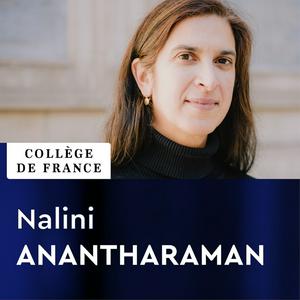
28/01/2026 | 38 minNalini Anantharaman
Géométrie spectrale
Collège de France
Année 2025-2026
Colloque - Géométrie et spectre des grands objets - Michael Magee : Strong Convergence of Unitary Representations
Michael Magee
Durham University
In the past few years the notion of "strong convergence" of multi-matrix models has found applications across pure mathematics including to random graphs, operator algebras (in several ways), spectral theory of hyperbolic manifolds, and the theory of minimal surfaces.
I will define strong convergence of unitary representations of groups and then discuss the still-mysterious and broad-ranging question of which discrete groups have finite dimensional unitary or "permutation" representations that strongly converge to their regular representation.
Based on joint works with W. Hide, L. Louder, D. Puder, M. de la Salle, J. Thomas, R. van Handel.Colloque - Géométrie et spectre des grands objets - Jean Raimbault : A Priori Bounds for the Homology of Arithmetic Manifolds
28/01/2026 | 53 minNalini Anantharaman
Géométrie spectrale
Collège de France
Année 2025-2026
Colloque - Géométrie et spectre des grands objets - Jean Raimbault : A Priori Bounds for the Homology of Arithmetic Manifolds
Jean Raimbault
CNRS, Institut de mathématiques de Marseille
It is well-known that the Betti numbers of nonpositively-curved manifolds are (under normalisation of curvature and some additional assumptions) linearly bounded by their volume. In a joint work with M. Frączyk and S. Hurtado we showed that for the sub-class of arithmetic locally symmetric spaces similar bounds hold for torsion homology. In most cases we also obtain sublinear bounds for the Betti numbers on terms of the volume. The main tools for both results are geometric, and i will explain our main technical result, a stronger version of the Margulis lemma specific to arithmetic manifolds.Colloque - Géométrie et spectre des grands objets - Ramon van Handel : The Polynomial Method
28/01/2026 | 53 minNalini Anantharaman
Géométrie spectrale
Collège de France
Année 2025-2026
Colloque - Géométrie et spectre des grands objets - Ramon van Handel : The Polynomial Method
Ramon van Handel
Princeton University
The polynomial method is a recent approach for establishing optimal spectral gaps that has led to new progress on various problems surrounding spectral gaps of random graphs and hyperbolic surfaces, and strong convergence of group representations. My aim in this talk is to explain in a general setting how and why this method works.Colloque - Géométrie et spectre des grands objets - Alice Guionnet : About Non-Commutative Entropy and Topology
28/01/2026 | 51 minNalini Anantharaman
Géométrie spectrale
Collège de France
Année 2025-2026
Colloque - Géométrie et spectre des grands objets - Alice Guionnet : About Non-Commutative Entropy and Topology
Alice Guionnet
CNRS, École normale supérieure de Lyon
In the 1990s, Voiculescu developed the theory of non-commutative entropy. For a single non-commutative variable, this entropy reduces to the rate function of the empirical measure of the eigenvalues of a Gaussian matrix. For several non-commutative variables, such a principle of large deviations, concerning the joint moments of Gaussian matrices, is not completely established. The topology used is that of the weak topology of non-commutative laws. This topology is not adequate for studying matrices whose coefficients have heavy tails and which typically have a finite number of non-zero coefficients per row or column. To overcome this shortcoming, Camille Male introduced traffics and the corresponding topology. I will discuss the associated entropy introduced in a recent article with Charles Bordenave and Camille Male, as well as the relationship between the topology of traffics and Benjamini and Schramm topology.Colloque - Géométrie et spectre des grands objets - Bram Petri : Bass Notes of Closed Arithmetic Hyperbolic Surfaces
27/01/2026 | 58 minNalini Anantharaman
Géométrie spectrale
Collège de France
Année 2025-2026
Colloque - Géométrie et spectre des grands objets - Bram Petri : Bass Notes of Closed Arithmetic Hyperbolic Surfaces
Bram Petri
Sorbonne Université
The spectral gap (or bass note) of a closed hyperbolic surface is the smallest non-zero eigenvalue of its Laplacian. This invariant plays an important role in many parts of hyperbolic geometry. The talk will start with a brief introduction to the (spectral) hyperbolic surfaces and some of the general motivation for the subject. After that, I will speak about joint work with Will Hide on the question of which numbers can appear as spectral gaps of closed arithmetic hyperbolic surfaces.
Plus de podcasts Mathématiques

Podcasts tendance de Mathématiques
À propos de Géométrie spectrale - Nalini Anantharaman
La géométrie spectrale est le domaine des mathématiques qui vise à faire le lien entre la géométrie d'un objet et son spectre de vibration. Le domaine a connu une première naissance dans les années 1910, quand les précurseurs de la mécanique quantique ont cherché à calculer le spectre des atomes à partir de considérations géométriques sur le modèle planétaire. La question s'est ensuite muée en l'étude du spectre d'opérateurs de Schrödinger, en lien avec la géométrie symplectique dans l'espace des phases de la mécanique classique.La seconde naissance du domaine remonte aux années 1960 avec le théorème de l'indice, qui donne des relations entre certains « indices topologiques » (par exemple la caractéristique d'Euler d'un espace topologique) et le bas du spectre d'un opérateur elliptique (comme l'opérateur de Laplace). Ce domaine connaît actuellement une activité intense du côté de la physique, avec la découverte du rôle de la notion d'« indice » dans la description des matériaux topologiques.Parmi les grandes questions de la géométrie spectrale, citons :Le chaos quantique : c'est l'étude du spectre d'un opérateur de Schrödinger, quand le système hamiltonien qui lui correspond en mécanique classique est chaotique ;Les problèmes inverses : que peut-on deviner de la géométrie d'un objet à partir de la mesure de son spectre de vibration ?Le lien entre spectre et topologie, via divers avatars du théorème de l'indice ;Le spectre de systèmes désordonnés ou d'objets géométriques aléatoires ;Le lien entre géométrie et contrôle des ondes : quels sont les meilleurs endroits où se placer pour « diriger » une onde ?Le cours sera tourné vers les aspects mathématiques de ces questions, mais certaines années le séminaire sera l'occasion d'entendre des physiciens présenter leurs travaux en lien avec le cours.
Site web du podcastÉcoutez Géométrie spectrale - Nalini Anantharaman, Tête-à-tête Chercheuse(s) ou d'autres podcasts du monde entier - avec l'app de radio.fr
Obtenez l’app radio.fr gratuite
- Ajout de radios et podcasts en favoris
- Diffusion via Wi-Fi ou Bluetooth
- Carplay & Android Auto compatibles
- Et encore plus de fonctionnalités
Obtenez l’app radio.fr gratuite
- Ajout de radios et podcasts en favoris
- Diffusion via Wi-Fi ou Bluetooth
- Carplay & Android Auto compatibles
- Et encore plus de fonctionnalités

Géométrie spectrale - Nalini Anantharaman
Scannez le code,
Téléchargez l’app,
Écoutez.
Téléchargez l’app,
Écoutez.
Géométrie spectrale - Nalini Anantharaman: Podcasts du groupe
 France