

Écoutez gratuitement ce podcast dans l'application : Télécharger gratuitement dans l'App Store
radio.fr
Minuteur
Sauvegarde des favoris
105 épisodes
ACTION #26 Comment réduire son temps d'écran ?
13/03/2024 | 7 minCet épisode a été créé par Thaïs Marques, aka study_and_t sur Instagram.
Découvrez le LIVRE Neurosapiens !
Pour apprendre à créer rapidement et à moindre coût son podcast, c'est par ici !
Dans cet épisode j’essaie de vous faire un tour d’horizon des méthodes qui sont proposées pour réduire son “temps d’écran” et dans quels contextes ces méthodes sont recommandées.
Recherches et écriture : Thaïs Marques
Animation & réalisation : Anaïs Roux
Production : Anaïs Roux & Lacmé Production
Instagram : https://www.instagram.com/neurosapiens.podcast/
Pour m'écrire : neurosapiens.podcast@gmail.com
Audio :
Play-Doh meets Dora - Carmen María and Edu Espinal
Good times - Patrick Patrikios.
Références
Liao, M., & Sundar, S. S. (2022). Sound of silence: Does Muting Notifications Reduce Phone Use? Computers in Human Behavior, 134, 107338. https://doi.org/10.1016/j.chb.2022.107338
Rahmillah, F. I., Tariq, A., King, M., & Oviedo-Trespalacios, O. (2023). Evaluating the Effectiveness of Apps Designed to Reduce Mobile Phone Use and Prevent Maladaptive Mobile Phone Use: Multimethod Study. Journal of Medical Internet Research, 25, e42541. https://doi.org/10.2196/42541
Vanden Abeele, M. M. P., Vandebosch, H., Koster, E. H. W., De Leyn, T., Van Gaeveren, K., De Segovia Vicente, D., Van Bruyssel, S., Van Timmeren, T., De Marez, L., Poels, K., DeSmet, A., De Wever, B., Verbruggen, M., & Baillien, E. (2024). Why, how, when, and for whom does digital disconnection work? A process-based framework of digital disconnection. Communication Theory, 34(1), 3–17. https://doi.org/10.1093/ct/qtad016
Wu, L., Sun, S., He, Y., & Jiang, B. (2016). The effect of interventions targeting screen time reduction: A systematic review and meta-analysis. Medicine, 95(27), e4029. https://doi.org/10.1097/MD.0000000000004029
Hébergé par Ausha. Visitez ausha.co/politique-de-confidentialite pour plus d'informations.69 | Celui où on parlait des effets du téléphone sur le cerveau des ados
06/03/2024 | 12 minDécouvrez le livre NEUROSAPIENS !
Pour apprendre à créer rapidement et à moindre coût son podcast, c'est par ici !
Recherches et écriture : Thaïs Marques
Production, animation, réalisation : Anaïs Roux
Instagram : https://www.instagram.com/neurosapiens.podcast/
neurosapiens.podcast@gmail.com
Produit et distribué en association avec LACME Production.
Références :
Crone, E. A., & Konijn, E. A. (2018). Media use and brain development during adolescence. Nature Communications, 9(1), 588. https://doi.org/10.1038/s41467-018-03126-x
Dienlin, T., & Johannes, N. (2020). The impact of digital technology use on adolescent well-being. Dialogues in Clinical Neuroscience, 22(2), 135–142. https://doi.org/10.31887/DCNS.2020.22.2/tdienlin
Harris, B., Regan, T., Schueler, J., & Fields, S. A. (2020). Problematic Mobile Phone and Smartphone Use Scales: A Systematic Review. Frontiers in Psychology, 11, 672. https://doi.org/10.3389/fpsyg.2020.00672
Odgers, C. L., & Jensen, M. R. (2020). Annual Research Review: Adolescent mental health in the digital age: facts, fears, and future directions. Journal of Child Psychology and Psychiatry, 61(3), 336–348. https://doi.org/10.1111/jcpp.13190
Orben, A. (2020). Teenagers, screens and social media: A narrative review of reviews and key studies. Social Psychiatry and Psychiatric Epidemiology, 55(4), 407–414. https://doi.org/10.1007/s00127-019-01825-4
Orben, A., & Blakemore, S.-J. (2023). How social media affects teen mental health: A missing link. Nature, 614(7948), 410–412. https://doi.org/10.1038/d41586-023-00402-9
Orben, A., & Przybylski, A. K. (2019). The association between adolescent well-being and digital technology use. Nature Human Behaviour, 3(2), 173–182. https://doi.org/10.1038/s41562-018-0506-1
Orben, A., Przybylski, A. K., Blakemore, S.-J., & Kievit, R. A. (2022). Windows of developmental sensitivity to social media. Nature Communications, 13(1), 1649. https://doi.org/10.1038/s41467-022-29296-3
Panova, T., & Carbonell, X. (2018). Is smartphone addiction really an addiction? Journal of Behavioral Addictions, 7(2), 252–259. https://doi.org/10.1556/2006.7.2018.49
Sherman, L. E., Greenfield, P. M., Hernandez, L. M., & Dapretto, M. (2018). Peer Influence Via Instagram: Effects on Brain and Behavior in Adolescence and Young Adulthood. Child Development, 89(1), 37–47. https://doi.org/10.1111/cdev.12838
Sherman, L. E., Hernandez, L. M., Greenfield, P. M., & Dapretto, M. (2018). What the brain ‘Likes’: Neural correlates of providing feedback on social media. Social Cognitive and Affective Neuroscience, 13(7), 699–707. https://doi.org/10.1093/scan/nsy051
Smith, A. R., Rosenbaum, G. M., Botdorf, M. A., Steinberg, L., & Chein, J. M. (2018). Peers influence adolescent reward processing, but not response inhibition. Cognitive, Affective, & Behavioral Neuroscience, 18(2), 284–295. https://doi.org/10.3758/s13415-018-0569-5
Hébergé par Ausha. Visitez ausha.co/politique-de-confidentialite pour plus d'informations.ACTION #25 Optimiser sa méthode de travail | Spécial étudiants
28/02/2024 | 5 minDécouvrez le LIVRE Neurosapiens !
Pour apprendre à créer rapidement et à moindre coût son podcast, c'est par ici !
Aujourd'hui je vous partage des méthodes de travail issues des recherches en psychologie et cognition pour améliorer vos révisions et votre organisation, et attaquer le semestre de façon plus sereine.
Recherches et écriture : Thaïs Marques
Animation & réalisation : Anaïs Roux
Production : Anaïs Roux & Lacmé Production
Instagram : https://www.instagram.com/neurosapiens.podcast/
Pour m'écrire : neurosapiens.podcast@gmail.com
Audio :
Play-Doh meets Dora - Carmen María and Edu Espinal
Good times - Patrick Patrikios.
Références
Karpicke, J. D., & Roediger III, H. L. (2008). The critical importance of retrieval for learning. science, 319(5865), 966-968.
Psychological Correlates of University Students’ Academic Performance: A Systematic Review and Meta-Analysis (Richardson et al., 2012)
Improving Students’ Learning With Effective Learning Techniques: Promising Directions From Cognitive and Educational Psychology (Dunlosky et al., 2013)
- Neural mechanisms of mental fatigue (Ishii et al., 2014)
Albulescu, P., Macsinga, I., Rusu, A., Sulea, C., Bodnaru, A., & Tulbure, B. T. (2022). " Give me a break!" A systematic review and meta-analysis on the efficacy of micro-breaks for increasing well-being and performance. Plos one, 17(8), e0272460.
- Long-Term Effects of Attentional Performance on Functional Brain Network Topology (Breckel et al., 2013)
- Spatially Distributed Effects of Mental Exhaustion on Resting-State FMRI Networks (Esposito et al., 2014)
Investigating the testing effect: Retrieval as a characteristic of effective study strategies (Bae & al., 2019)
Rethinking the Use of Tests: A Meta-Analysis of Practice Testing (Adesope & al., 2017)
The Effect of Testing Versus Restudy on Retention: A Meta-Analytic Review of the Testing Effect (Rowland 2014)
Hébergé par Ausha. Visitez ausha.co/politique-de-confidentialite pour plus d'informations.68 | Celui où on parlait de la méditation
21/02/2024 | 11 minDécouvrez le livre NEUROSAPIENS !
Pour apprendre à créer rapidement et à moindre coût son podcast, c'est par ici !
Recherches et écriture : Thaïs Marques
Production, animation, réalisation : Anaïs Roux
Instagram : https://www.instagram.com/neurosapiens.podcast/
neurosapiens.podcast@gmail.com
Produit et distribué en association avec LACME Production.
Références :
Bamber, M. D., & Kraenzle Schneider, J. (2016). Mindfulness-based meditation to decrease stress and anxiety in college students: A narrative synthesis of the research. Educational Research Review, 18, 1–32. https://doi.org/10.1016/j.edurev.2015.12.004
Fox, K. C. R., Nijeboer, S., Dixon, M. L., Floman, J. L., Ellamil, M., Rumak, S. P., Sedlmeier, P., & Christoff, K. (2014). Is meditation associated with altered brain structure? A systematic review and meta-analysis of morphometric neuroimaging in meditation practitioners. Neuroscience & Biobehavioral Reviews, 43, 48–73. https://doi.org/10.1016/j.neubiorev.2014.03.016
Hasenkamp, W., & Barsalou, L. W. (2012). Effects of Meditation Experience on Functional Connectivity of Distributed Brain Networks. Frontiers in Human Neuroscience, 6. https://doi.org/10.3389/fnhum.2012.00038
Hoge, E. A., Bui, E., Palitz, S. A., Schwarz, N. R., Owens, M. E., Johnston, J. M., Pollack, M. H., & Simon, N. M. (2018). The effect of mindfulness meditation training on biological acute stress responses in generalized anxiety disorder. Psychiatry Research, 262, 328–332. https://doi.org/10.1016/j.psychres.2017.01.006
Saeed, S. A., Antonacci, D. J., & Bloch, R. M. (2010). Exercise, Yoga, and Meditation for Depressive and Anxiety Disorders. Depression and Anxiety, 81(8).
Stinson, C., Curl, E. D., Hale, G., Knight, S., Pipkins, C., Hall, I., White, K., Thompson, N., & Wright, C. (2020). Mindfulness Meditation and Anxiety in Nursing Students. Nursing Education Perspectives, 41(4), 244–245. https://doi.org/10.1097/01.NEP.0000000000000635
Whitfield, T., Barnhofer, T., Acabchuk, R., Cohen, A., Lee, M., Schlosser, M., Arenaza-Urquijo, E. M., Böttcher, A., Britton, W., Coll-Padros, N., Collette, F., Chételat, G., Dautricourt, S., Demnitz-King, H., Dumais, T., Klimecki, O., Meiberth, D., Moulinet, I., Müller, T., … Marchant, N. L. (2022). The Effect of Mindfulness-based Programs on Cognitive Function in Adults: A Systematic Review and Meta-analysis. Neuropsychology Review, 32(3), 677–702. https://doi.org/10.1007/s11065-021-09519-y
Wielgosz, J., Goldberg, S. B., Kral, T. R. A., Dunne, J. D., & Davidson, R. J. (2019). Mindfulness Meditation and Psychopathology. Annual Review of Clinical Psychology, 15(1), 285–316. https://doi.org/10.1146/annurev-clinpsy-021815-093423
Zsadanyi, S. E., Kurth, F., & Luders, E. (2021). The Effects of Mindfulness and Meditation on the Cingulate Cortex in the Healthy Human Brain: A Review. Mindfulness, 12(10), 2371–2387. https://doi.org/10.1007/s12671-021-01712-7
Hébergé par Ausha. Visitez ausha.co/politique-de-confidentialite pour plus d'informations.ACTION #24 Guérir d’un coeur brisé
14/02/2024 | 5 minDécouvrez le LIVRE Neurosapiens !
Pour apprendre à créer rapidement et à moindre coût son podcast, c'est par ici !
Aujourd’hui, c’est la saint valentin, jour de l’amour sous toutes ses formes, qu’il soit heureux, complexe, multiple, triste, solitaire ou plein d’espoir. Je sais à travers les statistiques mais aussi à travers les moments où je vous rencontre et échange avec vous, que l’épisode qui vous a le plus touché et qui vous est le plus utile est l’épisode sur le coeur brisé. Alors aujourd’hui, pour cet épisode ACTION, j’aimerais vous proposer quelques conseils pour guérir d’un coeur brisé avec patience et compassion. Que nous disent les études scientifiques à ce sujet ? Quels comportements favorisent la réparation d’un coeur brisé ?
Animation & réalisation : Anaïs Roux
Production : Anaïs Roux & Lacmé Production
Instagram : https://www.instagram.com/neurosapiens.podcast/
Pour m'écrire : neurosapiens.podcast@gmail.com
Audio :
Play-Doh meets Dora - Carmen María and Edu Espinal
Good times - Patrick Patrikios.
Hébergé par Ausha. Visitez ausha.co/politique-de-confidentialite pour plus d'informations.
Plus de podcasts Sciences
 Mystères et étoilesAstronomie, Sciences
 Le temps d'une rencontreArts, Forme et santé, Livres, Santé mentale, Sciences, Sciences sociales
 Les idées largesActualités, Culture et société, Gouvernement, Sciences
 Ologies with Alie WardCulture et société, Humour, Sciences
- NeurosapiensSciences, Éducation
 La vie partoutNature, Sciences
 L'art du mentalisteDéveloppement personnel, Sciences, Sciences sociales, Éducation
 Psychiatrie InternationaleForme et santé, Médecine, Sciences
 Les Aventuriers de la pensée (sciences sociales : sociologie, anthropologie, psychologie, histoire)Culture et société, Sciences, Sciences sociales, Éducation
 Paléoanthropologie du genre Homo - Jean-Jacques HublinScience de la vie, Sciences
Podcasts tendance de Sciences
 Babbage from The EconomistActualités, Actualités Tech, Sciences, Technologies
 Les Voix de la forêtNature, Sciences
 Curious CasesSciences
 La charrue avant les boeufs !Sciences
 Speed & ScaleNature, Sciences
 АНТРОПОГЕНЕЗ.РУHistoire, Science de la vie, Sciences
 Uncharted with Hannah FrySciences
 Les Pieds dans l'EauNature, Sciences
 À l'écoute de la scienceSciences
 MermozActualité économique, Actualités, Culture et société, Documentaire, Politique, Sciences, Sciences sociales
 Podcast ScienceSciences, Technologies, Éducation
 UnexplainableScience de la vie, Sciences
 EmonthebrainSciences
 Stanford Psychology PodcastCulture et société, Sciences, Sciences sociales
 NeuroTransmissionSciences
 Ligne de MIRForme et santé, Médecine, Sciences
 Maths en têteMathématiques, Sciences, Éducation
 Voyage dans l'espaceSciences
 Parlons cheval - Le podcast de l'Institut français du cheval et de l'équitationSciences, Sports
À propos de Neurosapiens
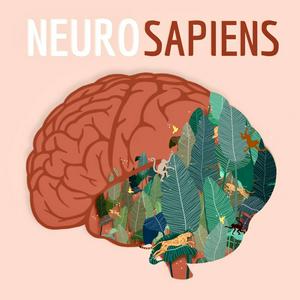
Plongez au coeur du fonctionnement de votre cerveau. Un mercredi sur deux, découvrez les secrets de votre outil le plus précieux, apprenez comment il vous accompagne au quotidien et comment il peut, parfois, vous tromper. Ce podcast se veut léger, décomplexé et compréhensible par tous à travers des sujets ancrés dans la vie quotidienne. Découvrez ce qu’il se trame dans votre cerveau lorsque vous avez un mot sur le bout de la langue, lorsque vous tombez amoureux, lorsque vous avez “déjà-vu” cette scène ou encore lorsque vous croyez en Dieu.
Une question ? Un thème du quotidien que vous aimeriez voir sous le prisme des neurosciences ? Contactez-nous sur neurosapiens.podcast[at]gmail.com
Créé et réalisé par Anaïs Roux
Logo : Instagram @lesillustrees
Hébergé par Ausha. Visitez ausha.co/fr/politique-de-confidentialite pour plus d'informations.
Site web du podcastÉcoutez Neurosapiens, Mystères et étoiles ou d'autres podcasts du monde entier - avec l'app de radio.fr
Obtenez l’app radio.fr gratuite
- Ajout de radios et podcasts en favoris
- Diffusion via Wi-Fi ou Bluetooth
- Carplay & Android Auto compatibles
- Et encore plus de fonctionnalités
Obtenez l’app radio.fr gratuite
- Ajout de radios et podcasts en favoris
- Diffusion via Wi-Fi ou Bluetooth
- Carplay & Android Auto compatibles
- Et encore plus de fonctionnalités
Neurosapiens
Scannez le code,
Téléchargez l’app,
Écoutez.
Téléchargez l’app,
Écoutez.
 France