

Écoutez gratuitement ce podcast dans l'application : Télécharger gratuitement dans l'App Store
radio.fr
Minuteur
Sauvegarde des favoris
Épigénétique et mémoire cellulaire - Edith Heard
Collège de France
Dernier épisode
77 épisodes
Conférence - Stephen Quake : Medical Innovations from the Genome Revolution: Liquid Biopsies
22/09/2025 | 43 minEdith Heard
Collège de France
Epigénétique et mémoire cellulaire
Année 2024-2025
Conférence - Stephen Quake : Medical Innovations from the Genome Revolution: Liquid Biopsies
Stephen Quake
Head of Science at the Chan Zuckerberg Initiative and Lee Otterson Professor at Stanford University
Stephen Quake est invité par l'assemblée du Collège de France sur proposition de la Pr Edith Heard.
Résumé
One of the most important medical innovations to arise from the genome revolution is the development of liquid biopsies: simple blood tests which replace the need for invasive sampling in fields as diverse as pregnancy, transplant medicine, infectious disease, and cancer. Virtually all of these liquid biopsies are based on a physiological phenomenon discovered in Strasbourg in 1948: circulating cell free nucleic acids. Despite more than a half century of research, this phenomenon did not have a clinical use until it was paired with high throughput sequencing and knowledge of the human genome sequence. I will describe how our lab developed a variety of diagnostic tests which have replaced invasive biopsies and are now used by millions of patients each year.
Stephen Quake
Stephen Quake is Head of Science at the Chan Zuckerberg Initiative, where he oversees CZI's science grant programs, technology development, and the CZ Biohub Network. He has received numerous awards for his contributions to science and is one of only two dozen scientists elected to all three National Academies. Steve also holds a faculty position at Stanford University, where he is the Lee Otterson Professor of Bioengineering and Applied Physics. Previously he was the founding co-president of the Chan Zuckerberg Biohub (2016-2022), investigator of the Howard Hughes Medical Institute (2006-2016), and professor at the California Institute of Technology (1996-2005).Conférence - Stephen Quake : Understanding the Mysteries of the Cell: Our Immune Repertoire Viewed Through the Darwin's Eyes
08/09/2025 | 46 minEdith Heard
Collège de France
Epigénétique et mémoire cellulaire
Année 2024-2025
Conférence - Stephen Quake : Understanding the Mysteries of the Cell: Our Immune Repertoire Viewed Through the Darwin's Eyes
Stephen Quake
Head of Science at the Chan Zuckerberg Initiative and Lee Otterson Professor at Stanford University
Stephen Quake est invité par l'assemblée du Collège de France sur proposition de la Pr Edith Heard.
Résumé
The nature of the immune system's antibody repertoire has been a subject of fascination for more than a century. This repertoire is highly plastic and can be directed to create antibodies with broad chemical diversity and high selectivity. There is now a good understanding of the potential diversity available and the mechanistic aspects of how this diversity is generated. Antibodies are formed by a mixture of recombination among gene segments, sequence diversification at the junctions of these segments, and point mutations throughout the gene. However, certain very elementary questions have remained open more than a half-century after being posed: It is still unclear what fraction of the potential repertoire is expressed in an individual at any point in time and how similar repertoires are between individuals who have lived in similar environments. Moreover, because each individual's immune system is an independent experiment in evolution by natural selection, experiments about repertoire similarity also inform our understanding of evolutionary diversity and convergence. I will discuss how we have used high throughput sequencing to sequence immune repertoires in both humans and model organisms to address these questions.
Stephen Quake
Stephen Quake is Head of Science at the Chan Zuckerberg Initiative, where he oversees CZI's science grant programs, technology development, and the CZ Biohub Network. He has received numerous awards for his contributions to science and is one of only two dozen scientists elected to all three National Academies. Steve also holds a faculty position at Stanford University, where he is the Lee Otterson Professor of Bioengineering and Applied Physics. Previously he was the founding co-president of the Chan Zuckerberg Biohub (2016-2022), investigator of the Howard Hughes Medical Institute (2006-2016), and professor at the California Institute of Technology (1996-2005).Colloque - L'inactivation du chromosome X : Closing words
11/06/2025 | 4 minEdith Heard
Collège de France
Epigénétique et mémoire cellulaire
Année 2024-2025
Colloque - L'inactivation du chromosome X : Closing words
Organisation : Pre Edith Heard (Collège de France, chaire Épigénétique et mémoire cellulaire) et Pre Claire Rougeulle (Institut Curie)
Edith Heard
Professeur du Collège de FranceColloque - L'inactivation du chromosome X : XIST and the Maintenance of XCI: Lessons from XCI Erosion in Human Pluripotent Stem Cells
11/06/2025 | 18 minEdith Heard
Collège de France
Epigénétique et mémoire cellulaire
Année 2024-2025
Colloque - L'inactivation du chromosome X : XIST and the Maintenance of XCI: Lessons from XCI Erosion in Human Pluripotent Stem Cells
Organisation : Pre Edith Heard (Collège de France, chaire Épigénétique et mémoire cellulaire) et Pre Claire Rougeulle (Institut Curie)
Simão José Teixeira da Rocha
IBB, Lisbonne, PortugalColloque - L'inactivation du chromosome X : Modulation of X chromosome inactivity and phenotypic consequences
11/06/2025 | 16 minEdith Heard
Collège de France
Epigénétique et mémoire cellulaire
Année 2024-2025
Colloque - L'inactivation du chromosome X : Modulation of X chromosome inactivity and phenotypic consequences
Organisation : Pre Edith Heard (Collège de France, chaire Épigénétique et mémoire cellulaire) et Pre Claire Rougeulle (Institut Curie)
Céline Morey
Université Paris Cité, France
Plus de podcasts Science de la vie
 Neurêkha!Science de la vie, Sciences, Sciences sociales
 UnexplainableScience de la vie, Sciences
 Paléoanthropologie du genre Homo - Jean-Jacques HublinScience de la vie, Sciences
 Speaking of PsychologyForme et santé, Santé mentale, Science de la vie, Sciences
 杨定一博士专辑Science de la vie, Sciences
 40 ans de biologie au service de l’Histoire, par OzymeForme et santé, Médecine, Science de la vie, Sciences, Sciences naturelles
 The Quanta PodcastScience de la vie, Sciences
 Les VolontairesScience de la vie, Sciences
 Psychologie cognitive expérimentale - Stanislas DehaeneScience de la vie, Sciences
 Les podcasts de la Société Française d’EndocrinologieScience de la vie, Sciences
Podcasts tendance de Science de la vie
 Dynamiques du vivant - Thomas LecuitScience de la vie, Sciences
- Les podcasts de la Société Française d’EndocrinologieScience de la vie, Sciences
 Oncologie cellulaire et moléculaire - Hugues de ThéScience de la vie, Sciences
- Épigénétique et mémoire cellulaire - Edith HeardScience de la vie, Sciences
 Biodiversité et écosystèmes (2023-2024) - Emmanuelle PorcherScience de la vie, Sciences
 Médecine expérimentale - Alain FischerScience de la vie, Sciences
 پادکست آذرخش مکری - azarakhsh mokriForme et santé, Santé mentale, Science de la vie, Sciences, Sciences sociales
 АНТРОПОГЕНЕЗ.РУHistoire, Science de la vie, Sciences
- Les VolontairesScience de la vie, Sciences
- The Quanta PodcastScience de la vie, Sciences
 The Joy of WhyScience de la vie, Sciences
- 杨定一博士专辑Science de la vie, Sciences
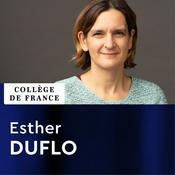
À propos de Épigénétique et mémoire cellulaire - Edith Heard
Née le 5 mars 1965 à Londres (Angleterre).Edith Heard est généticienne de formation. Elle a suivi des études en sciences naturelles à l'Université de Cambridge au Royaume-Uni et a préparé son doctorat au « Imperial Cancer Research Fund » à Londres. Edith Heard est arrivée en France, à l'Institut Pasteur en 1990. Elle dirige aujourd'hui à l'Institut Curie, l'Unité de Génétique et biologie du développement et l'équipe « Épigenèse et développement des mammifères ».Elle a reçu de nombreuses distinctions pour ses travaux de recherche, comme la Médaille d'argent du CNRS, en 2008, le prix Jean Hamburger de la ville de Paris, en 2009, l'ERC Advanced Investigator Award du Conseil européen de la recherche en 2010 et le Grand Prix de la FRM en 2011. Elle est en outre membre élu de la prestigieuse Organisation européenne de biologie moléculaire (EMBO) depuis 2005. En 2012, elle a été nommée Professeure au Collège de France.Edith Heard se consacre depuis plusieurs années à l'étude des processus épigénétiques, tel que l'inactivation du chromosome X chez les mammifères, un modèle classique dans ce domaine. Ses travaux ont contribué à la compréhension des premiers événements qui accompagnent l'inactivation du chromosome X au cours de l'embryogenèse. Son équipe a mis en évidence une dynamique remarquable des changements épigénétiques au cours du développement précoce et a élucidé une partie des mécanismes responsables du processus d'inactivation du X. Elle a aussi démontré la diversité de stratégies mises en œuvre dans ce processus entre des mammifères mêmes très proches au cours de l'évolution. L'ensemble de ces travaux sont largement reconnus dans le domaine, car des mécanismes similaires semblent être impliqués dans d'autres processus épigénétiques.
Site web du podcastÉcoutez Épigénétique et mémoire cellulaire - Edith Heard, Neurêkha! ou d'autres podcasts du monde entier - avec l'app de radio.fr
Obtenez l’app radio.fr gratuite
- Ajout de radios et podcasts en favoris
- Diffusion via Wi-Fi ou Bluetooth
- Carplay & Android Auto compatibles
- Et encore plus de fonctionnalités
Obtenez l’app radio.fr gratuite
- Ajout de radios et podcasts en favoris
- Diffusion via Wi-Fi ou Bluetooth
- Carplay & Android Auto compatibles
- Et encore plus de fonctionnalités
Épigénétique et mémoire cellulaire - Edith Heard
Scannez le code,
Téléchargez l’app,
Écoutez.
Téléchargez l’app,
Écoutez.
Épigénétique et mémoire cellulaire - Edith Heard: Podcasts du groupe
 France