

Écoutez gratuitement ce podcast dans l'application : Télécharger gratuitement dans l'App Store
radio.fr
Minuteur
Sauvegarde des favoris
186 épisodes
185 - Brian Knutson: What Neuroscience Reveals About Our Decisions
09/10/2026 | 55 minThis week, Katia Kriakova has a conversation with Brian Knutson, a professor of psychology and neuroscience at Stanford University. In this episode, we explore the neuroscience of decision-making, how brain activity can predict behavior and relapse in addiction, and why our choices don’t always align with how we want to live.
Brian Knutson’s LinkedIn: https://www.linkedin.com/in/brian-knutson-8b87762a5/
Brian Knutson’s Lab Website: https://spanlab.stanford.edu/people/brian-knutson/
Katia’s LinkedIn: https://www.linkedin.com/in/katiakriakova/
Podcast Contact: stanfordpsychpodcast@gmail.com
Podcast Twitter: @StanfordPsyPod
Podcast Substack: https://stanfordpsypod.substack.com/184 - Tamar Schapiro: What Philosophy Can(not) Tell us About Children, Adults, and the Root of All Evil
18/09/2026 | 48 minIn this week’s episode, Julie and Adani chat with Tamar Schapiro, professor of philosophy at MIT! Tamar is interested in a wide range of things, from what it means to make good decisions in everyday life to ethical theory and the history of ethics (especially Kant and the British Moralists). We discussed Tamar’s work on why we treat children differently from adults, dig into whether and how reactivity might be the root of all evil, and close with some practical life advice based on Tamar’s own journey through philosophy and life!
Tamar’s faculty webpage: https://philosophy.mit.edu/schapiro
Tamar’s recent book, Feeling Like It: a Theory of Inclination and Will: https://doi.org/10.1093/oso/9780198862932.001.0001
Tamar’s paper, Childhood and Personhood: https://access.heinonline.com/HOL/P?h=hein.journals/arz45&i=593
Stanford Encyclopedia of Philosophy entry on The Philosophy of Childhood: https://plato.stanford.edu/entries/childhood/
Julie: https://www.linkedin.com/in/hengj/
Adani: https://www.adaniabutto.com
Podcast Twitter: @StanfordPsyPod
Podcast Substack: https://stanfordpsypod.substack.com/
Let us know what you thought of this episode, or of the podcast! :) stanfordpsychpodcast@gmail.com183 - William Damon: How to Live a Purposeful Life
03/09/2026 | 50 minThis week, Katia Kriakova has a conversation with William Damon, a professor at Stanford University. He is one of the world's leading researchers on human development across the lifespan and has pioneered the scientific study of purpose in life. In this conversation, we explore how we can make our own lives more purposeful and expand purpose beyond ourselves.
William Damon’s book on purpose: The Path to Purpose: How Young People Find Their Calling in Life
William Damon’s paper: The Psychology of Purpose: A Comprehensive Approach
William Damon’s LinkedIn: https://www.linkedin.com/in/williamdamon/
Katia Kriakova’s LinkedIn: https://www.linkedin.com/in/katiakriakova/
Podcast Contact: stanfordpsychpodcast@gmail.com
Podcast Twitter: @StanfordPsyPod
Podcast Substack: https://stanfordpsypod.substack.com/
Podcast LinkedIn: https://www.linkedin.com/company/stanford-psychology-podcast/182 - Bill Burnett: How to Design a Meaningful Life
21/08/2026 | 1 h 8 minThis week, Katia has a conversation with Bill Burnett, an adjunct professor at Stanford University. He is the co-founder of Stanford's Life Design Lab and also the co-author of Designing Your Life and How to Live a Meaningful Life. In this conversation, Bill shares how we can live in alignment with our values and compass, how prototyping can help us embrace uncertainty, and how to design a life that is more meaningful to us.
Designing Your Life Website: https://designingyour.life/
Bill Burnett’s LinkedIn: https://www.linkedin.com/in/bill-burnett-4225401/
Bill Burnett’s Books:
Designing Your Life: How to Build a Well-Lived, Joyful Life
How to Live a Meaningful Life: Using Design Thinking to Unlock Purpose, Joy, and Flow Every Day
Katia’s LinkedIn: https://www.linkedin.com/in/katiakriakova/
Podcast Contact: stanfordpsychpodcast@gmail.com
Podcast Twitter: @StanfordPsyPod
Podcast Substack: https://stanfordpsypod.substack.com/181 - Nomisha Kurian: Critical Hope for the Future of Children & AI
07/08/2026 | 50 minAdani chats with Nomisha Kurian, Assistant Professor in Education Studies at the University of Warwick, Associate Fellow at the University of Cambridge’s Leverhulme Centre for the Future of Intelligence, and Associate at the University of Edinburgh’s Centre for Research in Digital Education. Nomisha has been at the forefront of research on children’s safety and well-being, elucidating what it means for up-and-coming AI technologies to support children’s development and align with their best interests. She has also advised the UK Government Open Innovation Team, spearheaded policy briefs, and previously researched children’s rights law at Yale University. We discuss how a recently-viral NYT article relates to Nomisha’s frameworks for developmentally aligned AI, why we should have “critical hope” for the future, and learn more about the exciting things she’ll be releasing later this year!
NYT feature – “What Parents in China See in A.I. Toys”: https://www.nytimes.com/video/world/asia/100000010595407/china-ai-toy-chatbot.html
Nomisha’s framework on developmentally aligned AI: https://doi.org/10.1007/s44436-025-00009-z
Nomisha’s further work: https://scholar.google.com/citations?user=wT89nlAAAAAJ
Nomisha’s children’s book: https://nosycrow.com/book/university-of-cambridge-think-big-artificial-intelligence/
Adani’s website: https://www.adaniabutto.com
Adani’s Bluesky @adani
Podcast Twitter @StanfordPsyPod
Podcast Substack https://stanfordpsypod.substack.com/
Let us know what you thought of this episode, or of the podcast! :) stanfordpsychpodcast@gmail.com
Plus de podcasts Culture et société








Podcasts tendance de Culture et société















À propos de Stanford Psychology Podcast
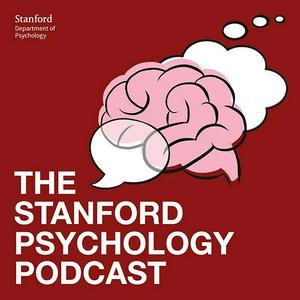
The student-led Stanford Psychology Podcast invites leading psychologists to talk about what’s on their mind lately. Join Eric Neumann, Anjie Cao, Kate Petrova, Bella Fascendini, Joseph Outa and Julia Rathmann-Bloch as they chat with their guests about their latest exciting work. Every week, an episode will bring you new findings from psychological science and how they can be applied to everyday life. The opinions and views expressed in this podcast represent those of the speaker and not necessarily Stanford's. Subscribe at stanfordpsypod.substack.com. Let us hear your thoughts at stanfordpsychpodcast@gmail.com. Follow us on Twitter @StanfordPsyPod. Visit our website https://stanfordpsychologypodcast.com. Soundtrack: Corey Zhou (UCSD). Logo: Sarah Wu (Stanford)
Site web du podcastÉcoutez Stanford Psychology Podcast, Happy End Le Podcast ou d'autres podcasts du monde entier - avec l'app de radio.fr
Obtenez l’app radio.fr gratuite
- Ajout de radios et podcasts en favoris
- Diffusion via Wi-Fi ou Bluetooth
- Carplay & Android Auto compatibles
- Et encore plus de fonctionnalités
Obtenez l’app radio.fr gratuite
- Ajout de radios et podcasts en favoris
- Diffusion via Wi-Fi ou Bluetooth
- Carplay & Android Auto compatibles
- Et encore plus de fonctionnalités
Stanford Psychology Podcast
Scannez le code,
Téléchargez l’app,
Écoutez.
Téléchargez l’app,
Écoutez.
Stanford Psychology Podcast: Podcasts du groupe
 France