

Écoutez gratuitement ce podcast dans l'application : Télécharger gratuitement dans l'App Store
radio.fr
Minuteur
Sauvegarde des favoris
141 épisodes
"Europe's Access Dilemma" (4/5) - Pharma Innovation: Your 8-Year Competitive Window Is Now Just 3
28/09/2026 | 30 minWhat happens to pharmaceutical innovation when your competitive window shrinks from eight years to just three?
In this episode of Pharma minds, I speak with Marine Baxendell, CFO and co-fonder at xcube.bio, about a fundamental shift in the economics of pharma innovation.
Science is moving faster. Competition is accelerating. And at the same time, MFN pricing, healthcare budget pressures and increasingly complex market access are challenging the traditional model on both sides of the Atlantic.
An innovative treatment could once expect five to eight years before serious competition entered the same space. Today, Marine argues, that window can be closer to two or three years, even while the original molecule remains protected.
So what happens when the time available to capture the value of innovation gets shorter?
We explore:
◾️ Why the next wave of pharma innovation is structurally different
◾️ What MFN reveals about the limits of today’s pricing model
◾️ Why demonstrating patient value earlier is becoming critical
◾️ What is really slowing market access in Europe
◾️ Why being first to market may no longer be enough
◾️ And what a more sustainable model for pharma, payers and patients could look like
Marine’s perspective reframes MFN not simply as a threat, but as a signal that the rules of pharmaceutical innovation are changing.
This is episode #4 of Europe’s Access Dilemma: five perspectives on how Europe can make innovation affordable.
To find Marine Baxendell:
LinkedIn: https://www.linkedin.com/in/marine-baxendell/
Resources mentioned in the episode:
📌 xcube.bio : https://xcube.bio/
___
📩 Subscribe to the newsletter : https://nathalielahitte.substack.com/
Hébergé par Ausha. Visitez ausha.co/politique-de-confidentialite pour plus d'informations."Europe's Access Dilemma" (3/5) - MFN Is Already Changing Pharma Launch Strategy. Here’s How to Prepare.
21/09/2026 | 30 minMFN isn't just a pricing debate. It is already changing how pharma companies think about where, when and how they launch new medicines.
In this episode of Pharma minds, I speak with Laure Nas de Tourris, Partner at Clarivate, about what she is seeing on the ground as pharma and biotech leaders start adapting their commercial strategies to the new Most Favored Nation (MFN) environment.
And one thing is clear:uncertainty is here to stay.
From early-stage assets to upcoming launches and portfolio decisions, MFN is forcing companies to rethink the traditional launch playbook. US and European pricing have always been interconnected, but those links now need to be considered much more intentionally, and much earlier, from Phase I or II of development. Launch sequencing is becoming more complex, requiring teams to anticipate the impact across markets from the very beginning.
We explore:
◾️ Why MFN has become a top-of-mind issue for pharma leaders
◾️ How MFN is already changing global launch sequencing
◾️ Why even rare disease and early-stage assets may need to prepare
◾️ How scenario planning can help teams navigate regulatory and pricing uncertainty
◾️ Why commercial, market access, medical and other functions need to work together much earlier
◾️ How pharma companies can build more flexible go-to-market models
◾️ When it may make sense to deprioritize an indication, market or investment
◾️ What delayed launches could ultimately mean for patient access to innovation
◾️ And why “wait and see” may be one of the riskiest strategies of all
The companies best prepared for what comes next will not necessarily be those that correctly predict exactly how MFN will unfold. They will be those that build different scenarios, preserve optionality, connect decisions across their portfolio and prepare their teams early.
Because under MFN, the old launch playbook may not be enough.
This is episode #3 of Europe’s Access Dilemma: five perspectives on how Europe can make innovation affordable.
To find Laure Nas de Tourris:
LinkedIn: https://www.linkedin.com/in/laurenasdetourris/
MFN as a Catalyst for Strategic Reinvention https://clarivate.com/life-sciences-healthcare/wp-content/uploads/sites/4/dlm_uploads/2026/09/MFN-as-Catalyst-for-Reinvention-Clarivate.pdf
___
📩 Subscribe to the newsletter : https://nathalielahitte.substack.com/
Hébergé par Ausha. Visitez ausha.co/politique-de-confidentialite pour plus d'informations."Europe's Access Dilemma" (2/5) - Europe Can't Pay More For Innovation: The Case For Co-developing With Asia
14/09/2026 | 31 minWhat if Europe’s answer to the rising cost of pharmaceutical innovation wasn’t simply to pay more, but to develop differently?
In this episode of Pharma minds, I speak with Franck Le Deu, one of the few European voices with decades of first-hand experience inside Asia’s rapidly evolving biopharma ecosystem.
Franck spent 20 years in China as a Senior Partner at McKinsey, advising some of the world’s largest pharmaceutical companies as China transformed from a market for Western medicines into a global source of biopharma innovation. Today, he is working on building bridges between Western innovation and Asian capabilities. That transformation is at the heart of our conversation.
Because Europe faces an uncomfortable equation.
The pharmaceutical industry has become increasingly US-centric. The majority of its profits are generated in the US, investment has followed, and Europe has progressively lost influence. At the same time, European governments face growing fiscal constraints, making simply spending more on innovative medicines increasingly difficult.
Franck makes the case for another path: co-development with Asia.
We explore:
◾️ How China became one of the world’s leading biopharma innovation ecosystems
◾️ Why US pharma is moving faster than Europe to tap into Chinese biotech innovation
◾️ How Asia could help reduce the cost and accelerate the execution of clinical trials and drug development
◾️ Why Europe can no longer afford to look at China only as a competitive threat
◾️ What Europe–Asia co-development could look like in practice
◾️ How Europe could combine Asian capabilities with its own strengths in research, development and manufacturing
◾️ And whether this model could help Europe regain pharmaceutical competitiveness while protecting its sovereignty
Franck’s argument is not that Europe should replace its relationship with the US with China. It is that Europe needs to engage with Asia strategically, learn from ecosystems that move faster, and build new forms of collaboration that preserve European strengths and sovereignty.
Ultimately, making pharmaceutical innovation accessible to more patients will require more than higher budgets. It means bringing R&D and manufacturing costs down, rethinking pricing, and creating ecosystems that know how to collaborate and compete.
This is episode #2 of Europe’s Access Dilemma: five perspectives on how Europe can make innovation affordable.
Franck Le Deu: https://www.linkedin.com/in/franck-le-deu/
Resources mentioned in the episode:
📌 PhRMA Forum 2026 - “China’s Leading Edge: What’s at Risk” : https://www.innovation.org/phrma-forum/
📌 “Europe’s narrow path between the U.S. and China in biotech”, an article from Franck Le Deu, BioCentury : https://www.biocentury.com/article/659819/
Further reading from Franck Le Deu:
📌 “In support of a multipolar biopharma world: Guest Commentary", BioCentury : https://www.biocentury.com/article/658573
___
📩 Subscribe to the newsletter : https://nathalielahitte.substack.com/
Hébergé par Ausha. Visitez ausha.co/politique-de-confidentialite pour plus d'informations."Europe's Access Dilemma" (1/5) - Europe Is Losing Access to New Medicines. Here’s Why.
07/09/2026 | 30 minWhat happens when making medicines cheaper in the US makes Europe less attractive for pharmaceutical innovation?
In this episode of Pharma minds, I speak with Christoffer Frendesen, a Brussels-based pharmaceutical journalist specializing in pricing and market access, about one of the most consequential questions facing Europe’s pharmaceutical market: what happens when the rules of global drug pricing change?
Trump’s Most Favored Nation (MFN) policy is putting pressure on pharmaceutical prices in the US. But the consequences may extend far beyond American patients, and Europe may end up paying part of the price.
Christoffer explains what he is hearing from industry and policy experts, and why delayed launches and higher prices in Europe may not be temporary effects. In some European countries, fewer new medicines are already being launched, raising a fundamental question about access to innovation.
We also explore:
◾️ Why Europe is struggling to speak with one voice on pharmaceutical pricing and market access
◾️ Whether national pricing and reimbursement systems are still sustainable
◾️ Whether a more coordinated European pricing and reimbursement system could improve access
◾️ Why the EU’s Biotech Act may not be enough to make Europe attractive for pharmaceutical R&D and manufacturing
◾️ And why the consequences of MFN could be much more permanent than a Trump presidency.
This is not simply a story about Trump or pricing. It is a conversation about Europe’s pharmaceutical competitiveness, access to innovation, and the choices Europe will have to make if it wants to remain an attractive market for the medicines of tomorrow.
To find Christoffer Frendesen: LinkedIn
Resources mentioned in the episode:
📌 Trump’s Most Favored Nation (MFN) policy: https://www.whitehouse.gov/fact-sheets/2026/08/fact-sheet-president-donald-j-trump-announces-deal-with-nine-additional-pharmaceutical-manufacturers-to-lower-drug-prices-for-americans/
📌 The EU Critical Medicines Act: https://health.ec.europa.eu/medicinal-products/critical-medicines-act_en
📌 The EU Biotech Act: https://health.ec.europa.eu/biotechnology/european-biotech-act_en
📌 GlobalData - March 2026
https://www.pharmaceutical-technology.com/analyst-comment/most-favored-nation-policy-early-insights-into-europe-response/
📌 IQVIA - July 2026
https://www.iqvia.com/locations/emea/blogs/2026/07/tracking-mfns-impact-on-innovative-medicine-launches
___
📩 Subscribe to the newsletter : https://nathalielahitte.substack.com/
Hébergé par Ausha. Visitez ausha.co/politique-de-confidentialite pour plus d'informations.[Insights] Produits frontières : transformer la réglementation en avantage stratégique
02/09/2026 | 14 minCompléments alimentaires, cosmétiques, huiles essentielles, biocides, laits infantiles... Certains produits se situent à la frontière de plusieurs catégories réglementaires. Et selon leur composition, leur destination ou leur présentation, leur statut peut changer.
Dans cet épisode de Pharma Minds Insights, je reçois Béatrice Espesson-Vergeat, spécialisée en droit pharmaceutique et réglementaire au cabinet BCTG Avocats, pour comprendre pourquoi les produits frontières sont bien plus qu'un sujet de conformité.
Car une requalification réglementaire peut avoir des conséquences très concrètes sur la distribution, le développement ou même l'avenir d'un produit. L'exemple du peroxyde d'hydrogène montre notamment à quel point une évolution réglementaire peut contraindre certaines entreprises à retirer leurs produits ou à revoir complètement leur activité.
Mais faut-il pour autant subir la réglementation ?
Dans cet échange, nous explorons une autre approche : anticiper les évolutions réglementaires, évaluer les risques et construire une stratégie produit en transversalité avec les équipes réglementaires, juridiques et marketing.
Vous découvrirez :
◾️ Pourquoi le positionnement réglementaire d'un produit peut devenir un véritable choix stratégique ;
◾️ Comment arbitrer entre enjeux sanitaires et économiques ;
◾️ Pourquoi certaines évolutions réglementaires peuvent être anticipées ;
◾️ Et comment transformer une mise en conformité anticipée en avantage concurrentiel.
Bonne écoute !
--
Merci à notre partenaire BCTG Avocats d’avoir rendu cet épisode possible et de nous aider à comprendre les tendances de fond dans la régulation du secteur. Comme toujours, l’équipe Pharma Minds garde la main sur la ligne éditoriale et le choix des invités.
Pour retrouver BCTG Avocats :
📌 Site internet BCTG Avocats : https://bctg-avocats.com
📌 Pour contacter BCTG Avocats : https://bctg-avocats.com/nous-contacter/
📌 LinkedIn : https://www.linkedin.com/company/bctg-avocats/
Ressources mentionnées dans l’épisode :
📌 Arrêt de justice concernant le peroxyde d'hydrogène : https://eur-lex.europa.eu/legal-content/FR/ALL/?uri=ecli:ECLI:EU:C:2015:335
--
🎧 Vous êtes nouveau par ici ? Pour comprendre en un clin d'œil le panorama des épisodes, téléchargez « 25 conseils pour un leadership engagé », un guide inspiré des meilleurs conseils de mes invités.
🤝 Vous voulez me parler ou échanger sur vos enjeux ? Connectons-nous sur LinkedIn.
📩 Et si vous voulez aller plus loin dans la compréhension des grandes transformations de l’écosystème pharma et santé, abonnez-vous à la newsletter Pharma Minds.
Hébergé par Ausha. Visitez ausha.co/politique-de-confidentialite pour plus d'informations.
Plus de podcasts Business
 The Elevate HouseBusiness, Développement personnel, Entreprenariat, Éducation
 Génération Do It YourselfBusiness, Développement personnel, Entreprenariat, Technologies, Éducation
 La MartingaleBusiness, Investissement
 Les expertsActualité économique, Actualités, Business, Gestion, Investissement
 The Diary Of A CEO with Steven BartlettBusiness, Culture et société, Éducation
 RichissimeBusiness, Investissement, Éducation
 RessentirArts, Business, Carrière, Entreprenariat, Mode et beauté
 From Messy to MerciBusiness, Entreprenariat, Marketing
 C'est votre argentActualité économique, Actualités, Business, Gestion, Investissement
 FinaryBusiness, Investissement
Podcasts tendance de Business
 The Story of MoneyActualité économique, Actualités, Business, Culture et société, Histoire, Éducation
 Invest Like the Best with Patrick O'ShaughnessyBusiness, Investissement, Technologies
 The Master Investor Podcast with Wilfred FrostBusiness, Investissement
 M&A ScienceBusiness, Tutoriels, Éducation
 Discussions d'IngénieursBusiness, Carrière
 L'Éducation Financière Pour TousBusiness, Investissement
 The Ramsey ShowBusiness, Développement personnel, Investissement, Éducation
 Moonshots with Peter DiamandisBusiness
 RapBossBusiness, Entreprenariat, Musique, Musique : interviews
 Manager InspirantBusiness, Développement personnel, Gestion, Éducation
 Les Infaillibles - le podcast des managers qui se racontent avec authenticité pour un management qui allie performance et bienveillanceBusiness, Carrière
 Business WarsBusiness, Gestion, Histoire
 Hospitality Insiders - Excellence de service & HospitalitéAlimentation, Arts, Business, Carrière, Entreprenariat, Gestion
 Good Bad BillionaireBusiness, Culture et société, Documentaire, Entreprenariat
 Bourseko MOATBusiness, Investissement
 Franck Lahoui - Hacker son FuturBusiness, Carrière, Développement personnel, Entreprenariat, Éducation
 L'Art d'investir en bourseActualité économique, Actualités, Business, Développement personnel, Investissement, Éducation
 Story TravauxBusiness, Investissement, Loisirs, Maison et jardin
À propos de Pharma Minds
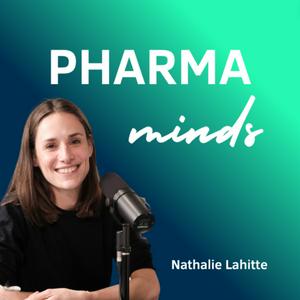
Bienvenue dans Pharma minds, le podcast qui vous emmène dans une aventure captivante à travers la Pharma et la Santé d'aujourd'hui ! Je suis votre hôte, Nathalie Lahitte. Mon objectif ? Découvrir comment des personnalités influentes ont contribué à façonner ce secteur.
À chaque épisode, nous plongeons dans leurs caractéristiques uniques, dévoilant les secrets de leurs parcours exceptionnels et leur rôle dans les grandes transformations de cet écosystème.
Explorez les coulisses de l'évolution de la Pharma et de la Santé à travers des discussions authentiques et percutantes. Ensemble, nous construisons l'avenir de ce secteur fascinant en le rendant plus innovant et inclusif. Rejoignez-nous pour des épisodes inspirants et motivants, et soyez aux premières loges de la Santé de demain.
🎧 Vous êtes nouveau par ici ? Pour comprendre en un clin d'œil le panorama des épisodes, téléchargez « 25 conseils pour un leadership engagé (https://pharma-minds.kit.com/ebookleadership) », un guide inspiré des meilleurs conseils de mes invités.
🤝 Vous voulez me parler ou échanger sur vos enjeux ? Connectons-nous sur LinkedIn (https://www.linkedin.com/in/nathalielahitte/).
📩 Et si vous voulez aller plus loin dans la compréhension des grandes transformations de l’écosystème pharma et santé, abonnez-vous à la newsletter Pharma Minds (https://nathalielahitte.substack.com/).
Hébergé par Ausha. Visitez ausha.co/fr/politique-de-confidentialite pour plus d'informations.
Site web du podcastÉcoutez Pharma Minds, The Elevate House ou d'autres podcasts du monde entier - avec l'app de radio.fr
Obtenez l’app radio.fr gratuite
- Ajout de radios et podcasts en favoris
- Diffusion via Wi-Fi ou Bluetooth
- Carplay & Android Auto compatibles
- Et encore plus de fonctionnalités
Obtenez l’app radio.fr gratuite
- Ajout de radios et podcasts en favoris
- Diffusion via Wi-Fi ou Bluetooth
- Carplay & Android Auto compatibles
- Et encore plus de fonctionnalités

Pharma Minds
Scannez le code,
Téléchargez l’app,
Écoutez.
Téléchargez l’app,
Écoutez.
 France