

Écoutez gratuitement ce podcast dans l'application : Télécharger gratuitement dans l'App Store
radio.fr
Minuteur
Sauvegarde des favoris
159 épisodes
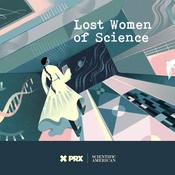
A pioneer behind x-ray crystallography, Isabella Karle
06/08/2026 | 36 minIn high school, Isabella Karle had to take a science class to fulfill a prerequisite. She chose chemistry at random. Karle would go on to become one of the most important chemists of her time, doing groundbreaking research in the field of X-ray crystallography. Her discoveries in the mid 1950s are a key reason many modern-day pharmaceuticals are available on pharmacy shelves. But Karle’s collaborator–her husband, Jerome–would eventually receive the Nobel Prize in Chemistry for work Isabella also achieved.
Learn about your ad choices: dovetail.prx.org/ad-choicesConversations: The Rediscovery of I Who Have Never Known Men
16/07/2026 | 28 minIn this episode of Lost Women of Science Conversations, host Elah Feder explores the remarkable resurgence of I Who Have Never Known Men, Jacqueline Harpman’s 1995 novel that went largely unnoticed for decades before becoming an international sensation. Harpman was a psychoanalyst and her training informed the book’s speculative fiction, dystopian, and science fiction genres.
Elah first speaks with award-winning translator Ros Schwartz, who translated the novel into English twice –once in 1997 and again in 2022, when a new edition helped introduce Harpman’s work to a new generation of readers.
Later, Elah is joined by Susan Watkins, Professor of Women’s Writing at Leeds Beckett University, to discuss the novel’s themes of resilience, isolation, and survival, and why this once-overlooked book is resonating so strongly with readers today.
Learn about your ad choices: dovetail.prx.org/ad-choicesLa mujer que demostró el efecto invernadero
25/06/2026 | 36 minEn 1856, décadas antes de que se acuñara el término “gas de efecto invernadero”, Eunice Newton Foote demostró el efecto invernadero en su laboratorio casero. Colocó un cilindro de vidrio lleno de dióxido de carbono al sol y observó que se calentaba mucho más rápido que un cilindro con aire común. Su conclusión: más dióxido de carbono en la atmósfera da lugar a un planeta más cálido. Años más tarde, un científico británico llamado John Tyndall realizó un experimento mucho más complejo que demostró el mismo efecto y explicó su funcionamiento. Hoy en día, Tyndall es ampliamente reconocido como el hombre que descubrió el efecto invernadero. ¡Incluso hay un cráter en la luna que lleva su nombre! Mientras que Eunice Newton Foote fue olvidada por la historia… hasta que un historiador aficionado redescubrió su legado.
Learn about your ad choices: dovetail.prx.org/ad-choicesBest Of: The Woman Who Demonstrated the Greenhouse Effect
25/06/2026 | 31 minIn 1856, decades before the term “greenhouse gas” was coined, Eunice Newton Foote demonstrated the greenhouse effect in her home laboratory. She placed a glass cylinder full of carbon dioxide in the sun, and found that it heated up much faster than a cylinder of ordinary air. Her conclusion: more carbon dioxide in the atmosphere results in a warmer planet. Several years later, a British scientist named John Tyndall conducted a far more complicated experiment that demonstrated the same effect and revealed how it worked. Today, he’s widely known as the man who discovered the greenhouse gas effect. There’s even a crater on the moon named for him! Eunice Newton Foote, meanwhile, was lost to history—until an amateur historian stumbled on her story.
Learn about your ad choices: dovetail.prx.org/ad-choicesTilly Edinger: The Paleoneurologist Saved By Her Science
11/06/2026 | 31 minHow much can you understand about a brain when that brain is long gone? Tilly Edinger, a Jewish paleontologist, used fossilized skulls to study the evolution of brains. That research allowed her to escape Nazi Germany in 1939, and create a new subdivision of paleontology, paleoneurology.
Learn about your ad choices: dovetail.prx.org/ad-choices
Plus de podcasts Sciences
 Science Infuse - Culture scientifique et curiosités étonnantesSciences, Éducation
 Mystères et étoilesAstronomie, Sciences
 LIMITSciences
 Le temps d'une rencontreArts, Forme et santé, Livres, Santé mentale, Sciences, Sciences sociales
 Les idées largesActualités, Culture et société, Gouvernement, Sciences
 NeurosapiensSciences, Éducation
 BRAINCASTForme et santé, Médecine, Santé mentale, Sciences
 Hidden BrainArts, Arts du spectacle, Sciences, Sciences sociales
 Le Monde d'après par ReporterreNature, Sciences
 Les Aventuriers de la pensée (sciences sociales : sociologie, anthropologie, psychologie, histoire)Culture et société, Sciences, Sciences sociales, Éducation
Podcasts tendance de Sciences
 I.A. Café - Enquête au cœur de la recherche sur l’intelligence artificielleCulture et société, Philosophie, Sciences, Sciences sociales
 Entre mystères & secrets : la fascinante histoire des OVNISCulture et société, Histoire, Sciences
 Dose de psy: le podcastCulture et société, Forme et santé, Santé mentale, Sciences, Sciences sociales
 La charrue avant les boeufs !Sciences
 Short WaveActualités, Science de la vie, Sciences
 From Our Neurons to YoursForme et santé, Santé mentale, Science de la vie, Sciences
 Dans le cielAstronomie, Sciences
 PsychoShotSciences, Sciences sociales
 Choses à Savoir CERVEAUSciences
 Les Pieds dans l'EauNature, Sciences
 Sound By NatureNature, Sciences
 IQ - Wissenschaft und ForschungSciences
 Innovation managériale, regard sur le management de demainBusiness, Gestion, Sciences, Sciences sociales
 NeuroTransmissionSciences
 Stanford Psychology PodcastCulture et société, Sciences, Sciences sociales
 Le podcast du jardinier-maraîcherSciences, Sciences de la Terre
 A la citéSciences, Sciences sociales
 The Joy of WhyScience de la vie, Sciences
 RadiolabCulture et société, Documentaire, Histoire, Sciences, Sciences naturelles
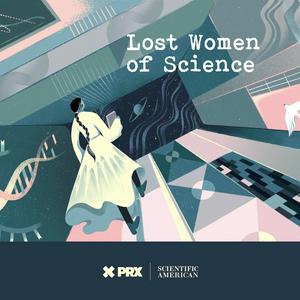
À propos de Lost Women of Science
For every Marie Curie or Rosalind Franklin whose story has been told, hundreds of female scientists remain unknown to the public at large. In this series, we illuminate the lives and work of a diverse array of groundbreaking scientists who, because of time, place and gender, have gone largely unrecognized. Each season we focus on a different scientist, putting her narrative into context, explaining not just the science but also the social and historical conditions in which she lived and worked. We also bring these stories to the present, painting a full picture of how her work endures.
Site web du podcastÉcoutez Lost Women of Science, Science Infuse - Culture scientifique et curiosités étonnantes ou d'autres podcasts du monde entier - avec l'app de radio.fr
Obtenez l’app radio.fr gratuite
- Ajout de radios et podcasts en favoris
- Diffusion via Wi-Fi ou Bluetooth
- Carplay & Android Auto compatibles
- Et encore plus de fonctionnalités
Obtenez l’app radio.fr gratuite
- Ajout de radios et podcasts en favoris
- Diffusion via Wi-Fi ou Bluetooth
- Carplay & Android Auto compatibles
- Et encore plus de fonctionnalités
Lost Women of Science
Scannez le code,
Téléchargez l’app,
Écoutez.
Téléchargez l’app,
Écoutez.
 France