

Écoutez gratuitement ce podcast dans l'application : Télécharger gratuitement dans l'App Store
radio.fr
Minuteur
Sauvegarde des favoris
26 épisodes
Uncovering chemical biodegradation in the environment - Kathrin Fenner, Eawag
02/03/2026 | 1 h 7 minIn this episode I speak with Prof. Kathrin Fenner, one of the leading academic scientists in the study of chemical biodegradation and environmental persistence.
Kathrin and I have a far-reaching conversation covering her background and research interests, challenges and developments in chemical biodegradation research, and implications for policy and society.
We have learned an enormous amount about the fate and persistence of chemicals in recent years, and the work of Kathrin and her group has been at the heart of this.
Listen to the episode to find out about biodegradation of chemicals in different environmental settings, what factors contribute to persistence, understanding transformation products and pathways, predicting biodegradation for different chemicals and scenarios, and how we can utilise this knowledge toward safer and more sustainable use of chemicals.
Works cited:
Innovate beyond PFAS | Science
Designing Small Molecules for Biodegradability | Chemical Reviews
Bridging across OECD 308 and 309 Data in Search of a Robust Biotransformation Indicator | Environmental Science & Technology
Developing a weight-of-evidence methodology for persistence assessment of substances in the environment | IEAM
Breaking it down: Unveiling the roles of chemical structure, concentrations and technology on micropollutant biotransformation in wastewater treatment plants - ScienceDirect
High-Throughput Miniaturized Biotransformation Testing Using Activated Sludge Enables Rapid Chemical Persistence Assessment | Environmental Science & Technology Letters
Read-Across of Biotransformation Potential between Activated Sludge and the Terrestrial Environment: Toward Making It Practical and Plausible | ES&T
Modernizing persistence–bioaccumulation–toxicity (PBT) assessment with high throughput animal-free methods | Archives of Toxicology
Do biotransformation data from laboratory experiments reflect micropollutant degradation in a large river basin? - ScienceDirect
Eawag-Soil in enviPath: a new resource for exploring regulatory pesticide soil biodegradation pathways and half-life data - Environmental Science: Processes & Impacts
FAIR and Effective Communication of Data on Chemical Contaminant Biotransformation in the Environment | ES&T Letters
Confidently Uncertain: Probabilistic Machine Learning to Predict Soil Biotransformation Half-Lives | ES&T
Predicting Micropollutant Removal in Wastewater Treatment Based on Molecular Structure: Benchmark Data and Models | ES&T
Persistence Assessment of Chemicals: Trajectories toward New Approach Methodologies (P-NAMs) | ES&T
Discover enviPath.orgChemicals in our language - Joanna Gavins, University of Sheffield
29/01/2026 | 1 h 5 minIn this episode I speak with Joanna Gavins, who is a professor of English Language and Literature at the University of Sheffield.
Joanna and I discuss the language we use and how this influences the way we think, feel and act in relation to choices we make, the environment, and chemicals.
We start off by discussing the work Joanna has been doing at the Bio-based and Biodegradable Industries Association (BBIA) on how to effectively communicate information about sustainability to consumers. We also delve into our complex relationship with nature, and how this is influenced by language.
Our conversation then moves onto chemicals. We do a deep dive into the language surrounding chemicals in modern discourse, and how this influences public perception and emerging policy. We talk about the issue of chemicals in the environment, how this relates to us, and how we might get better at talking - and thinking - about these issues.
I hope you will find this discussion as fascinating as I did!
Plastic: Unwrapped podcast - Plastic Planet | The University of Sheffield Player
Human/Nature podcast | The University of Sheffield Player
White paper: Growing the UK’s Modern Industrial Bioeconomy
Effective Communication to Advance the Modern Industrial Bioeconomy - report
Just Earth: How a Fairer World Will Save the Planet - Tony Juniper
Vanished: An Unnatural History of Extinction - Sadiah Qureshi
Ecolinguistics: Language, Ecology and the Stories We Live By – Arran StibbeEarly career journeys in academia and beyond - Fola Ogungbemi, Currenta
12/01/2026 | 55 minHappy 2026, and welcome to Chemical Journeys Season 2!
In this episode, I speak with Dr. Fola Ogungbemi, Senior Expert in Product Compliance at Currenta.
Fola and I talk about his career journey so far, from student in ecotoxicology to senior regulatory consultant. We discuss experiences of early career scientists finding their next steps after completing a PhD, adapting to working in different sectors, the importance of staying open for continuous growth and learning, and the value of mentorship and support along the way.
Fola also shares some of his personal experiences of relocating to multiple cities, finding friends and community, and his adventures as a DJ. We talk about Fola's journey with the Society of Environmental Toxicology and Chemistry (SETAC), and that part that the organisation has played in his development. Fola also reflects on his Christian Faith and how this shapes his outlook and approach to life.
Fola Ogungbemi, PhD | LinkedIn
DJ with a PhD (@djfolaflo) • Instagram photos and videos
SETAC Europe 36th Annual MeetingPutting yourself in a regulator's shoes - Watze de Wolf
19/11/2025 | 1 h 22 minIn this episode, I speak with Dr. Watze de Wolf.
Watze has had a long and accomplished career working as a scientist and manager in both industry and regulatory settings, including 15 years working at the European Chemicals Agency (ECHA).
We have a wide-ranging discussion about his experiences and observations of how chemicals management has evolved over recent decades, and attempt to provide a diagnosis for the current situation and outlook for the years ahead.
This includes:
Watze’s background, career journey and people he worked with
The tension between the uncertainty and complexity of science vs the need for clear and predictable regulation
The importance of communication and meeting your audience where they are
Contrasting sensitivities and drivers of behaviour in different industries
The shift away from risk-based approaches, and the rise of persistence
The importance of dialogue and the value of organisations like the Society of Environmental Toxicology and Chemistry (SETAC)
Understanding EU regulations as complex systems
Experiences with REACH dossiers, from both industry and regulator perspectives
What it’s like for early career scientists at ECHA
Discussions and experiences from the ECHA Member State Committee
Thoughts on the Biocidal Products Regulation (BPR)
What a new harmonised classification of ethanol means for its ongoing use as a disinfectant
The essential use concept and how it could re-define chemicals management in Europe
Importance of EU Member State participation, and the impact of Brexit on regulatory discussions
Regrettable restrictions and thoughts on the ongoing group-wide restriction of PFAS
Thoughts on the overall direction of travel, broader technological and societal shifts, and the impact on science
Watze's website: rMSC.fi – rMSC
Member State Committee - ECHA
Trifluoroacetic Acid in the Environment: Consensus, Gaps, and Next Steps | Environmental Toxicology and Chemistry | Oxford Academic
Persistence Science Interest Group Pushes Forward with Global Collaboration and New Initiatives
Literature review on micro‐ and nanoplastic release from food contact materials during their use | EFSA
Reflecting on 40 years of regulatory developments in Europe – Peter Fisk — Embark Chemical Consulting
Visit my website for more content and insights www.embarkchemical.comA tool to improve your regulatory foresight - Steven Brennan, Foresight
27/10/2025 | 55 minIn this episode I speak with Dr. Steven Brennan, co-founder and CEO of Foresight.
Foresight is a software platform that helps organizations to make sense of complex and fast moving chemical regulations, so they can always be ready for what's coming next.
Steven and I have a nice conversation that shows how he turned his years of regulatory experience into a software solution that solves a key challenge - how to get access to key insights faster to understand and manage regulatory change.
Listen to this conversation if you want to get a look into the world of startups and software as a solution (SaaS) from a chemical regulatory point of view. We also talk about aspects of building and growing a business, and some reflections on life as founders and keeping everything in balance.
Our conversation covers:
Steven's background and career journey
The story behind Foresight - identifying an industry need, and developing a solution
Features of Foresight - how the tool delivers advanced regulatory insights
Applications and limitations of AI in chemicals regulation
REACH Article 129 - Member State safeguard clause
What kinds of customers are using Foresight?
What process and considerations go into developing new features?
Building the company - from startup to commercialisation
The customer buyer journey
Steven's work as a co-opted member of the ECHA Socio-Economic Analysis Committee (SEAC)
Steven and Chris swap stories about life as founders
Follow the link to find out more about Foresight and start your free trial: Foresight | The future of chemical policy monitoring
Visit my website for more content and insights www.embarkchemical.com
Plus de podcasts Business
 Le Podcast de Pauline LaigneauBusiness, Carrière, Entreprenariat
 RessentirArts, Business, Carrière, Entreprenariat, Mode et beauté
 The Diary Of A CEO with Steven BartlettBusiness, Culture et société, Éducation
 RichissimeBusiness, Investissement, Éducation
 Investir avec XavierActualité économique, Actualités, Business, Investissement
 OuiHustleBusiness, Entreprenariat
 Génération Do It YourselfBusiness, Développement personnel, Entreprenariat, Technologies, Éducation
 The Elevate HouseBusiness, Développement personnel, Entreprenariat, Éducation
 Femmes d'ActionsBusiness, Investissement
 La MartingaleBusiness, Investissement
Podcasts tendance de Business
 David SenraBusiness
 ExchangesBusiness
 Se Lancer En Bourse - Par Gwenn RohartBusiness, Investissement
 Surfin' BitcoinBusiness, Investissement
 La CourbeBusiness, Investissement, Éducation
 What It's Like To Be... with Dan HeathBusiness, Carrière, Culture et société
 Market MakerActualité : analyses, Actualité économique, Actualités, Business, Investissement
 The Ramsey ShowBusiness, Développement personnel, Investissement, Éducation
 Le BazCast - par BazingaBusiness, Entreprenariat
 développement personnelBusiness, Investissement
 Invest Like the Best with Patrick O'ShaughnessyBusiness, Investissement, Technologies
 M&A ScienceBusiness, Tutoriels, Éducation
 The GaryVee Audio ExperienceBusiness, Marketing
 Les Geeks des ChiffresBusiness, Gestion
 Le Podcast du Marketing - stratégie digitale, marketing digital, CMO, persona, emailing, inbound marketing, webinaire, lead magnet, brandingBusiness, Marketing
 Getting Things DoneActualité économique, Actualités, Business
 La Minute du VCActualité : analyses, Actualités, Business, Investissement
 Les Infaillibles - le podcast des managers qui se racontent avec authenticité pour un management qui allie performance et bienveillanceBusiness, Carrière
 Next WaveBusiness, Entreprenariat
À propos de Chemical Journeys
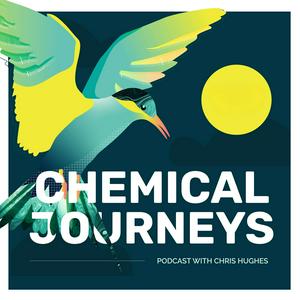
Welcome to Chemical Journeys. Explore the science and story of chemicals in the environment through conversations with people working in this area.
Site web du podcastÉcoutez Chemical Journeys, Le Podcast de Pauline Laigneau ou d'autres podcasts du monde entier - avec l'app de radio.fr
Obtenez l’app radio.fr gratuite
- Ajout de radios et podcasts en favoris
- Diffusion via Wi-Fi ou Bluetooth
- Carplay & Android Auto compatibles
- Et encore plus de fonctionnalités
Obtenez l’app radio.fr gratuite
- Ajout de radios et podcasts en favoris
- Diffusion via Wi-Fi ou Bluetooth
- Carplay & Android Auto compatibles
- Et encore plus de fonctionnalités

Chemical Journeys
Scannez le code,
Téléchargez l’app,
Écoutez.
Téléchargez l’app,
Écoutez.
Chemical Journeys: Podcasts du groupe
 France