

Écoutez gratuitement ce podcast dans l'application : Télécharger gratuitement dans l'App Store
radio.fr
Minuteur
Sauvegarde des favoris
34 épisodes
Xavier Gabaix on The Shape of Big Things
28/09/2026 | 1 h 4 minCities, firms, market crashes and CEO pay all follow the same statistical shape. Xavier Gabaix has spent his career working out why.
He is the Pershing Square Professor of Economics and Finance at Harvard, a mathematician by training from the École Normale Supérieure, and a winner of the Fischer Black Prize.
We talk about what that shared shape means for anyone who treats big companies as a problem to be corrected. We get into how a few very large firms can move a whole national economy, and why the standard objection, that individual shocks cancel out, fails. We finish on the cost of thinking, which he has measured, and what becomes of that cost once the thinking can be handed to a machine.
**
Mentioned in this episode
Xavier Gabaix, “Zipf’s Law for Cities: An Explanation” (QJE, 1999): https://doi.org/10.1162/003355399556133
Xavier Gabaix, “Power Laws in Economics and Finance” (Annual Review of Economics, 2009): https://doi.org/10.1146/annurev.economics.050708.142940
Xavier Gabaix, “Power Laws in Economics: An Introduction” (JEP, 2016): https://doi.org/10.1257/jep.30.1.185
Xavier Gabaix and Augustin Landier, “Why Has CEO Pay Increased So Much?” (QJE, 2008): https://doi.org/10.1162/qjec.2008.123.1.49
Xavier Gabaix, “The Granular Origins of Aggregate Fluctuations” (Econometrica, 2011): https://doi.org/10.3982/ECTA8769
Xavier Gabaix and Ralph Koijen, “Granular Instrumental Variables” (JPE, 2024): https://www.journals.uchicago.edu/doi/10.1086/728743
Xavier Gabaix and Thomas Graeber, “The Complexity of Economic Decisions” (NBER, 2024): https://www.nber.org/papers/w33109
Xavier Gabaix, “A Theory of Complexity Aversion” (working paper, 2025): https://papers.ssrn.com/sol3/papers.cfm?abstract_id=5185671
Xavier Gabaix’s publications: https://xgabaix.scholars.harvard.edu/publications
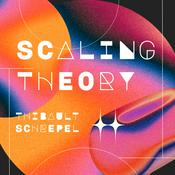
Scaling Theory is a podcast by Thibault Schrepel on the laws that govern how things grow, from companies and cities to AI and law.
Spotify: https://open.spotify.com/show/7o5GqRfTOzyCRABkvs6RpM
Apple Podcasts: https://podcasts.apple.com/us/podcast/scaling-theory/id1736309658John H. Cochrane on Empty Skies
31/08/2026 | 50 minJohn H. Cochrane is the Rose-Marie and Jack Anderson Senior Fellow at the Hoover Institution. He spent thirty years as a professor of finance at the University of Chicago Booth School of Business. He writes The Grumpy Economist (over 34,000 subscribers).
Cochrane is a pilot, and the empty skies are his example of what permission costs when it compounds for fifty years.
We cover three things. Why compound growth dwarfs everything else on the policy agenda and still moves almost no voters. What happens to the scaling of an economy when the default answer is that you must ask permission. And what has become of universities and peer review, where Cochrane says nobody reads the papers and the profession rewards where you published rather than whether you convinced anyone. I hope you enjoy the conversation.
**
Mentioned in this episode
John Cochrane, "Economic Growth" (2016), in John Norton Moore (ed.), The Presidential Debates, Carolina Academic Press, pp. 65-90. A shorter version appeared as "The Election's Most Important Issue": https://www.hoover.org/research/elections-most-important-issue
John Cochrane, "Finance: Function Matters, Not Size," Journal of Economic Perspectives 27(2), 2013: https://www.aeaweb.org/articles?id=10.1257/jep.27.2.29
John Cochrane, "The Rule of Law in the Regulatory State" (2015), prepared for the Hoover Institution Magna Carta conference: https://www.johnhcochrane.com/news-op-eds-all/rule-of-law-regulation
John Cochrane, "Refine," The Grumpy Economist: https://www.grumpy-economist.com/p/refine
John Cochrane, "Writing Tips for PhD Students": https://www.johnhcochrane.com/writing-group
John Cochrane, "Conti on the Future of Universities," The Grumpy Economist: https://www.grumpy-economist.com/p/conti-on-the-future-of-universities
Gregory Conti, "The Rise of the Sectarian University," Compact: https://www.compactmag.com/article/the-rise-of-the-sectarian-university/
The Grumpy Economist, John Cochrane's Substack: https://www.grumpy-economist.com/
Thibault Schrepel, "The Matthew Effect at Scale: Attention Scarcity and the AI Output Explosion," Network Law Review: https://www.networklawreview.org/matthew-effect/
Robert E. Lucas Jr., "Expectations and the Neutrality of Money," Journal of Economic Theory 4(2), 1972, pp. 103-124.Peter Howitt on Creative Destruction in the Age of AI
27/07/2026 | 54 minPeter Howitt won the 2025 Nobel Prize in Economic Sciences. The award was for the theory of sustained growth through creative destruction. He and Philippe Aghion gave that theory a mathematical form in 1992.
Competition and innovation do not move together in a straight line. What decides the direction is where a firm sits relative to the technological frontier. Peter also draws the line between a merger that buys innovation and one that removes it, and he describes the route by which an incumbent turns market power into political power. We then turn to agent-based modeling. He is candid about why a method he still defends took thirty years to find readers.
Follow me on X (https://x.com/profschrepel) and BlueSky (@ProfSchrepel).
***
References:
"A Model of Growth Through Creative Destruction" (with Aghion), Econometrica 60(2), March 1992, 323–351. https://www.jstor.org/stable/2951599.
Endogenous Growth Theory (with Aghion), MIT Press, 1998. https://mitpress.mit.edu/9780262528467/endogenous-growth-theory/
"Competition and Innovation: An Inverted-U Relationship" (with Aghion, Bloom, Blundell, Griffith), Quarterly Journal of Economics 120(2), May 2005, 701–728. https://academic.oup.com/qje/article-abstract/120/2/701/1933966.
"The Effects of Entry on Incumbent Innovation and Productivity" (with Aghion, Blundell, Griffith, Prantl), Review of Economics and Statistics 91(1), February 2009, 20–32. https://direct.mit.edu/rest/article/91/1/20/57753/The-Effects-of-Entry-on-Incumbent-Innovation-and.
"The Emergence of Economic Organization" (with Robert Clower), Journal of Economic Behavior & Organization 41(1), January 2000, 55–84. https://www.sciencedirect.com/science/article/abs/pii/S0167268199000876.
"Banks, Market Organization, and Macroeconomic Performance: An Agent-Based Computational Analysis" (with Ashraf and Gershman), JEBO 135, March 2017, 143–180. DOI 10.1016/j.jebo.2016.12.023.
"How Inflation Affects Macroeconomic Performance: An Agent-Based Computational Investigation" (with Ashraf and Gershman), Macroeconomic Dynamics 20(2), March 2016, 558–581. https://www.cambridge.org/core/journals/macroeconomic-dynamics/article/abs/how-inflation-affects-macroeconomic-performance-an-agentbased-computational-investigation/DC3AF3CA750F82FDE20164B36935FA1F.
"Getting at Systemic Risk via an Agent-Based Model of the Housing Market" (with Geanakoplos, Axtell, Farmer and others), American Economic Review 102(3), May 2012, 53–58. https://www.aeaweb.org/articles?id=10.1257/aer.102.3.53.Steven Pinker on Common Knowledge, From Eye Contact to the Super Bowl
29/06/2026 | 33 minSome things change the world not because they are new, but because everyone learns them at once. That is the difference between mutual knowledge, where each of us knows something, and common knowledge, where each of us knows that the other knows, without end. It is the hidden machinery behind money, language, authority, and revolution.
Steven Pinker, professor of psychology at Harvard, joins Scaling Theory to discuss his latest book, “When Everyone Knows That Everyone Knows.” We move from a folk tale to game theory, from the evolution of altruism to the future of artificial agents. I read the book as a theory of scaling. A single mind can hold only a few layers of who knows what about whom, yet we coordinate in the millions. How we bridge that gap, and what happens to it in an age of fragmented media and machines that can model one another, is what I wanted to understand.#30 – Matthew O. Jackson on How Networks Quietly Shape What You Believe
06/05/2026 | 47 minWelcome back to Scaling Theory. In this episode, I speak with Matthew O. Jackson, the William D. Eberle Professor of Economics at Stanford University and an external faculty member at the Santa Fe Institute. Matthew is one of the founders of the modern economics of networks and the author of The Human Network and Social and Economic Networks.
We talk about the friendship paradox, why homophily slows how fast a society learns the truth but helps niche ideas catch fire, and the gossip study where villagers in southern India proved remarkably good at naming the most central spreaders in their community. We then turn to AI agents as a different species: Turing tests on LLMs, the steerability of agent personas through system prompts, and what to make of Moltbook, the social network for AI agents.
By the end, you will know why telling students how much their peers actually drink reduces binge drinking more than warning them about the dangers of alcohol, why the same network can spread a virus quickly and a belief slowly, and why AI agents change their behavior when asked to explain it.
Papers and works referenced in the conversation
Books
The Human Network: How Your Social Position Determines Your Power, Beliefs, and Behaviors — Matthew O. Jackson (Pantheon, 2019). https://web.stanford.edu/~jacksonm/books.html
Social and Economic Networks — Matthew O. Jackson (Princeton University Press, 2008). https://web.stanford.edu/~jacksonm/books.html
Part I — The scaling of human networks
"Diffusion and Contagion in Networks with Heterogeneous Agents and Homophily" — Matthew O. Jackson and Dunia López-Pintado, Network Science 1(1), 2013. https://arxiv.org/abs/1111.0073
"How Homophily Affects the Speed of Learning and Best-Response Dynamics" — Benjamin Golub and Matthew O. Jackson, Quarterly Journal of Economics 127(3), 2012. https://web.stanford.edu/~jacksonm/homophily.pdf
"Using Gossips to Spread Information: Theory and Evidence from Two Randomized Controlled Trials" — Abhijit Banerjee, Arun G. Chandrasekhar, Esther Duflo, and Matthew O. Jackson, Review of Economic Studies 86(6), 2019. https://academic.oup.com/restud/article/86/6/2453/5345571
"Empathy and Well-Being Correlate with Centrality in Different Social Networks" — Sylvia A. Morelli, Desmond C. Ong, Rucha Makati, Matthew O. Jackson, and Jamil Zaki, PNAS 114(37), 2017. https://www.pnas.org/doi/10.1073/pnas.1702155114
Part II — The scaling of AI agents
"Inequality's Economic and Social Roots: The Role of Social Networks and Homophily" — Matthew O. Jackson, in Advances in Economics and Econometrics: Twelfth World Congress of the Econometric Society (Cambridge University Press, 2025). https://arxiv.org/abs/2506.13016
"AI Behavioral Science" — Jackson, Mei, Wang, Xie, Yuan, Benzell, Brynjolfsson, Camerer, Evans, Jabarian, Kleinberg, Meng, Mullainathan, Ozdaglar, Pfeiffer, Tennenholtz, Willer, Yang, and Ye, arXiv 2509.13323, 2025. https://arxiv.org/abs/2509.13323
"A Turing Test of Whether AI Chatbots Are Behaviorally Similar to Humans" — Qiaozhu Mei, Yutong Xie, Walter Yuan, and Matthew O. Jackson, PNAS 121(9), 2024. https://www.pnas.org/doi/10.1073/pnas.2313925121
Plus de podcasts Sciences








Podcasts tendance de Sciences




















À propos de Scaling Theory
Scaling Theory is a podcast dedicated to the power laws behind the growth of companies, technologies, legal and living systems. The host, Dr. Thibault Schrepel, has a PhD in antitrust law and looks at the regulation of digital ecosystems through the lens of complexity theory. The podcast is hosted by the Network Law Review. It features scholarly discussions with select guests and deep dives into the academic literature.
Site web du podcastÉcoutez Scaling Theory, Les idées larges ou d'autres podcasts du monde entier - avec l'app de radio.fr

Obtenez l’app radio.fr gratuite
- Ajout de radios et podcasts en favoris
- Diffusion via Wi-Fi ou Bluetooth
- Carplay & Android Auto compatibles
- Et encore plus de fonctionnalités
Obtenez l’app radio.fr gratuite
- Ajout de radios et podcasts en favoris
- Diffusion via Wi-Fi ou Bluetooth
- Carplay & Android Auto compatibles
- Et encore plus de fonctionnalités

Scaling Theory
Scannez le code,
Téléchargez l’app,
Écoutez.
Téléchargez l’app,
Écoutez.
Scaling Theory: Podcasts du groupe
 France
