

Écoutez gratuitement ce podcast dans l'application :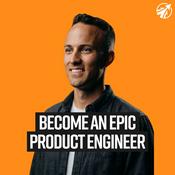 Télécharger gratuitement dans l'App Store
radio.fr
Minuteur
Sauvegarde des favoris
27 épisodes
Use the product yourself - empathy, architecture, and PM partnership with Rita Kozlov
16/09/2026 | 39 minIf you ship a feature and never click through it yourself, this episode is for you. Kent talks with Rita Kozlov, VP of Product for Cloudflare's developer platform, about the line between product managers and product engineers, why ownership still matters when prototypes look real, and how far upstream an engineer should insert themselves.
They cover holding the pager vs throwing away a prototype, sitting in customer calls until someone will not click the button, primitives vs paved paths, and what to do when your PM is running a feature factory.
(00:00) - Meet Rita Kozlov
(01:36) - Engineering taste in a PM role
(04:05) - Where PM and product engineer blur
(07:53) - You are not holding the pager
(09:48) - What AI changed on both sides
(13:40) - Sit in the user's seat
(17:04) - The art of the possible
(18:53) - Trade-offs and why not both
(23:22) - Primitives vs paved cow paths
(26:43) - Insert yourself upstream
(29:40) - When the PM is a feature factory
(33:17) - Deep-stack work still reaches users
(37:58) - Homework: go use the product
Rita Kozlov is VP of Product for Cloudflare's developer platform - Workers, KV, Pages, and the rest of the stack Kent uses constantly. She started as a software engineer, and that background shows up in the details: taste for developer experience, intuition for patterns that do not sit right, and a refusal to treat implementation as someone else's problem.
A major theme is how AI blurred the PM and engineer line. Prototypes are worth a million words, and they create a temptation to ship the facade. Rita's reminder to her product team: you are not the one holding the pager. Accountability is not about having someone to call at 2 a.m. It is about living with the code for the next two years. Product engineers close that gap by translating implementation trade-offs, filling the holes a PRD will never list, and sitting in the user's seat - including the customer call where nobody clicks the button.
They also get into Cloudflare-shaped product judgment: most doors swing both ways if you wait; early customers are worth delaying a launch for; primitives can serve many jobs, and sometimes you still pave a cow path. Rita wants PMs to define the problem, not the solution. Engineers should get closer to customers, challenge a feature-factory PM with why, and remember that even work deep in the stack - cache, TTL, the interface between systems - is user experience.
Homework is basic on purpose: go use the product, including the feature you just shipped, and push it before you throw it over the fence.
Homework
Use the product you work on this week - not as a demo path, as a real user.
After you ship a feature, try it in the different modalities and push the limits before you hand it off.
Write down what you found that you would have missed from the ticket alone.
Resources
Rita Kozlov
Rita on X
Rita on Bluesky
Rita on GitHub
Rita on LinkedIn
Cloudflare Workers
Cloudflare
Guest: Rita Kozlov
Company: Cloudflare
GitHub: @rita3ko
𝕏: @ritakozlov_
Host: Kent C. Dodds
Website: kentcdodds.com
𝕏: @kentcdodds
GitHub: @kentcdodds
YouTube: kentcdodds-plus
Podcast: epicproduct.engineer
See on Epic Product EngineerAsk why in every PR - product engineering with Erin Fox
09/09/2026 | 40 minIf you are merging beautiful AI PRs without being able to say why the change exists, this episode is for you. Kent talks with Erin Fox about treating every feature like a new product, asking why before you write code, and rebuilding the trust contract that agents quietly broke.
They cover circling back to metrics, using community Slack as a feedback loop, telling a stakeholder story that is not just a migration estimate, and going slower with agents so they do not rewrite your patterns.
(00:00) - Meet Erin Fox
(01:40) - A new feature is a new product
(05:03) - Finding the why before you build
(07:36) - AI PRs broke the trust contract
(10:57) - Metrics, research, and circling back
(14:25) - Community Slack as a feedback loop
(16:17) - Tell the story stakeholders can hear
(20:49) - Communications skills as an engineering edge
(24:12) - Ask your boss their goals
(27:22) - Go slower with your agents
(37:50) - Homework: ask why on every PR
Erin Fox is a full-stack engineer who has shipped a React Native MLS soccer app, creator-focused email tools, and plenty of features that felt like launching a product each time. In this conversation, she and Kent dig into what that framing changes: you do not just implement a ticket. You figure out the date, the why, and whether the real fix is a new feature or a two-hour margin change.
A major theme is trust. Erin used to assume a teammate's PR already had the why baked in. AI-generated PRs look great and pass tests, but the why is often missing. Her red flag is simple: if you cannot explain why this change is needed, do not treat passing tests as permission. That same question belongs in the PR template, in stakeholder conversations, and in how you brief an agent - because "fix this bug" will happily change a million things.
They also get practical about feedback loops. Look at the metrics you instrumented. Lurk in community Slack, including accessibility channels, until user pain is not abstract. Then tell the story in language stakeholders care about: not "this migration takes a quarter," but what it unlocks. Erin's communications master's degree shows up here. She asks her manager what their goals are this quarter and treats that as the job.
Homework is small on purpose: on every PR you open or review, write why this change matters.
Homework
On the next PR you open, add a Why section that a teammate could understand without the ticket.
On the next PR you review, ask why this change is needed - especially if it looks AI-generated.
If you cannot answer why, stop and find out before you merge.
Resources
Erin Fox on X
Erin on Bluesky
Erin on GitHub
Erin on LinkedIn
Kit
Guest: Erin Fox
GitHub: @erinfox
𝕏: @erinfoox
Host: Kent C. Dodds
Website: kentcdodds.com
𝕏: @kentcdodds
GitHub: @kentcdodds
YouTube: kentcdodds-plus
Podcast: epicproduct.engineer
See on Epic Product EngineerAI is a tool, not a silver bullet - product discovery with Peppe Silletti
02/09/2026 | 42 minIf shipping got cheap and you are still not sure you are building the right thing, this episode is for you. Kent talks with Peppe Silletti, independent product engineer and host of The Product Engineers Podcast, about why customer discovery still comes first when AI can write the code in a day.
They cover startup vs scale-up trade-offs, raising the MVP baseline without adding noise, how PostHog treats product engineers vs product managers, and the durable skills that stay valuable when agents take more of the implementation.
(00:00) - Meet Peppe Silletti
(01:13) - Startup exploration vs scale-up bottlenecks
(04:04) - Trade-offs before you paint yourself into a corner
(06:07) - AI raises the MVP baseline
(09:47) - Do not add so much that the data gets noisy
(11:13) - AI is a tool, not a silver bullet
(13:47) - Product engineers are not just managers
(16:06) - How you know you built too much
(18:49) - Prioritizing after product-market fit
(24:30) - PM as compass, engineer as slice owner
(27:08) - What Peppe learned hosting a podcast
(29:25) - Durable skills as agents take the code
(33:06) - Product engineering for backend engineers
(38:26) - Homework: ally with your PM
Peppe Silletti is an independent product engineer and host of The Product Engineers Podcast. In this conversation, he and Kent dig into what changes when you move from a startup hunting for product-market fit to a scale-up fixing bottlenecks - and what AI does and does not change about that work.
A major theme is that writing code got cheap, so the old lean-startup constraint loosened. You can ship more than a classic MVP, then sculpt features away like Instagram dropping everything but photos. The risk did not go away. It got worse. You can feel productive while running in the wrong direction, because AI will happily agree with you. Discovery, customer interviews, and a tight feedback loop still decide whether you are learning or just shipping.
They also unpack the product manager vs product engineer split. Peppe points to PostHog: product engineers owned decisions for years before a PM showed up to hold the bigger picture. His model is a PM as compass, a product engineer owning one outcome end to end. For listeners who still take tickets over the wall, the durable skills are framing the problem, interviewing without jumping to solutions, and treating UX as more than pixels - including APIs and neighboring layers of the system.
Peppe's homework is deliberately social: shadow customer interviews, watch session replays with your team, and get into discovery before the roadmap is locked.
Homework
Ask your PM if you can shadow customer interviews and listen for how people describe the pain.
Set a weekly half hour to watch session replays with your team and name the friction you see.
Once those two are happening, ask to join discovery earlier - when requirements and the roadmap are still being shaped.
Resources
Peppe Silletti
The Product Engineers Podcast
Peppe on LinkedIn
Peppe on GitHub
The Product Engineers Podcast on YouTube
Product management is broken. Engineers can fix it - PostHog
Continuous Discovery Habits by Teresa Torres
Laws of UX by Jon Yablonski
Guest: Peppe Silletti
Company: The Product Engineers Podcast
GitHub: @peppesilletti
𝕏: @peppesilletti
Host: Kent C. Dodds
Website: kentcdodds.com
𝕏: @kentcdodds
GitHub: @kentcdodds
YouTube: kentcdodds-plus
Podcast: epicproduct.engineer
See on Epic Product EngineerCuriosity, micro-sales, and AI as a supplement with Shaundai Person
19/08/2026 | 46 minIf you walk into cross-team asks with a prescription instead of curiosity, this episode is for you. Kent talks with Shaundai Person about privacy UX at Netflix, the micro-sales skills she brought from a decade in sales, and why AI should accelerate good engineering judgment instead of replacing it.
They cover putting yourself in the user's seat before you push back, selling the conversation instead of the ticket, what happens when agents fill a repo with band-aids, and homework that gets you out of your usual domain: try a CSS animation course without AI.
(00:00) - Meet Shaundai Person
(00:51) - Privacy and consent at Netflix
(04:30) - What privacy engineering actually involves
(08:38) - Push back with user scenarios
(11:10) - UX so intuitive a toddler can use it
(13:43) - Working through technical constraints
(18:45) - Micro-sales from a sales career
(22:32) - Curiosity is not manipulation
(25:47) - AI's impact on software engineering
(29:42) - Agent band-aids and architecture gaps
(35:40) - New criteria for senior engineers
(37:35) - AI accelerates bad practices too
(40:51) - AI as a supplement, not a replacement
(45:09) - Homework: try animations without AI
Shaundai Person is a senior software engineer at Netflix working full stack on privacy and consent for Netflix.com. In this conversation, she and Kent dig into what product engineering looks like when the work is mostly invisible when you do it right - and when your job is piping the right experience to the right person under different laws, profiles, and countries.
A major theme is how she communicates across teams. After more than a decade in sales before engineering, Shaundai treats collaboration as a series of micro-sales: get someone into the conversation, then into a small piece of work, then into teaching you how they solved it. She argues smart people do not want prescriptions. They want curiosity, a clear goal, a map of where they fit, and an invitation to dissent.
They also talk about AI's impact on software engineering. Shaundai sees AI elevating more engineers toward architecture and product thinking, while warning that unchecked agents create pattern-free codebases full of band-aids. Her take: humans stay in the loop because software is for humans, and AI is a supplement - not a replacement. Her homework is specific: try Josh Comeau's Whimsical Animations (or its CSS-based starter path) and do the first stretch without AI.
Homework
Start Josh Comeau's Whimsical Animations (or the free CSS-based starter path).
Do the first stretch without AI - refresh your own problem-solving muscle.
Notice how far you get on your own, then decide where a tool would actually help.
Resources
Shaundai Person
Shaundai on Bluesky
Shaundai on X
Shaundai on GitHub
Shaundai on LinkedIn
TypeScript for JavaScript Developers
Whimsical Animations by Josh Comeau
Netflix
Guest: Shaundai Person
Company: Netflix
GitHub: @shaundai
𝕏: @shaundai
Host: Kent C. Dodds
Website: kentcdodds.com
𝕏: @kentcdodds
GitHub: @kentcdodds
YouTube: kentcdodds-plus
Podcast: epicproduct.engineer
See on Epic Product EngineerTalk to users, ship live demos, and build durable products with Michael Grinich
12/08/2026 | 47 minIf you are building something people want but still cannot grow it, this episode is for you. Kent talks with Michael Grinich, founder of WorkOS, about cold-emailing product managers, closing the feedback loop with real users, and why live demos beat polished decks.
They cover the missing step after "make something people want," how durable problem spaces survive market shifts (including auth for agents), and why storytelling is part of the product.
(00:00) - Meet Michael Grinich
(02:00) - Choosing the enterprise-ready niche
(04:31) - Building for problems that are not yours
(06:34) - Cold-emailing PMs who already shipped enterprise
(10:44) - Questions that get past compliments
(12:52) - Patience and durable problem spaces
(15:57) - Beyond make something people want
(20:25) - Auth for agents and MCP
(23:57) - Talk to users, not just customers
(28:42) - Live demos as tech marketing
(31:39) - Test your story like Comedy Cellar material
(39:10) - Monkey see, monkey do and Julia Child
(43:03) - Homework: build GPT from scratch
(46:10) - Where to follow Michael
Michael Grinich founded WorkOS to help software companies become enterprise-ready - SSO, directory sync, permissions, audit logging, and the rest of the stack that unlocks bigger customers. In this conversation, he and Kent dig into how that idea came from lived pain at a previous startup, and how he validated the market by cold-emailing and meeting PMs at companies like Dropbox, Slack, Asana, and Airtable.
A major theme is that "make something people want" is incomplete. Michael argues you also need an economic engine: who pays, why they pay continuously, and how the business model stays in harmony with the product. He ties that to picking durable problem spaces - WorkOS started in classic B2B auth, and the same foundation now matters even more for agents, MCP, and agent registration via auth.md.
They also get practical about product discovery. Talk to users, not only customers and dollar signs. Use live demos as the pinnacle of tech marketing. Treat small meetups like a Comedy Cellar set where you test material before the big stage. And when you show people how something works, you put yourself on the same side of the table - the Julia Child model of teaching by doing.
Michael's homework is concrete: spend an afternoon with Andrej Karpathy's "Let's build GPT from scratch" video so you understand the underpinnings of the systems you are building on.
Homework
Watch Andrej Karpathy's "Let's build GPT from scratch" video (a few hours, one afternoon is enough).
Hack along enough to rebuild a simple ChatGPT-like interface on top of a transformer you understand.
Notice how that deeper mental model changes how you talk about agents, models, and product bets at work.
Resources
Michael Grinich on X
Michael on GitHub
Michael on LinkedIn
Michael on Bluesky
WorkOS
auth.md
auth.md on GitHub
WorkOS events on Luma
Let's build GPT from scratch (Andrej Karpathy)
The Mom Test
Guest: Michael Grinich
Company: WorkOS
GitHub: @grinich
𝕏: @grinich
Host: Kent C. Dodds
Website: kentcdodds.com
𝕏: @kentcdodds
GitHub: @kentcdodds
YouTube: kentcdodds-plus
Podcast: epicproduct.engineer
See on Epic Product Engineer
Plus de podcasts Business
 Le Podcast de Pauline LaigneauBusiness, Carrière, Entreprenariat
 FinaryBusiness, Investissement
 RessentirArts, Business, Carrière, Entreprenariat, Mode et beauté
 The Elevate HouseBusiness, Développement personnel, Entreprenariat, Éducation
 Investir avec XavierActualité économique, Actualités, Business, Investissement
 La MartingaleBusiness, Investissement
 Les expertsActualité économique, Actualités, Business, Gestion, Investissement
 Génération Do It YourselfBusiness, Développement personnel, Entreprenariat, Technologies, Éducation
 RichissimeBusiness, Investissement, Éducation
 Good Morning BusinessActualité économique, Actualités, Business, Gestion, Investissement
Podcasts tendance de Business
 声动早咖啡Business, Entreprenariat, Investissement, Technologies
 The Real Eisman PlaybookBusiness, Investissement
 Christèle AlbaretBusiness
 The Master Investor Podcast with Wilfred FrostBusiness, Investissement
 Discussions d'IngénieursBusiness, Carrière
 Strong Girl BossBusiness, Entreprenariat
 Le monde qui bougeBusiness
 Prof G MarketsBusiness, Investissement
 MouvcastBusiness, Entreprenariat
 Les Investisseurs Sereins - Investissement Immobilier RentableBusiness, Développement personnel, Investissement, Éducation
 David SenraBusiness
 Animal Spirits PodcastActualité économique, Actualités, Business, Investissement
 World Business ReportActualité économique, Actualités, Business
 The Story of MoneyActualité économique, Actualités, Business, Culture et société, Histoire
 Dans la tête d'un CEO par Yacine SqalliBusiness, Entreprenariat
 Le Super DailyActualités, Actualités Tech, Business, Marketing, Technologies
 Réussir Son ManagementBusiness, Carrière, Développement personnel, Gestion, Éducation
 Story TravauxBusiness, Investissement, Loisirs, Maison et jardin
 Build with Leila HormoziBusiness, Entreprenariat, Gestion, Tutoriels, Éducation
À propos de Become an Epic Product Engineer
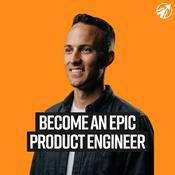
Become an Epic Product Engineer is Kent C. Dodds's interview podcast about skills that stay valuable as AI takes on more implementation: product engineering - blending technical depth with product judgment, user empathy, and problem clarity.
Each episode is a long-form conversation with a guest who has shipped real software and cares about building the right thing before making it right. You get full audio, transcripts, structured show notes, homework (one concrete action to try), and links from the conversation.
Canonical home for the show and every episode page: https://www.epicproduct.engineer/become-an-epic-product-engineer-podcast
New episodes publish on Wednesdays (America/Denver). Video is added on Transistor for supported podcast apps when available.
Complements Better with Kent - Kent's solo series on durable skills for people who ship software.
Site web du podcastÉcoutez Become an Epic Product Engineer, Le Podcast de Pauline Laigneau ou d'autres podcasts du monde entier - avec l'app de radio.fr
Obtenez l’app radio.fr gratuite
- Ajout de radios et podcasts en favoris
- Diffusion via Wi-Fi ou Bluetooth
- Carplay & Android Auto compatibles
- Et encore plus de fonctionnalités
Obtenez l’app radio.fr gratuite
- Ajout de radios et podcasts en favoris
- Diffusion via Wi-Fi ou Bluetooth
- Carplay & Android Auto compatibles
- Et encore plus de fonctionnalités
Become an Epic Product Engineer
Scannez le code,
Téléchargez l’app,
Écoutez.
Téléchargez l’app,
Écoutez.
Become an Epic Product Engineer: Podcasts du groupe
 France