PodcastsSciencesThe Moos Room™

The Moos Room™

University of Minnesota Extension
The Moos Room™
Dernier épisode

354 épisodes

  • The Moos Room™

    Episode 352 - Somatic Cell Count Genetics and Heifer Feed Efficiency - UMN Extension's The Moos Rom

    22/06/2026 | 17 min
    Brad shares two studies He presented at the American Dairy Science Association annual meeting. First, he examines records from more than 150,000 lactations to compare genetic predictions for somatic cell score and clinical mastitis. The results suggest that PTA for somatic cell score is more useful for predicting and ranking cows by observed somatic cell count than PTA for mastitis.
    He also discusses a study comparing Holstein and crossbred heifers for feed intake, methane emissions, rumination, and feeding behavior. Although methane produced per kilogram of feed was similar across breed groups, smaller crossbred heifers consumed four to five pounds less dry matter per day. The findings highlight how genetics, breed, sensors, and precision feeding data could help producers improve herd health and heifer management.

    Questions, comments, scathing rebuttals? -> themoosroom@umn.edu or call 612-624-3610 and leave us a message!
    Linkedin -> The Moos Room
    Twitter -> @UMNmoosroom and @UMNFarmSafety
    Facebook -> @UMNDairy
    YouTube -> UMN Beef and Dairy and UMN Farm Safety and Health
    Instagram -> @UMNWCROCDairy
    Extension Website
    AgriAmerica Podcast Directory
  • The Moos Room™

    Episode 351 - High Oleic Soybeans: A New Tool for Dairy Rations? - UMN Extension's The Moos Room

    15/06/2026 | 17 min
    Brad discusses what he learned about high oleic soybeans at the Four State Dairy Management and Nutrition Conference in La Crosse, Wisconsin. High oleic soybeans are gaining attention in dairy nutrition because they can provide both rumen undegradable protein and a more rumen-friendly fat source, potentially reducing the need for purchased protein and fat supplements.
    The episode covers how high oleic beans differ from conventional soybeans, why roasting quality matters, and how measures like protein dispersibility index help determine whether beans are under- or over-processed. Brad also reviews feeding rates, farm case studies showing milk fat and energy-corrected milk responses, possible cost savings, and the pros and cons of adopting high oleic beans on dairy farms.
    Overall, high oleic soybeans are not a silver bullet, but they may offer dairy producers another tool for improving ration economics, milk components, and on-farm feed production when managed carefully.

    Questions, comments, scathing rebuttals? -> themoosroom@umn.edu or call 612-624-3610 and leave us a message!
    Linkedin -> The Moos Room
    Twitter -> @UMNmoosroom and @UMNFarmSafety
    Facebook -> @UMNDairy
    YouTube -> UMN Beef and Dairy and UMN Farm Safety and Health
    Instagram -> @UMNWCROCDairy
    Extension Website
    AgriAmerica Podcast Directory
  • The Moos Room™

    Episode 350 - New World Screwworm Returns to the U.S.: What Farmers Need to Know - UMN Extension's The Moos Room

    08/06/2026 | 14 min
    A case of New World screwworm was recently identified in a three-month-old calf in Zavala County, Texas, near the Texas-Mexico border. In this episode, Brad breaks down what New World screwworm is, why it matters to livestock producers, and what signs to watch for in cattle and other animals. He explains how the larvae infest live tissue, how the pest spreads, and why early detection, reporting, quarantine, and treatment are key to preventing further spread.
    The episode also clears up common myths, including whether screwworm spreads animal-to-animal or person-to-person, whether whole herds must be culled, and whether recovered animals can enter the food supply. Brad also discusses past eradication efforts using sterile flies, current treatment options, and the importance of producer awareness, especially for those in areas at higher risk. 
    Questions, comments, scathing rebuttals? -> themoosroom@umn.edu or call 612-624-3610 and leave us a message!
    Linkedin -> The Moos Room
    Twitter -> @UMNmoosroom and @UMNFarmSafety
    Facebook -> @UMNDairy
    YouTube -> UMN Beef and Dairy and UMN Farm Safety and Health
    Instagram -> @UMNWCROCDairy
    Extension Website
    AgriAmerica Podcast Directory

  • The Moos Room™

    Episode 349 - Can Pasture-Raised Heifers Outperform Confinement Heifers? - UMN Extension's The Moos Room

    01/06/2026 | 17 min
    Brad discusses new research comparing dairy heifers raised on pasture versus in confinement, focusing on studies from Wisconsin and Minnesota. Both studies found that pasture-raised heifers were slightly lighter and gained less before calving, but they reached calving at a similar age and showed advantages after freshening. Pasture-raised animals had higher dry matter intake, fewer health issues in the Minnesota study, and stronger first-lactation milk production, especially under rotational grazing systems.
    Brad also highlights the economic upside: pasture systems reduced heifer feed costs and, in the Wisconsin study, improved income over feed cost during lactation. The episode makes the case that raising dairy heifers on pasture can be a practical strategy to lower rearing costs without sacrificing, and potentially improving, future milk production.
     
    Questions, comments, scathing rebuttals? -> themoosroom@umn.edu or call 612-624-3610 and leave us a message!
    Linkedin -> The Moos Room
    Twitter -> @UMNmoosroom and @UMNFarmSafety
    Facebook -> @UMNDairy
    YouTube -> UMN Beef and Dairy and UMN Farm Safety and Health
    Instagram -> @UMNWCROCDairy
    Extension Website
    AgriAmerica Podcast Directory

  • The Moos Room™

    Episode 348 - Holstein Classification and Crossbreeding Lessons from Minnesota Dairy Research - UMN Extension's The Moos Room

    25/05/2026 | 24 min
    Brad shares updates from the University of Minnesota Morris dairy herd, including cows heading out to spring pasture, a recent Holstein classification, and highlights from several high-scoring cows. He then revisits University of Minnesota crossbreeding research comparing Holsteins with Viking Red and Montbéliarde crosses. The results show that crossbred cows often had better fertility, lower health treatment costs, improved survival to later lactations, and higher daily profitability, even when milk volume was sometimes lower than Holsteins. Brad also connects these findings to current beef-on-dairy calf research showing health advantages from crossbreeding, especially fewer scours and digestive problems.
    Questions, comments, scathing rebuttals? -> themoosroom@umn.edu or call 612-624-3610 and leave us a message!
    Linkedin -> The Moos Room
    Twitter -> @UMNmoosroom and @UMNFarmSafety
    Facebook -> @UMNDairy
    YouTube -> UMN Beef and Dairy and UMN Farm Safety and Health
    Instagram -> @UMNWCROCDairy
    Extension Website
    AgriAmerica Podcast Directory

Plus de podcasts Sciences
À propos de The Moos Room™
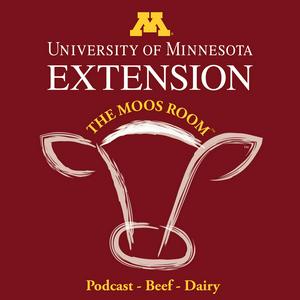
Hosted by members of the University of Minnesota Extension Beef and Dairy Teams, The Moos Room discusses relevant topics to help beef and dairy producers be more successful. The information is evidence-based and presented as an informal conversation between the hosts and guests.

Site web du podcast

Écoutez The Moos Room™, La vie partout ou d'autres podcasts du monde entier - avec l'app de radio.fr

Obtenez l’app radio.fr
 gratuite

  • Ajout de radios et podcasts en favoris
  • Diffusion via Wi-Fi ou Bluetooth
  • Carplay & Android Auto compatibles
  • Et encore plus de fonctionnalités
The Moos Room™: Podcasts du groupe
Applications
Réseaux sociaux
v8.10.5| © 2007-2026 radio.de GmbH
Generated: 6/28/2026 - 12:31:54 PM