Écoutez gratuitement ce podcast dans l'application : Télécharger gratuitement dans l'App Store
radio.fr
Minuteur
Sauvegarde des favoris
416 épisodes
AI Isn’t Moving Too Fast. It’s Too Noisy - Nikolas Badminton
19/10/2026 | 55 min🤖 Why AI Transformation Needs Intentionality, Not More Technology
AI transformation is not about putting AI everywhere. Futurist Nikolas Badminton argues that successful organizations are becoming much more intentional about where AI creates value and where humans remain essential.
In this episode of Beginner’s Guide to AI, Dietmar Fischer speaks with Nikolas Badminton, Chief Futurist and Hope Engineer at Futurist.com, about moving beyond AI hype and building organizations that can actually handle technological change.
Nikolas argues that the world is not simply changing faster. It is getting noisier.
Behind the endless stream of AI models, agents and automation promises are the same difficult questions companies have faced for decades: people, processes, governance, data, culture and leadership.
So what changes when AI enters the picture?
We explore why going all in on AI can make employees work harder instead of less, why intentionality is becoming central to AI strategy, and why successful AI adoption is fundamentally a transformation project.
We also go beyond AI.
Nikolas introduces the idea behind his new book, The Hope Engineer’s Playbook: hope can become a practical energy for organizational change when leaders combine vision with pathways, agency and wisdom.
We discuss futures thinking, employee empowerment, sustainability, open-source AI, AI sovereignty and even science fiction as a serious strategic tool.
🎧 In this episode:
• Why AI feels faster and more chaotic than it really is
• Why leaders should stop trying to use AI everywhere
• The hidden organizational work behind AI transformation
• Why AI can increase employee workload
• Hope as an energy for change
• Why agency matters inside organizations
• Open-source AI and enterprise AI sovereignty
• Why sustainability and futures thinking belong in business strategy
• How science fiction helps executives experience possible futures
• Whether AI leads us toward Terminator, Matrix or something completely different
Get the Newsletter!
📧💌📧
Tune in to get my thoughts and all episodes. Don't forget to subscribe to our Newsletter:
https://beginnersguideto.ai
📧💌📧
🎙️ About Dietmar Fischer
Dietmar Fischer is a podcaster and AI marketer from Berlin.
If you want help with AI strategy or digital marketing, visit:
https://argoberlin.com
💬 Quotes from the Episode
“The world is changing faster than ever before. I actually think it's noisier than ever before.”“It's a transformation project. There's still people and processes and governance, there's data, and that's messy.”“I get hired for the things I used to get fired for.”
⏱️ Chapters
00:00 Meet Futurist and Hope Engineer Nikolas Badminton
01:26 Why AI Feels Faster Than It Really Is
04:33 From AI Hype to Intentional Transformation
09:16 Why Hope Is a Serious Leadership Tool
17:16 Futures Thinking and the Courage to Think Differently
25:10 How to Become a Hope Engineer
29:22 AI Sovereignty and the Case for Open Source
32:47 Sustainability, Science Fiction and Better Futures
42:11 Will AI Create Terminator or Matrix?
45:26 The Hope Engineer’s Playbook
🔗 Where to Find Nikolas Badminton
🌐 Website: futurist.com
💼 LinkedIn: linkedin.com/in/futuristnikolasbadminton
📕 The Hope Engineer’s Playbook: How Leaders Build Vision, Pathways, and Energy for Better Futures: https://futurist.com/hope-engineers-playbook/
Hosted on Acast. See acast.com/privacy for more information.AI Is Now the Business Standard. Are You Falling Behind? - DIETMARs OPINION
17/10/2026 | 9 min🤖 AI has moved beyond technical teams and innovation labs. At Berlin’s BIG BANG KI Festival, Dietmar Fischer found packed stages, long queues, and business professionals searching for practical ways to implement artificial intelligence.
In this solo episode of Beginner’s Guide to AI, Dietmar shares what he observed at the festival and what it tells us about AI adoption in the wider business world.
The dominant questions were practical. How can a company integrate AI into its CRM? How can it build useful AI agents? How can it turn individual tools into repeatable workflows? The audience was not limited to developers or AI specialists. It looked like the audience at any large business conference.
That shift matters. AI is no longer an unusual competitive advantage. It is becoming part of the expected business standard.
The festival also exposed the continuing gap between AI marketing and AI implementation. Many exhibitors used impressive language without clearly explaining what their products did. Interest in AI is high, but clear business value is still difficult to identify.
Dietmar also visits the robot arena, where humanoid machines dance and fight. The demonstration leads to a more serious question about how physical robots could change private security and other real-world services.
💡 In this episode:
What the BIG BANG KI Festival reveals about AI adoption
Why AI has entered mainstream business
What business professionals want from AI agents
Why CRM integration and AI workflows are becoming important
The gap between AI buzzwords and practical business value
What humanoid robots could mean for security
Why occasional AI use is no longer enough
How companies can move from AI tools to systematic implementation
The message is simple: companies must do more than use AI. They must learn to systematize it, connect it to real processes, and make it productive.
📧💌📧
Tune in to get my thoughts and all episodes, and don’t forget to subscribe to our newsletter: beginnersguideto.ai
📧💌📧
Quotes from the Episode
“AI arrived in the business world, definitely arrived.”“It makes AI a standard. And if you don’t follow the standard, you are below standard and you fall behind.”“It’s not just using AI. You have to get to the next level to systematize AI, to use it to really be productive, to use agents and all those things.”
Chapters
00:00 How Mainstream Business Sees AI
01:26 Inside the BIG BANG KI Festival
02:23 Packed Stages and Practical AI
04:43 Agents, Acceptance and AI Buzzwords
05:47 Robot Boxing and the Future of Security
07:28 AI Is Now the Business Standard
About Dietmar Fischer
Dietmar is a podcaster and digital marketer from Argo.berlin. If you want to get your AI or digital marketing going, contact him at argoberlin.com.
Hosted on Acast. See acast.com/privacy for more information.Stop Doing the Work. Start Directing the AI - Solomon Thimothy
13/10/2026 | 56 min🤖 AI fluency is becoming a core business skill. But being AI fluent means much more than knowing how to prompt ChatGPT.
In this episode of Beginner's Guide to AI, Dietmar Fischer talks with entrepreneur and growth marketer Solomon Thimothy about the transition from using AI as a chatbot to using AI as part of the workforce.
Solomon describes how his teams use AI agents and coding tools to create software, automate workflows, prepare client work and increase capacity without simply adding more people.
One example captures the shift: a client had a design process that normally took about a week. After rebuilding the workflow around AI, multiple branded materials could be produced during a single call. According to Solomon, the client estimated that the new process saved him $18,000.
But this episode is not really about one tool.
It is about a different way of working.
Instead of employees doing every task themselves, Solomon argues that professionals increasingly need to direct AI systems that execute the work. That changes productivity, hiring, professional services, management and even the economics of running a company.
We discuss:
🤖 Why AI fluency matters beyond prompt engineering
⚙️ How AI agents change everyday knowledge work
📈 Why AI can increase capacity without immediately increasing headcount
🧠 Why employees need to learn to direct rather than simply execute
💼 What AI means for hiring and professional services
💻 How non-programmers can build working software with AI
⏱️ Why speed can be more valuable than pure cost reduction
💰 Why AI token costs are becoming a management problem
👥 Why human experience and context remain essential
The larger question is simple:
If AI can increasingly execute the work, what becomes your job?
📧💌📧
Tune in to get my thoughts and all episodes. Don't forget to subscribe to our Newsletter:
https://beginnersguideto.ai
📧💌📧
👤 About Dietmar Fischer
Dietmar Fischer is a podcaster and AI marketer from Berlin.
If you want help with AI strategy or digital marketing, visit:
https://argoberlin.com
💬 Quotes from the Episode
“We now need to drive the thing, we don't need to do the thing.”“I don't think we're going to be taken over by AI. I think we already are.”“It's your talent, your experience, your past work.”
⏱️ Chapters
00:00 Meet Solomon Thimothy
01:05 Scaling a Business With “Tokenized Labor”
07:02 How AI Changes the Agency Business Model
12:24 Building Software Without Being a Developer
18:24 Why Every Professional Needs AI Fluency
27:14 Hiring and Leading in an AI-First Company
36:09 Managing Multiple AI Agents and Models
40:31 Has AI Already Taken Over?
46:25 AI Costs, Books and Where to Find Solomon
🔗 Where to Find Solomon Thimothy
🌐 IMS: https://www.ims.net/
🌐 Personal website: https://www.thimothy.com/
💼 LinkedIn: https://www.linkedin.com/in/solomonthimothy/
🏢 OneIMS: https://www.oneims.com/
📚 Books: his upcoming "How to Have Buyers Chase You" is not yet out, you can find all the details here: https://www.thimothy.com/books
Hosted on Acast. See acast.com/privacy for more information.Jevons’ AI Paradox: Why Cheaper Models Raise Energy Demand
11/10/2026 | 22 min⚡ AI is getting cheaper, faster, and more efficient. So why are data centres preparing to use far more electricity?
In this episode of A Beginner’s Guide to AI, Professor GePhardT explores Jevons’ paradox and its uncomfortable lesson for artificial intelligence: using less energy per task does not guarantee that we use less energy overall.
Better chips, smaller models, efficient inference, and AI agents make AI more affordable. But lower cost also creates more demand. One AI task becomes ten. One assistant becomes an agent. One model call becomes a long automated workflow running quietly in the background.
We look at the AI rebound effect, AI energy consumption, data-centre electricity demand, sustainable AI, AI agents, and the infrastructure cost behind near-free inference. The episode also examines Google Gemini prompt efficiency alongside the larger growth in AI-focused data centres.
📧💌📧
Tune in to get my thoughts and all episodes. Don’t forget to subscribe to our Newsletter: beginnersguideto.ai
📧💌📧
👤 About Dietmar Fischer
Dietmar is a podcaster and digital marketer from Argo.berlin. If you want to get your AI or digital marketing going, contact him at argoberlin.com.
💬 Quotes from the Episode
“Each individual task may become cheaper. The total number of tasks can explode.”
“The efficient oven was not a failure. It did exactly what it was supposed to do.”
“Efficient per what? And more of how many?”
Hosted on Acast. See acast.com/privacy for more information.A Disturbing AI Story Big Tech Never Wants You to Hear, with Paul Hebert // REPOST
09/10/2026 | 53 min🎙️In this episode of Beginner’s Guide to AI, Dietmar Fischer sits down with Paul A. Hebert, founder of AI Recovery Collective and author of Escaping the Spiral, for a serious conversation about AI chatbot harm, hallucinations, digital dependency, and the real-world psychological risks of generative AI.
Paul shares how an intense experience with ChatGPT pushed him into a dangerous spiral, what he learned about the limits of large language models, and why AI literacy may be one of the most important skills of this decade.
🧠 This episode explores what happens when AI stops feeling like software and starts feeling personal. Dietmar and Paul talk about hallucinations, trust, chatbot addiction, AI companions, mental health risks, youth safety, and why companies building these systems cannot hide behind product language forever. The discussion is intense, but it is also practical. You will come away with a clearer sense of how to use AI more safely, what warning signs to watch for, and why regulation is quickly becoming a much bigger part of the AI conversation.
OpenAI has publicly discussed why language models hallucinate, while lawmakers in multiple U.S. jurisdictions have pushed new restrictions on AI systems acting like therapists or medical professionals.
📧💌📧
Tune in to get my thoughts and all episodes, don't forget to subscribe to our Newsletter: beginnersguide.nl
📧💌📧
👤 About Dietmar Fischer: Dietmar is a podcaster and AI marketer from Berlin. If you want to know how to get your AI or your digital marketing going, just contact him at argoberlin.com
🔥 Quotes from the Episode
“AI literacy is the most important thing anybody can work on.”
“Had OpenAI responded to that first message and said this is a hallucination and you’re physically safe, I would have been fine.”
“Never trust the thing it tells you. Even if it gives you a citation, go look.”
🕒 Chapters
00:00 Paul Hebert’s Shocking ChatGPT Experience
08:14 Why AI Hallucinations Can Spiral Into Real Fear
16:05 AI Literacy, Neurodivergence, and How He Got Out
23:32 Why AI Companies Must Be Accountable
30:02 AI Companions, Youth Safety, and Addiction Risks
38:28 Terminator, Consciousness, and Practical Rules for Safe AI Use
🔗 Where to find Paul
The AI Recovery Collective: airecoverycollective.com
Escaping the Spiral on Amazon
AI Recovery Collective Substack: airecoverycollective.substack.com/
LinkedIn: Paul A. Hebert: linkedin.com/in/paul-hebert-48a36/
🎵 Music credit: "Modern Situations" by Unicorn Heads
Hosted on Acast. See acast.com/privacy for more information.
Plus de podcasts Business






Podcasts tendance de Business














À propos de A Beginner's Guide to AI
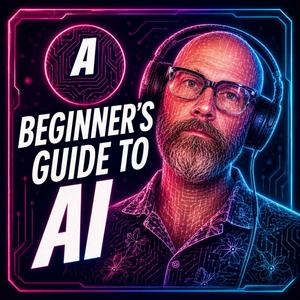
"A Beginner's Guide to AI" makes the complex world of Artificial Intelligence accessible to all. Each interview episode asks someone working with AI about what they do and how AI can help you. The explainer episodes take an important concept/idea and, yeah, explain it to you!Ideal for novices, tech enthusiasts, and the simply curious, this podcast transforms AI learning into an engaging, digestible journey. Join us and learn everything you need to know on how to use AI in the best way 🚀🎙️ About The Host, Dietmar FischerDietmar is a AI enthusiast and digital marketer from Berlin. If you want to know how to get your AI or your digital marketing going, just contact him at argoberlin.com Hosted on Acast. See acast.com/privacy for more information.
Site web du podcastÉcoutez A Beginner's Guide to AI, Les experts ou d'autres podcasts du monde entier - avec l'app de radio.fr
Obtenez l’app radio.fr gratuite
- Ajout de radios et podcasts en favoris
- Diffusion via Wi-Fi ou Bluetooth
- Carplay & Android Auto compatibles
- Et encore plus de fonctionnalités
Obtenez l’app radio.fr gratuite
- Ajout de radios et podcasts en favoris
- Diffusion via Wi-Fi ou Bluetooth
- Carplay & Android Auto compatibles
- Et encore plus de fonctionnalités

A Beginner's Guide to AI
Scannez le code,
Téléchargez l’app,
Écoutez.
Téléchargez l’app,
Écoutez.
A Beginner's Guide to AI: Podcasts du groupe
 France