

Écoutez gratuitement ce podcast dans l'application : Télécharger gratuitement dans l'App Store
radio.fr
Minuteur
Sauvegarde des favoris
568 épisodes

Laser Enrichment: America's Path to Nuclear Fuel Independence
19/09/2026 | 36 minIn this episode of the Energy News Beat Podcast, host Stu Turley sits down with Christo Liebenberg, President, Co-Founder, and Chief Technical Advisor of LIS Technologies, to explore one of the most promising solutions to America's nuclear fuel crisis. As global demand for nuclear power accelerates—driven by AI data centers, electrification, and climate imperatives—the U.S. faces a critical challenge: it currently produces only one-third of its own uranium enrichment needs, relying on imports from Russia and Western Europe.
LIS Technologies is reviving a decades-old technology that could transform this landscape. Using advanced laser isotope separation, the company aims to enrich uranium more efficiently, recycle spent nuclear fuel, and establish U.S. energy independence. With a working prototype weeks away from operation, a 206-acre facility in Oak Ridge, Tennessee, and a strategic partnership with Nano Nuclear, Liebenberg discusses the ambitious roadmap to commercialization, the regulatory pathway forward, and why laser enrichment has long been considered the "holy grail" of enrichment technologies. This conversation explores not just a technological breakthrough, but a pivotal moment for American nuclear energy and national security.
LIS Technologies Website: https://laseristech.com/
Christo Liebenberg's LinkedIn: https://www.linkedin.com/in/christo-liebenberg-838b4343/
1. Laser Isotope Separation (LIS) TechnologyThe core focus is LIS Technologies' development of laser-based uranium enrichment. This technology uses lasers to selectively target uranium-235 isotopes, enriching uranium in a single stage—far more efficient than traditional centrifuge methods that require dozens of stages. The technology was originally demonstrated in the late 1980s-early 1990s and is now being revived and commercialized.
2. Nuclear Fuel Independence & National SecurityA major theme is breaking U.S. dependence on Russian and Western European nuclear fuel. Currently, the U.S. only produces one-third of its enrichment needs domestically and imports two-thirds from abroad. LIS Technologies aims to make the U.S. self-sufficient in nuclear fuel production, positioning it as both an energy security and national security issue.
3. Growing Demand for Nuclear PowerThe podcast emphasizes accelerating demand driven by:
AI data centers (Amazon, Microsoft, Google, Apple, Meta all gravitating toward nuclear)
Electrification and climate change concerns
Small modular reactors (SMRs) and micro-reactors for diverse applications
Maritime applications (ships, tankers powered by nuclear instead of bunker fuel)
4. Spent Nuclear Fuel ReprocessingA key application: only 3% of nuclear fuel is burned in reactors, leaving 97% as spent fuel. Laser enrichment can selectively remove contaminant isotopes (uranium-232, 234, 236) and recover usable uranium-235, effectively recycling spent fuel.
5. Commercialization Timeline & InfrastructureLIS Technologies' roadmap includes:
Phase 1: Re-demonstrate 1993 baseline results (weeks away from loading uranium hexafluoride)
Phase 2: Scale hardware
Phase 3: Build a pilot plant by 2030 (500,000 SWU/year) and full commercial facility by 2032 (5 million SWU/year)
They've purchased a 206-acre island in Oak Ridge, Tennessee for the commercial facility
6. Scaling Nuclear CapacityTo quadruple U.S. nuclear power by 2050 (from 100 to 400 gigawatts), the U.S. would need roughly 380-600 new reactors. This requires a 12-fold increase in enrichment capacity and rebuilding the entire nuclear fuel cycle (mining, milling, conversion, enrichment, deconversion, fuel fabrication).
7. Strategic Partnerships & Vertical IntegrationLIS Technologies is partnering with Nano Nuclear to create a vertically integrated nuclear supply chain covering the entire fuel cycle—from mining and milling through enrichment, transportation, and reactor deployment.
8. Regulatory & Licensing ProgressAlready has Tennessee radiological materials license
Preparing NRC license application with environmental report submission planned for end of 2024
Team includes 200+ years of NRC expertise from former NRC employees
9. Competitive LandscapeLIS Technologies is the only U.S.-owned, U.S.-origin laser enrichment company. Their main competitor is Global Laser Enrichment (Australian-based). The U.S. currently has only one enrichment facility (Urenco USA in New Mexico), operated by a foreign company.
10. Dr. Jeff Eerkens' LegacyThe technology is based on work by 95-year-old co-founder Dr. Jeff Eerkens, known as the "father of laser enrichment." His personal story—surviving a Japanese concentration camp during WWII and being freed by atomic power—connects to developing this technology at Oak Ridge, where the uranium that saved his life was originally produced.
At Energy News Beat, we Make Appendices Great Again.
Check out the World's Greatest Podcast Show Notes at EnergyNewsBeat.co or EnergyNewsBeat.com, and the Energy News Beat Substack at: https://theenergynewsbeat.substack.com/
A shout-out to Steve Reese and the Reese Energy Consulting group for sponsoring the Podcast https://reeseenergyconsulting.com/.
Data2 if you have any business systems, can you trust A? Well, they have the patent on validation. . https://data2.zoholandingpage.com/energy
And we have WellDatabase rolling, and we use their tools for the Energy News Beat weekly Rig Reports: https://welldatabase.com/
Also entering Sponsor Rey Trevino, Pecos Operating https://pecos.energy/U.S. Fuel Crisis Status, Next Steps and Impact to Consumers. Energy News Beat Stand Up
18/09/2026 | 43 minIn this episode of Energy Newsbeat, host Stu Turley and energy industry expert Rey Trevino tackle the perfect storm facing America's energy sector. With diesel prices hitting record highs, critical refineries offline, and geopolitical tensions threatening global oil supplies, the hosts dissect nine major energy stories that reveal how decades of regulatory missteps and policy failures have created a cascading crisis.
From the Midwest refinery collapse to California's self-inflicted energy disaster, from Federal Reserve blunders to Iranian cyber threats, this conversation exposes the complex web of decisions—and indecisions—that have left the nation vulnerable. Whether you're concerned about fuel costs, grid reliability, or America's long-term energy security, this episode provides essential context on why energy dominance must start at home.
1. U.S. Diesel & Fuel CrisisThe episode opens with the critical diesel shortage affecting the nation. Key points include:
National retail diesel prices hitting all-time highs near $6.40/gallon
California diesel prices exceeding $8.30/gallon due to state regulations
The Exxon Mobil Joliet refinery in Illinois remaining offline after a power outage, exacerbating supply issues
Distillate inventory problems, particularly on the U.S. East Coast
2. Refinery Capacity & Regional DisparitiesDiscussion of refinery utilization across different PAD (Petroleum Administration for Defense) regions:
Midwest refineries running at 100% capacity
California's policy-driven energy costs creating a competitive disadvantage
Seven of California's refineries slated to close
The need for $10-100 million in repairs per refinery nationwide
3. Federal Reserve Policy MistakesCriticism of the Fed's recent rate hike:
Treating a supply shock as a demand problem
Historical parallels to 1973 and 1997-99 recessions triggered by similar policy errors
Concerns about triggering another recession
4. Russian Sanctions & Global Oil MarketsComplex geopolitical energy implications:
Russia's oil supply to China and South Korea
Proposed sanctions potentially disrupting global refining capacity
Impact on Ukraine-Russia peace negotiations
The need to delay sanctions to address the domestic diesel crisis
5. Oil & Gas Permitting DisparitiesStark differences in regulatory environments:
Texas: 4 days to obtain drilling permits, 3,232 permits issued
Colorado: 450 days for permits, only 335 permits issued
California: 1,853 permits but severe regulatory barriers
Impact on oil production despite high oil prices ($100+ WTI)
6. Renewable Energy & Subsidy IssuesEurope's largest independent solar operator declaring bankruptcy
Subsidy programs ending, creating market instability
Comparison of environmental liabilities between renewables and oil/gas
7. Iran Cyber Threats & Maritime SecurityIranian hacking attempts on oil tankers approaching U.S. coastlines
U.S. Coast Guard and FBI boarding a crude carrier in the Gulf of Mexico
Concerns about American maritime security and shipbuilding capacity
8. Canada's Energy Policy & Economic ImpactCanadian Prime Minister Mark Carney's negotiations with China
Job losses in Canadian manufacturing (81,800 already lost)
Critical importance of Canadian oil sands to U.S. energy security
Without Canadian oil, U.S. diesel prices could reach $12/gallon
9. Power Grid Strain & Energy InfrastructureHeat waves stressing North American power grids for 100+ million people
Natural gas providing 40% of U.S. grid power
ERCOT (Texas grid) near-miss blackout incident
Five-year wait times for new gas turbines
Recommendations for backup power systems
10. Global Food Security20% of world's grain sourced from Black Sea region
Ukraine-Russia conflict disrupting grain supplies through drone strikes
The podcast emphasizes that these interconnected energy challenges stem from 50+ years of poor policy decisions and regulatory overreach, particularly in states like California and Colorado, which are driving up consumer costs and reducing domestic production capacity.
At Energy News Beat, we Make Appendices Great Again.
Check out the World's Greatest Podcast Show Notes at EnergyNewsBeat.co or EnergyNewsBeat.com, and the Energy News Beat Substack at: https://theenergynewsbeat.substack.com/
A shout-out to Steve Reese and the Reese Energy Consulting group for sponsoring the Podcast https://reeseenergyconsulting.com/.
Data2 if you have any business systems, can you trust A? Well, they have the patent on validation. . https://data2.zoholandingpage.com/energy
And we have WellDatabase rolling, and we use their tools for the Energy News Beat weekly Rig Reports: https://welldatabase.com/
Also entering Sponsor Rey Trevino, Pecos Operating https://pecos.energy/Why Alaska Matters, Energy Independence, Critical Minerals, and National Security
15/09/2026 | 27 minAlaska is not a remote afterthought. It is one of the United States’ most strategically important resource bases for energy security, defense-critical minerals, and food supply. For two decades, its oil output declined as legacy North Slope fields matured and new projects faced long permitting timelines. That trend is now reversing. At the same time, Alaska holds known or prospective resources for 57 of the 60 minerals on the U.S. critical minerals list, and it supplies the majority of the nation’s wild-caught seafood. Policy choices at the state and federal level—permitting speed, infrastructure access, tax stability, and land management—will determine how much of that potential is realized.
We sit down with Bernadette Wilson, Republican Candidate for Governor of Alaska, and this is a critical race.
The cover photo shows a grizzly Stu photographed on one of his trips to Alaska.
Check out her website: https://bernadetteforgovernor.com/
As you have heard me say, "Energy Security Starts at Home, and Energy Dominance is displayed through your Exports". Well, Bernadette gets it, and I am truly impressed. Watch for her, as she is a breath of fresh air. America and Alaska are running down the road together.
1. Alaska's Economic Future & Youth RetentionBernadette's personal motivation for running stems from a conversation with her 18-year-old son about leaving Alaska for better economic opportunities. She emphasizes the need to make Alaska attractive for young people to stay, start businesses, and raise families.
2. Energy Independence & Oil DevelopmentA central theme is Alaska's critical role in U.S. energy independence. The discussion covers:
Domestic oil production ("American oil on Alaskan soil")
Alaska's vast resources (ANWR, NPRA, North Slope, Cook Inlet)
The need to reduce reliance on foreign oil
Exporting Alaskan oil to California and internationally
The threat of net-zero policies driving up energy costs
3. Critical Minerals & Mining ProjectsThe Ambler Road project is highlighted as crucial for accessing 2,700 mining claims. Bernadette stresses the urgency of advancing these projects within a 24-month window while the Trump administration is in power, before a potentially hostile future administration could block development.
4. Streamlining Permitting & Regulatory ReformA key policy proposal is implementing a "shot clock" on permits—establishing firm timelines (60-90 days) for permit decisions to reduce uncertainty for developers and accelerate project completion.
5. Alaska's Strategic Geopolitical ImportanceTopics include:
Alaska's proximity to Russia and its role in international relations
The potential for LNG ports to export liquefied natural gas
Alaska's 60% share of U.S. seafood production
Alaska's coastline and strategic location for energy dominance
6. Political Contrast & Campaign MessageBernadette contrasts her pro-development, pro-business approach with her Democratic opponent's focus on renewable energy, higher taxes on oil, and stricter regulations. She emphasizes that Alaska's oil industry pays 90% of the state's revenue and should be treated as business partners.
7. Leadership PhilosophyDrawing on her family history (great-uncle Governor Wally Hickel) and her own business experience, she argues that effective leaders come from outside government, have signed paychecks, and understand cash flow—citing examples like Donald Trump and Ronald Reagan.
This is a campaign-focused discussion emphasizing energy development, economic growth, and Alaska's role in national security and prosperity.
At Energy News Beat, we Make Appendices Great Again.
Check out the World's Greatest Podcast Show Notes at EnergyNewsBeat.co or EnergyNewsBeat.com, and the Energy News Beat Substack at: https://theenergynewsbeat.substack.com/
A shout-out to Steve Reese and the Reese Energy Consulting group for sponsoring the Podcast https://reeseenergyconsulting.com/.
Data2 if you have any business systems, can you trust A? Well, they have the patent on validation. . https://data2.zoholandingpage.com/energy
And we have WellDatabase rolling, and we use their tools for the Energy News Beat weekly Rig Reports: https://welldatabase.com/
Also entering Sponsor Rey Trevino, Pecos Operating https://pecos.energy/he Refining Reckoning: Why Diesel, Not Oil, Is Your Real Problem
13/09/2026 | 35 minThe world's energy markets are facing a perfect storm, and it's not about crude oil—it's about diesel. While geopolitical tensions escalate in the Middle East and China returns to aggressive oil buying, the real crisis is unfolding at the refinery gate. With global refining capacity crippled by conflict, infrastructure damage, and years of underinvestment, refineries are running at 97-98% capacity with no spare room. The result? Diesel prices are skyrocketing, and unlike oil prices, the Federal Reserve and Treasury have no tools to fix it. From the Bab el-Mandeb Strait shutdown driving tanker rates to $800,000 a day, to California's energy collapse threatening national supply chains, join us as we break down the 10 biggest stories reshaping global energy markets—and what it means for your wallet, your food prices, and your power grid.
1. Middle East Escalation & Geopolitical TensionsThe podcast opens with the critical situation in the Middle East, particularly the closure of the Bab el-Mandeb Strait due to Houthi attacks. This has disrupted shipping routes and forced tankers to take longer routes around Africa, driving tanker rates to $800,000 per day. Saudi Arabia faces significant challenges with damaged pipelines and reduced export capacity.
2. Global Oil & Refining Capacity CrisisA major focus is the global refining bottleneck. With only 2.5 million barrels per day of new refining capacity expected through 2030, and significant capacity losses in Russia, Venezuela, and the Middle East, there's a severe shortage of refined products—particularly diesel. U.S. refineries are operating at 97-98% capacity with no spare room.
3. Diesel Inflation & Consumer ImpactThe host emphasizes that diesel prices are the "inflationary impact to consumers that the Fed nor the Treasury can fix." Diesel affects agriculture, transportation, and food delivery, making it a critical economic issue. Prices have reached $6.39 in Oklahoma City and nearly $9.99 in California.
4. China's Return to Oil MarketsChina is buying crude again above 10 million barrels per day (up from a June slump), which is driving up global demand and prices. This increased demand is pushing crude prices above $100 per barrel.
5. Ukraine-Russia Energy WarUkraine's drone and missile strikes have crippled Russian refining capacity, while Russia's attacks on Odessa threaten Ukraine's energy infrastructure. This conflict has disrupted global energy supplies and refined product availability.
6. Oil & Gas Companies Becoming Power CompaniesA significant industry shift is occurring where oil and gas companies are moving into the utility and power generation space. Companies like Liberty Energy and EQT are diversifying into hyperscaling and electricity generation to achieve more stable cash flows.
7. U.S. Refining Challenges & California's Energy CrisisThe U.S. has 130 refineries with no spare capacity. California's seven remaining refineries are set to close, forcing the state to rely on imports and creating bottlenecks at ports. This threatens national energy security and supply chain efficiency.
8. Strategic Stockpile DepletionThe U.S. has exhausted its strategic petroleum reserve releases and loosened sanction rules on floating storage—the "shock absorbers" that previously kept oil prices from spiking. These tools are no longer available to stabilize markets.
9. Rig Count & Production OutlookThe podcast reviews weekly rig counts across major basins (Permian, Haynesville, Eagle Ford) and discusses the EIA's 2027 production forecast of 14.3 million barrels per day, though this may not translate to lower prices given current constraints.
10. Corporate Relocations & Energy PolicyEnergy Transfer and Sunoco are moving to the Texas stock exchange, reflecting broader concerns about regulatory environments in New York and Canada. The host also discusses California's reconsideration of nuclear power as a solution to its energy crisis.
The overarching theme is that global energy markets face a perfect storm of geopolitical disruption, refining capacity constraints, and supply chain challenges that will likely keep energy prices elevated and create inflationary pressures on consumers.
At Energy News Beat, we Make Appendices Great Again.
Check out the World's Greatest Podcast Show Notes at EnergyNewsBeat.co or EnergyNewsBeat.com, and the Energy News Beat Substack at: https://theenergynewsbeat.substack.com/
A shout-out to Steve Reese and the Reese Energy Consulting group for sponsoring the Podcast https://reeseenergyconsulting.com/.
Data2 if you have any business systems, can you trust A? Well, they have the patent on validation. . https://data2.zoholandingpage.com/energy
And we have WellDatabase rolling, and we use their tools for the Energy News Beat weekly Rig Reports: https://welldatabase.com/
Also entering Sponsor Rey Trevino, Pecos Operating https://pecos.energy/The Crude Truth: When Geopolitics Rewrites the Oil Market
10/09/2026 | 54 minIn early 2026, the global oil market experienced a seismic shift. When geopolitical tensions with Iran escalated, crude prices surged—and Texas responded. In this episode, economist Karr Ingham, oil producer Rey Trevino, and energy journalist Stu Turley break down how a single conflict triggered a cascade of market changes: rig counts climbing for the first time in years, jobs returning to the industry, and a historic deal securing 65 billion barrels of Venezuelan oil. But here's the real story: how these moves reshape energy independence, refinery infrastructure, and consumer prices for the next decade.
Check out the Texas Alliance of Energy Producers: https://www.texasalliance.org
Connect with Karr on his LinkedIn https://www.linkedin.com/in/karr-ingham-9b62333a/
Connect with Rey on his LinkedIn https://www.linkedin.com/in/reytrevinoiii/
1. Global Oil Market Transformation
The hosts discuss dramatic shifts in global oil supply and demand, particularly focusing on:
China's changing import patterns (buying Russian oil at elevated prices, reduced purchases from Iran and Iraq)
The impact of the Iran conflict on crude oil prices and market dynamics
Russia's refinery capacity reduction (down 40%) due to drone strikes
Global diesel shortage and its economic implications
2. Venezuela's Oil Resources & U.S. Policy
A significant focus on the recent U.S. deal securing 65 billion barrels of Venezuelan oil over 25 years:
The removal of Maduro and its impact on oil production potential
Secretary Chris Wright's role in facilitating investment opportunities for Chevron, Exxon, and independents
Plans to increase Venezuelan production by 1 million barrels per day
The strategic importance of liberating these resources for global markets
3. Texas Oil & Gas Production Trends
Detailed analysis of Texas's response to market changes:
Rig count recovery: from 229 rigs in December to 282 currently (41 rigs added year-over-year)
Production increases despite declining rig counts (efficiency and productivity gains)
Job creation returning to the industry after losses in 2024-2025
The Permian Basin's continued dominance
4. Crude Oil Quality & Refinery Infrastructure
Discussion of different crude types and refining capabilities:
Light sweet crude (Texas) vs. heavy sour crude (Venezuelan, Canadian)
Why the U.S. exports light sweet crude (refineries worldwide are better equipped to process it)
Plans for a new refinery in Brownsville to process Texas sweet crude domestically
The importance of crude oil trade and energy independence
5. U.S. Energy Independence Progress
Reduction in crude oil imports from 60-65% twenty years ago to approximately 10% today
The lifting of the crude oil export ban in 2015 as a critical milestone
Current import sources: primarily Canada (20%), minimal imports from the Strait of Hormuz (1.5-2%)
California's hypocrisy in importing oil from Russia, Ecuador, and Iran while opposing domestic production
6. Tariffs & Trade Policy Debate
A nuanced discussion on tariffs and trade:
Karr's anti-tariff stance vs. Stu's perspective on managed tariffs
The weaponization of the U.S. dollar through sanctions
Canada's importance as a reliable energy partner
The need for balanced trade relationships
7. Regulatory & Legislative Challenges
Texas Alliance of Energy Producers' ongoing work:
Produced water management from increased oil and gas production
Associated natural gas handling from Permian crude production
Orphan wells regulation and inactive well management
Preparation for the 2027 Texas legislative session
Federal-level advocacy in Washington D.C.
8. Renewable Energy Accountability
A critical look at wind energy infrastructure:
79,000 wind turbines in the U.S., with 40% approaching end-of-life in 3-5 years
$89 billion liability for decommissioning and recycling with no funding mechanism
Contrast with oil and gas industry's established orphan well remediation processes
This episode presents a comprehensive view of how geopolitical events, policy changes, and market dynamics are reshaping the global and U.S. energy landscape, with particular emphasis on Texas's strategic role.
At Energy News Beat, we Make Appendices Great Again.
Check out the World's Greatest Podcast Show Notes at EnergyNewsBeat.co or EnergyNewsBeat.com, and the Energy News Beat Substack at: https://theenergynewsbeat.substack.com/
A shout-out to Steve Reese and the Reese Energy Consulting group for sponsoring the Podcast https://reeseenergyconsulting.com/.
Data2 if you have any business systems, can you trust A? Well, they have the patent on validation. . https://data2.zoholandingpage.com/energy
And we have WellDatabase rolling, and we use their tools for the Energy News Beat weekly Rig Reports: https://welldatabase.com/
Also entering: Sponsor Rey Trevino, Pecos Operating https://pecos.energy/
At Energy News Beat, we Make Appendices Great Again.
Check out the World's Greatest Podcast Show Notes at EnergyNewsBeat.co or EnergyNewsBeat.com, and the Energy News Beat Substack at: https://theenergynewsbeat.substack.com/
A shout-out to Steve Reese and the Reese Energy Consulting group for sponsoring the Podcast https://reeseenergyconsulting.com/.
Data2 if you have any business systems, can you trust A? Well, they have the patent on validation. . https://data2.zoholandingpage.com/energy
And we have WellDatabase rolling, and we use their tools for the Energy News Beat weekly Rig Reports: https://welldatabase.com/
Also entering Sponsor Rey Trevino, Pecos Operating https://pecos.energy/
Plus de podcasts Actualité économique
 L'angle éco de François LengletActualité économique, Actualités
 Blast - L’actualitéActualité économique, Actualités
 Les Coulisses de l'économieActualité économique, Actualités
 Blast - L’économieActualité économique, Actualités
 Good Morning MarketActualité économique, Actualités, Business, Investissement
 The Economics ShowActualité : analyses, Actualité économique, Actualités, Business
 Money Talks from The EconomistActualité économique, Actualités, Business
 L'Entretien géopolitiqueActualité : analyses, Actualité économique, Actualités, Politique
 Bloomberg Daybreak: Europe EditionActualité économique, Actualités, Business
 Le Journal de l'EconomieActualité économique, Actualités
Podcasts tendance de Actualité économique
À propos de Energy News Beat Podcast
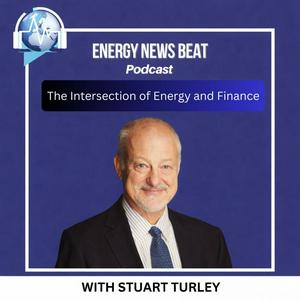
Covering the energy markets around the world, one story at a time. Our daily podcast keeps you up to speed on all the latest energy news while our weekly interviews with energy industry experts keep you in the know for all things energy development. Follow us at energynewsbeat.com
Site web du podcastÉcoutez Energy News Beat Podcast, L'angle éco de François Lenglet ou d'autres podcasts du monde entier - avec l'app de radio.fr
Obtenez l’app radio.fr gratuite
- Ajout de radios et podcasts en favoris
- Diffusion via Wi-Fi ou Bluetooth
- Carplay & Android Auto compatibles
- Et encore plus de fonctionnalités
Obtenez l’app radio.fr gratuite
- Ajout de radios et podcasts en favoris
- Diffusion via Wi-Fi ou Bluetooth
- Carplay & Android Auto compatibles
- Et encore plus de fonctionnalités

Energy News Beat Podcast
Scannez le code,
Téléchargez l’app,
Écoutez.
Téléchargez l’app,
Écoutez.
 France