

Écoutez gratuitement ce podcast dans l'application : Télécharger gratuitement dans l'App Store
radio.fr
Minuteur
Sauvegarde des favoris
168 épisodes

The Future of Cloud Computing Is in Space
12/10/2026 | 9 minAI data centers are getting so massive and power-hungry that some companies are looking beyond Earth for the next cloud computing frontier. In this video, we look at Starcloud, a startup trying to build data centers in space using satellites packed with AI hardware, solar panels, radiators, and high-speed communications. The idea sounds like science fiction, but Starcloud has already launched an Nvidia H100 GPU into orbit and raised major funding to scale its vision.
The pitch is simple: Earth-based data centers are running into serious limits, including power shortages, land constraints, cooling costs, grid delays, water usage, and local permitting battles. Space could offer constant solar energy, natural cooling through radiation, and room to build compute infrastructure at a scale that is difficult on the ground.
But the challenges are enormous. Launch costs, radiation, orbital debris, latency, regulation, hardware reliability, and connecting thousands of GPUs in orbit could make this one of the hardest infrastructure bets in tech. If it works, the future of cloud computing may not be in Virginia, Texas, or Silicon Valley — it may be in low Earth orbit.AI Workloads Are Breaking Cloud Budgets. Does Managed Cloud Fix That?
07/10/2026 | 34 minTry InMotion Cloud free for up to 30 days: https://inmotioncloud.com/david-linthicum Sponsored by InMotion Cloud. AI is reshaping the economics of cloud computing. It is not just adding more workloads to the cloud — it is changing how infrastructure is consumed, scaled, governed, and paid for. In this episode, David Linthicum explains why AI applications, agents, RAG systems, automated pipelines, testing environments, storage, networking, APIs, and AIOps-driven automation are creating new pressure on cloud budgets. The issue is no longer simply whether public cloud is "too expensive." The real question is whether each workload is running in the right place, under the right operating model, with the right cost structure.
Some AI workloads still benefit from public-cloud elasticity and rapid scaling. Others are more predictable, persistent, and infrastructure-heavy, making them better candidates for managed cloud or managed private cloud models. The goal is not to choose public cloud or private cloud as a philosophy. The goal is to match workloads to the infrastructure model that delivers the best balance of performance, governance, flexibility, and cost predictability. Thanks to InMotion Cloud for sponsoring this video. As you plan your AI strategy, take time to consider the true costs of AI — not just compute, but storage, networking, data movement, automation, operations, and long-term infrastructure control. The best platform is the one that fits the workload, the economics, and the business outcome. If you are evaluating where your AI workloads should run, check out InMotion Cloud.The AI Data Center Lie Is Falling Apart
05/10/2026 | 11 minThe AI infrastructure story was always bigger than GPUs, bigger than cloud announcements, and bigger than vendor promises. The real issue was power. For the last few years, hyperscalers, analysts, and the broader market pushed a narrative that massive AI data center capacity was right around the corner. But anyone who understands infrastructure, utilities, and grid expansion should have known the math did not work. You cannot announce enormous data center growth and assume the power grid will magically keep up.
In this video, I break down why the AI data center capacity crunch was completely predictable, why so many enterprises made strategic decisions based on unrealistic promises, and why many are now scrambling to secure the compute they thought would already be available. I explain the disconnect between market hype and physical infrastructure, the dangerous habit of treating vendor optimism as operational fact, and why enterprises need to do their own analysis before betting growth plans on future capacity.
This is not just about data centers. It is about how hype repeatedly outruns reality in enterprise technology. If your organization is planning AI growth, cloud expansion, or major infrastructure investments, this is the reality check you need before making expensive mistakes.The Hidden Career Trap Holding Women in Tech Back
30/09/2026 | 10 minAfter decades of working in cloud computing, enterprise architecture, AI, and digital transformation, I've seen one thing clearly: technical success is not just about who knows the newest platform, tool, or framework. It is about who gets ownership, who is trusted with hard problems, who is visible when major decisions are made, and who can connect technology to measurable business value. For women in IT, that means building deep technical expertise while also being deliberate about career strategy. Too many women are asked to do the work that keeps teams functioning without being given the credit, authority, budget exposure, or architectural ownership that leads to advancement.
That has to change. Women should be leading cloud migrations, AI governance efforts, cybersecurity strategies, platform modernization, data architecture, and cost optimization programs. They should be speaking up in design reviews, claiming the results they deliver, building strong sponsors, and choosing environments where their technical judgment is respected. The future of IT will belong to people who understand both technology and business outcomes. Women should not be waiting for permission to lead that future; they should be building the skills, visibility, and authority to own it.Edge Computing Does Not Always Need the Cloud…Duh!
28/09/2026 | 11 minEdge computing does not always need cloud-based back-ends, and pretending otherwise is one of the most expensive architectural mistakes in enterprise IT. Too many teams still assume that every edge device, every local decision, and every stream of operational data must be routed back to centralized cloud services before anything useful can happen. That assumption is not strategy; it is inertia dressed up as modernization. The truth is simpler: if a workload can be processed locally with better speed, lower bandwidth consumption, stronger privacy, higher resilience, and acceptable cost, then forcing a cloud dependency into the design is unnecessary. The cloud still matters, but its role should be selective, not automatic. It is excellent for aggregation, fleet management, historical analysis, large-scale coordination, and model training, but those strengths do not mean it belongs in every execution path. Edge computing earns its value by putting intelligence close to the event, the device, or the user. When architects understand that distinction, systems become faster, cheaper, and harder to break. When they do not, they build fragile, overconnected, overengineered platforms that confuse centralization with sophistication. That is the real debate, and it is long overdue. And the market is finally starting to notice.
Plus de podcasts Actualités










Podcasts tendance de Actualités
























À propos de Cloud Computing Insider
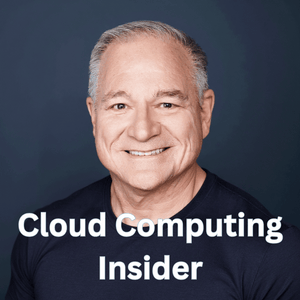
Hosted by cloud computing pioneer David Linthicum, the Cloud Computing Insider podcast gets to the bottom of what cloud computing, and generative AI can bring to your enterprise. New content will focus on what's important to you as a user of cloud computing and generative AI, and the ability to find value the first time.
Site web du podcastÉcoutez Cloud Computing Insider, C dans l'air ou d'autres podcasts du monde entier - avec l'app de radio.fr
Obtenez l’app radio.fr gratuite
- Ajout de radios et podcasts en favoris
- Diffusion via Wi-Fi ou Bluetooth
- Carplay & Android Auto compatibles
- Et encore plus de fonctionnalités
Obtenez l’app radio.fr gratuite
- Ajout de radios et podcasts en favoris
- Diffusion via Wi-Fi ou Bluetooth
- Carplay & Android Auto compatibles
- Et encore plus de fonctionnalités
Cloud Computing Insider
Scannez le code,
Téléchargez l’app,
Écoutez.
Téléchargez l’app,
Écoutez.
Cloud Computing Insider: Podcasts du groupe
 France
