

Écoutez gratuitement ce podcast dans l'application : Télécharger gratuitement dans l'App Store
radio.fr
Minuteur
Sauvegarde des favoris
31 épisodes
How to Become a NATO Fighter Pilot — Interview with DNK Lt Col Martin ‘AMI’ Friis
22/09/2026 | 22 minEject! Eject! Eject! In this episode of The Allied Airpower Podcast, Jose ‘Houdini’ Davis sits down with Danish Lieutenant Colonel Martin ‘AMI’ Friis for a conversation about life in the cockpit and what it takes to become a NATO fighter pilot.
AMI recalls a 1996 departure on a routine training flight: Sitting behind a student pilot in an F-16, he received a warning from the control tower: their engine was on fire. Looking over his shoulder, he saw orange surrounding the aircraft. Within seconds, he ordered both pilots to eject. Both survived; AMI was flying again the following week.
That experience gives weight to his explanation of fighter flying. Pilots must stay ahead of the aircraft, managing communications, scanning their surroundings, and making tactical decisions. Training makes flying second nature.
With a career spanning around four decades, including seventeen years flying the F-16, AMI has served as a squadron commander, an instructor at NATO’s Tactical Leadership Programme, and Denmark’s chief of aviation safety. Today, in Allied Air Command’s A3 Operations Support Branch, he helps turn NATO plans into major exercises, including Ramstein Flag: bringing cockpit experience to the preparation of Allied forces.
The conversation also explores the future of air warfare. Drawing on Ukraine, AMI discusses identifying airborne threats and selecting the right capabilities to defeat them. And while modern weapons favour engagements beyond visual range, he explains why dogfighting remains a skill pilots must retain.
For AMI, shared training builds the trust that allows Allied aviators to fly and fight together. His childhood memory of the fortified border between East and West Germany brings that mission back to its human purpose: defending “our family, our kids, our neighbors and friends.”
Recorded Tuesday, 19 May 2026.
This is a public episode. If you would like to discuss this with other subscribers or get access to bonus episodes, visit natoaircom.substack.comNEW SEASON! Belgium assumes Air Defence mission in Iceland, marking NATO’s new Airpower posture
10/09/2026 | 15 minThese five stories show how NATO is strengthening Air & Space power through faster integration, persistent readiness and closer cooperation between Allied forces.
In Iceland, Belgian F-16s took over NATO’s Air Defence mission at Keflavik, supporting Arctic Sentry and the Alliance’s broader move toward a more unified Integrated Air and Missile Defence posture. The deployment reflects a shift away from traditional Air Policing alone toward a wider approach designed to address a broader range of threats.
That same emphasis on interoperability was visible in Estonia, where Spanish EF-18M fighters, Turkish F-16s and Estonian ground crews trained together at Ämari. The activity focused on practical coordination, from refuelling and emergency procedures to familiarisation flights, helping deployed forces integrate quickly with host-nation and Allied personnel.
In Romania, Spain’s Paznic Detachment completed 30 days of continuous Quick Reaction Alert duty, carrying out 15 Alpha Scrambles. One of those alerts led to the interception and neutralisation of a drone that had entered Romanian airspace. Alongside these operational missions, the detachment continued multinational training, Agile Combat Employment activity and air-to-air refuelling, reinforcing its ability to respond rapidly along NATO’s eastern flank.
Further north, representatives from Denmark, Finland, Iceland, Norway and Sweden met at Combined Air Operations Centre Bodø to advance the Nordic Airpower Concept. With Finland and Sweden now part of NATO, the five Nordic countries are working more closely to align their Air Forces, improve regional cooperation and strengthen NATO’s northern posture.
The space domain was also part of this wider picture. From Andøya Spaceport in Norway, Isar Aerospace successfully placed satellites into orbit, adding to Europe’s commercial launch capability. While the mission was not a NATO operation, it highlighted the importance of resilient civilian and commercial space infrastructure to the Alliance. NATO increasingly depends on reliable access to space-based services for communications, navigation, surveillance and situational awareness.
Taken together, these updates point to a more connected NATO Air and Space posture. Whether through fighter deployments, Quick Reaction Alert, Nordic coordination or commercial access to orbit, the focus is on ensuring Allied forces and supporting systems can operate together, respond quickly and remain resilient across the Euro-Atlantic area.
This is a public episode. If you would like to discuss this with other subscribers or get access to bonus episodes, visit natoaircom.substack.comThe Deep Dive: Ramstein Flag
10/06/2026 | 18 minIn this episode of The Allied Airpower Podcast, Jose “Houdini” Davis takes listeners inside Ramstein Flag, one of NATO Allied Air Command’s most important large-scale air exercises.
Ramstein Flag is not just about aircraft, bases, or hardware. It is about NATO practicing how to fight as one air component in an Article 5 scenario — across nations, across geography, and under pressure.
The episode explains how Ramstein Flag builds on the Flag-series tradition of realistic high-end combat training, while giving it a NATO collective defence focus. The episode traces the exercise from its first edition in Greece in 2024, through the 2025 edition in the Netherlands, and into Ramstein Flag 2026.
This year’s exercise marks a major step forward, bringing together 18 Allied nations, more than 200 aircraft, and over 20 operating locations across Europe. Live-flying activity in NATO’s northern and southern Joint Operations Areas is supported by synthetic training, testing whether the Alliance can coordinate Airpower across a broad theatre.
The episode also makes clear that Ramstein Flag 2026 is not only about Agile Combat Employment. ACE is part of the picture, but the broader focus includes Integrated Air and Missile Defence, Counter Anti-Access/Area Denial, and seamless data and information sharing among Allies.
Above all, Ramstein Flag is about cohesion. Aircraft matter, but so do maintainers, tankers, command links, airspace procedures, sensor feeds, and host-nation support. Together, these pieces form Allied Airpower, which allows NATO to generate, sustain, and synchronize combat power.
Recorded Wednesday, 5 June 2026.
This is a public episode. If you would like to discuss this with other subscribers or get access to bonus episodes, visit natoaircom.substack.comNATO's Airpower: A Documentary
01/06/2026 | 16 minIn this special documentary episode of The Allied Airpower Podcast, Jose “Houdini” Davis takes listeners inside NATO Airpower through a documentary produced by NATO’s talented multimedia team based in Brussels.
Filmed across the Alliance and partially during Ramstein Flag 25, the episode breaks down one of NATO’s most complex missions: how Allied Air Forces would secure the skies in crisis or conflict. The documentary follows the key pieces of that mission across Europe: NATO AWACS at Geilenkirchen, tanker operations at Eindhoven, fighter aircraft in the Netherlands, and Wild Weasel F-16 crews at Spangdahlem Air Base.
The episode explains that air superiority is not just about fighter jets. It requires seeing the battlespace, suppressing hostile air defences, coordinating aircraft from multiple nations, keeping those aircraft fuelled, and adapting to new threats such as drones and one-way attack systems.
Major themes are cohesion and interoperability. Inside NATO’s E-3A AWACS, multinational crews work side by side, using shared standards, training, and trust to build a common picture of the airspace. That same teamwork carries through the fighter, tanker, and air defence missions that make Allied airpower possible.
The documentary also highlights the danger and importance of air superiority and the SEAD mission — pilots trained to go in first, draw out enemy air defence radars, and suppress the systems that threaten Allied aircraft. From there, the episode moves through fighter integration, air-to-air refuelling, and the growing challenge of defending against drones at scale.
This episode is ultimately about more than aircraft. It is about the people, planning, training, and trust behind Allied air defence — the system that allows NATO to secure the skies 24/7, 365 days a year.
This is a public episode. If you would like to discuss this with other subscribers or get access to bonus episodes, visit natoaircom.substack.comAllied Airpower strengthens C-A2AD Capabilities under NATO eVA EASTERN SENTRY
26/05/2026 | 24 minAcross these seven updates, NATO’s air and maritime activity in May 2026 points to a clear operational theme: the Alliance is strengthening its ability to operate as an integrated, distributed, and resilient force across multiple regions at once. From the Mediterranean to the Baltic, from Sweden and Finland to Norway and Greece, the focus is not only on presence, but on readiness, interoperability, Agile Combat Employment, ISR, air defence, and multi-domain integration.
That theme was visible in Neptune Strike 2026, led by Naval Striking and Support Forces NATO across the Western and Central Mediterranean Sea. The activity brought together carrier strike groups, amphibious strike groups, land-based forces, air assets, and maritime forces to demonstrate NATO’s ability to project deterrence across the Alliance’s southern and south-eastern flanks. AIRCOM contributed through integrated air operations involving Royal Air Force Typhoon Eurofighters deployed to Romania and Romanian F-16s. Their work alongside forces from Albania, Bulgaria, France, Greece, Montenegro, Portugal, and Türkiye showed how routine assurance missions such as Eastern Sentry can connect directly to wider NATO readiness, reinforcing the idea that air policing, maritime strike, and multi-domain activity are increasingly part of one defensive framework.
The same message carried into Lithuania, where around 100 French Air and Space Force aviators deployed to Šiauliai Air Base for NATO’s Baltic Air Policing 71 mission. Flying four Rafales, the French detachment took over from Spain and joined Romanian and Portuguese F-16 detachments in safeguarding the Baltic states’ airspace. The mission combined operational readiness with Allied training, including air defence drills between French Rafales and Romanian F-16s over the Baltic Sea. The central point was interoperability: not only having compatible equipment, but understanding how other Allied crews think, communicate, maneuver, and respond under pressure.
Sweden’s AURORA 26 expanded that focus from air policing into national defence, reinforcement, and distributed operations. As Sweden’s first Aurora exercise as a NATO Ally, it brought about 18,000 participants from 13 countries together across Sweden, the Baltic Sea, and Gotland. Swedish JAS 39 Gripens, Dutch AH-64 Apache helicopters, air defence assets, airlift platforms, and air-ground integration all supported the wider joint scenario. A key airpower contribution came through Agile Combat Employment (ACE), with Swedish and Finnish personnel conducting aircraft cross-servicing on JAS 39 Gripens and F/A-18 Hornets at Kalmar civilian airport in Sweden. The exercise also included aeromedical evacuation training with Swedish, Finnish, Dutch, and U.S. teams, as well as counter-UAS training informed by Ukrainian drone experience. Together, these elements showed how NATO’s newer members and long-standing Allies are building practical readiness for dispersed, contested, and multi-domain operations.
In Greece, NATO Tiger Meet 2026 focused on the human and tactical side of Allied air integration. Hosted by 335 Squadron of the Hellenic Air Force at Araxos Air Base, Greece, the exercise brought together aircrew, maintainers, and support personnel from Belgium, Czechia, Germany, Greece, Hungary, Italy, Poland, Spain, and Switzerland. Aircraft included F-16 Fighting Falcons, Eurofighters, Gripens, Tornados, Hornets, Venom helicopters, and HH.101 helicopters. The exercise blended tradition with operational relevance, giving participating units a demanding multinational environment in which to refine tactics, build trust, and adapt to threats such as drones, missiles, and contested airspace. Its importance lies in the relationships it builds: Allied personnel who train together in peacetime are better prepared to operate together in crisis.
Finland’s Imminent Field 26 showed Agile Combat Employment (ACE) in especially concrete terms. Conducted from May 18 to 22 at the Jokioinen landing site on a closed stretch of Highway 2, the exercise trained Finnish F/A-18 Hornets and other aircraft to operate away from their home bases. For the first time, Italy brought F-35B Lightning II fighters to the exercise, using their short take-off and vertical landing capabilities to rehearse operations from austere and decentralized locations. The Finnish-Italian activity demonstrated how NATO air forces are preparing to disperse aircraft, personnel, and support infrastructure to complicate targeting, reduce vulnerability, and keep generating combat power if main bases are threatened.
Norway then hosted a major ISR milestone with the first NISRF RQ-4D Phoenix operations from Norwegian territory. On May 21, a NATO RQ-4D Phoenix remotely piloted aircraft arrived at Ørland, marking the first time the system had operated from Norway and only the third time it had operated outside Italian Air Force Base Sigonella. The deployment was tied to Agile Combat Employment and demonstrated NISRF’s ability to deliver ISR effects from dispersed locations in support of NATO operations. For an Alliance increasingly focused on wide-area awareness, rapid decision-making, and distributed operations, the ability to move high-end ISR platforms beyond their usual operating base is a significant step.
Finally, the May 25 update on Eastern Sentry brought many of these themes together over the Baltic region. On May 21, Allied Airpower conducted a high-end training event focused on Multi-Domain Integration and Counter Anti-Access/Area Denial capabilities (C-A2AD). Led by NATO CAOC Bodø in Norway as the key command-and-control node, the activity included Romanian F-16s, French Rafales and Mirage 2000D aircraft, French A330 MRTT tankers, and a NATO RQ-4D Global Hawk from NISRF. The training emphasized tactical command and control, rapid information sharing, and Find, Fix, Track, and Target (F2T2) processes. It also highlighted NATO’s shift from air policing toward a more flexible air defence posture along the eastern flank.
Taken together, these stories show NATO Airpower operating across several layers at once. In the Mediterranean, Neptune Strike demonstrated maritime-air integration and Alliance-wide deterrence. In Lithuania, French Rafales reinforced the Baltic Air Policing mission while deepening tactical cooperation with Romania and Portugal. In Sweden and Finland, AURORA 26 and Imminent Field 26 tested dispersed operations, cross-servicing, airlift, counter-UAS lessons, and ACE in NATO’s northern Joint Operations Area (JOA). In Greece, NATO Tiger Meet strengthened the trust and habits that make multinational air operations work. In Norway, NISRF proved that NATO-owned ISR assets can operate more flexibly from dispersed locations. And under Eastern Sentry, Allied air forces practiced the kind of high-end, multi-domain air defence activity that connects all of these efforts into a wider deterrence posture.
This is a public episode. If you would like to discuss this with other subscribers or get access to bonus episodes, visit natoaircom.substack.com
Plus de podcasts Actualités
 Les Grosses TêtesActualité du divertissement, Actualités, Humour
 Le CollimateurActualité : analyses, Actualités
 LEGENDActualités, Culture et société, Télévision et cinéma
 L'Heure du MondeActualités
 Les Grandes GueulesActualité : analyses, Actualités
 HugoDécrypte - Actus et interviewsActualités
 C dans l'airActualités, Culture et société
 Global News PodcastActualités
 Code sourceActualités
 C ce soirActualité : analyses, Actualités, Culture et société, Philosophie
Podcasts tendance de Actualités
 The Rest Is Politics: USActualités, Gouvernement, Politique
 The News AgentsActualités, Gouvernement, Politique
 L'Heure des Pros 2Actualités, Politique
 Zack en Roue Libre by Zack NaniActualité du divertissement, Actualités
 Blast - L’actualitéActualité économique, Actualités
 PunchlineActualité : analyses, Actualités, Politique
 Suis-je mauvais ?Actualité du divertissement, Actualités
 Le Club Le Figaro PolitiqueActualités, Politique
 L'instant Christine KellyActualités
 Blast - L'Empire n'a jamais pris finActualité du divertissement, Actualités, Politique
 Blast - La politiqueActualités, Politique
 Pascal Praud et vousActualité : analyses, Actualités, Culture et société, Politique
 The Global StoryActualités
 Programme BActualités, Culture et société
 L'édito d'Etienne GernelleActualités, Politique
 Chaleur HumaineActualités, Culture et société
 Les récits de Stéphane BernActualités, Histoire
 La Matinée Est Tienne, par Samuel EtienneActualités, Culture et société, Éducation
 24H Pujadas - Les partis prisActualité : analyses, Actualités, Culture et société, Documentaire, Politique
 Cartel NordActualités, Crime : histoires vraies, Culture et société
 Le Titre à la uneActualité : analyses, Actualités, Politique
 Les coulisses de la politiqueActualités, Politique
À propos de The Allied Airpower Podcast
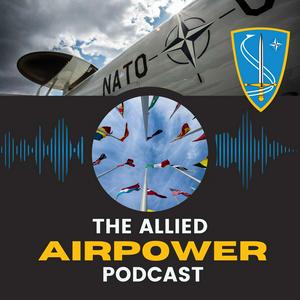
NATO's sole broadcast that patrols the full spectrum of air, space, and cyberspace. Subscribe and share to keep pace with our AI-generated news briefs and in-person exclusive interviews with senior leaders, subject matter experts, and frontline Airmen. natoaircom.substack.com
Site web du podcastÉcoutez The Allied Airpower Podcast, Les Grosses Têtes ou d'autres podcasts du monde entier - avec l'app de radio.fr
Obtenez l’app radio.fr gratuite
- Ajout de radios et podcasts en favoris
- Diffusion via Wi-Fi ou Bluetooth
- Carplay & Android Auto compatibles
- Et encore plus de fonctionnalités
Obtenez l’app radio.fr gratuite
- Ajout de radios et podcasts en favoris
- Diffusion via Wi-Fi ou Bluetooth
- Carplay & Android Auto compatibles
- Et encore plus de fonctionnalités

The Allied Airpower Podcast
Scannez le code,
Téléchargez l’app,
Écoutez.
Téléchargez l’app,
Écoutez.
 France