
Écoutez gratuitement ce podcast dans l'application : Télécharger gratuitement dans l'App Store
radio.fr
Minuteur
Sauvegarde des favoris
72 épisodes
The Night Flyer: How Bats sPOOkily Revive Forests (Replay)
22/10/2026 | 26 minThis Halloween, we’re going to the dark side. Deep in the darkest tropical forests, some of the world’s most elusive bats hang upside down in their winged sleeping bags. On a quest to find one of these flying mammals, Producerbud Ana ventures into a Puerto Rican forest and the back corridors of the American Museum of Natural History with Dr. Angelo Soto-Centeno. Why? Because while they may be scary and look kinda like Dracula, with their sharp fangs and beady eyes, these bats hold something crucial for humanity - the ability to repair entire ecosystems after some of the most destructive hurricanes ever.
Terrestrials was created by Lulu Miller with WNYC studios. This episode was produced and reported by Ana González with sound design by Mira Burt-Wintonick. Our Executive Producer is Sarah Sandbach. Our team also includes Alan Goffinski, Tanya Chawla and Joe Plourde. Factchecking was by Emily Krieger.
Special thanks to the American Museum of Natural History and Dr. Angelo Soto-Centeno.
Also tell us what creature you want a future show about! Submit suggestions on what animals we should do our next season on here!
Our advisors for this show were Liza Demby, Ana Luz Porzecanski, Nicole Depalma and Carly Ciarrocchi.
Support for Terrestrials also comes from the Simons Foundation, the Arthur Vining Davis Foundations, and the John Templeton Foundation.
HEY GROWN-UPS!
Love the show? Leave us a ⭐⭐⭐⭐⭐ rating and review on your podcast app—it helps curious listeners find us!
Terrestrials is made possible in part by listeners like you. Support the show by joining The Explorers Club —and we’ll send you a special puzzle as a thank-you gift from our team!
We want to hear from you! Share your thoughts about Terrestrials with us.
Subscribe to our weekly newsletter for bite-sized essays, activities, and ways to connect with the show.
Follow us on YouTube, Instagram, and TikTok for behind-the-scenes extras and more.
Listen to original music from Terrestrials on Spotify, Apple Music, or our music page.
Got a badgering question for the team? Email us at terrestrials@wnyc.org or submit a voice memo with your name, age, and your question using this form!
Hosted by Simplecast, an AdsWizz company. See pcm.adswizz.com for information about our collection and use of personal data for advertising.The Scarecrow: Scaring Birds with Mary Roach
15/10/2026 | 23 minIt’s an epic humans-versus-birds showdown in this follow-up to last week’s crows episode! Ever since humans started farming, birds have been eating our crops. And for centuries, we’ve been trying to figure out how to frighten them away.
Science writer Mary Roach walks Lulu and Radiolab’s Latif Nasser through the long and surprising history of humans scaring away birds: scarecrows, fake owls, taxidermied hawks, robotic falcons, even animatronic bears with flashing eyes. But none of it works for long. The birds are too smart for our tricks. Until one day in Ohio, a wildlife researcher accidentally stumbled onto something that seemed to really freak out a roost of vultures.
The strange solution raises a bigger question about what fear really is, and why uncertainty and confusion might be the thing we fear most. Plus, we learn about the one bird that seems to know how to overcome this fear.
Attention Grown-ups! For more Mary Roach, join us for Radiolab Presents: Viscera, live in New York City on Thursday, November 5, with special guest Mary Roach discussing her upcoming book, Replaceable You: Adventures in Human Anatomy. Get your tickets at wnyc.org/events.
And be sure to check out Mary Roach’s books Fuzz and Stiff, and pre-order her upcoming book: Replaceable You: Adventures in Human Anatomy.
Terrestrials was created by Lulu Miller with WNYC studios. This episode was produced by Tanya Chawla with sound design and editing by Mira Burt-Wintonick. Sarah Sandbach is our Executive Producer. Our team also includes Ana González, Alan Goffinski, Natalia Ramirez, and Joe Plourde. Fact checking by Hilary Etkins.
HEY GROWN-UPS!
Love the show? Leave us a ⭐⭐⭐⭐⭐ rating and review on your podcast app—it helps curious listeners find us!
Terrestrials is made possible in part by listeners like you. Support the show by joining The Explorers Club —and we’ll send you a special puzzle as a thank-you gift from our team!
We want to hear from you! Share your thoughts about Terrestrials with us.
Subscribe to our weekly newsletter for bite-sized essays, activities, and ways to connect with the show.
Follow us on YouTube, Instagram, and TikTok for behind-the-scenes extras and more.
Listen to original music from Terrestrials on Spotify, Apple Music, or our music page.
Got a badgering question for the team? Email us at terrestrials@wnyc.org or submit a voice memo with your name, age, and your question using this form!
Hosted by Simplecast, an AdsWizz company. See pcm.adswizz.com for information about our collection and use of personal data for advertising.The Goths: Befriending Clever Crows
08/10/2026 | 31 minSpooky season is upon us and so we are bringing you a tale of Halloween’s eeriest avian mascot.
Emma Terry is friends with basically everyone in her town. She personifies a rainbow—she has bouncy blonde hair, sparkly cat-eye glasses, and a closet full of bright colors. But for the last decade, she's been trying to befriend the one creature that seems like the opposite of her vibe: the cemetery-lurking, ominous crow.
The more Emma observed and read about crows, the more their morbid reputation seemed… off. She learned crows drop nuts into crosswalks so car tires will crack them open, that they can recognize human faces, that they can use tools... She even heard a rumor that, sometimes, crows might leave gifts for humans who are nice to them.
So she started leaving treats for them in a basket outside her home, nearly every day, for seven years. Then one summer morning, she looked under the basket and saw something glinting. Crow scientist and ornithologist Dr. John Marzluff helps us figure out whether a friendship between a person and a bird is a real thing, or just a story we wish were true.
Special thanks to Emma Terry and Dr. John Marzluff. Check out Emma's art and ceramics at madebyemmapie.com. And if you want to help scientists study crows, download Crow Scientist, a free app made by John and Colleen Marzluff.
Check out some crows talking here!
Jimini Crowket Talking Crow [VIDEO]
Joe, the talking crow [VIDEO]
Joe, the talking crow pt 2 [VIDEO]
Crow saying hello, I know right after a human talks to it [VIDEO]
Crow saying "you alright love?" in Yorkshire accent [VIDEO]
Terrestrials was created by Lulu Miller with WNYC studios. This episode was produced by Tanya Chawla with sound design and editing by Mira Burt-Wintonick. Sarah Sandbach is our Executive Producer. Our team also includes Ana González, Alan Goffinski, Natalia Ramirez, and Joe Plourde. Fact checking by Sophie Samiee.
HEY GROWN-UPS!
Love the show? Leave us a ⭐⭐⭐⭐⭐ rating and review on your podcast app—it helps curious listeners find us!
Terrestrials is made possible in part by listeners like you. Support the show by joining The Explorers Club —and we’ll send you a special puzzle as a thank-you gift from our team!
We want to hear from you! Share your thoughts about Terrestrials with us.
Subscribe to our weekly newsletter for bite-sized essays, activities, and ways to connect with the show.
Follow us on YouTube, Instagram, and TikTok for behind-the-scenes extras and more.
Listen to original music from Terrestrials on Spotify, Apple Music, or our music page.
Got a badgering question for the team? Email us at terrestrials@wnyc.org or submit a voice memo with your name, age, and your question using this form!
Hosted by Simplecast, an AdsWizz company. See pcm.adswizz.com for information about our collection and use of personal data for advertising.The Hideout: A Monarch Butterfly Mystery
24/09/2026 | 34 minAs the leaves begin to change and the air cools, monarch butterflies disappear from our skies and journey …where? The mysterious migration of this iconic butterfly stumped scientists for decades. Until an intercepted message on a butterfly wing led them to the isolated mountains of central Mexico to find the ancient monarch oasis where these butterflies cluster by the millions. It’s here we meet Estela, who grew up around this extraordinary phenomenon and explains that the real mystery isn’t where the monarchs are going but, actually, how??
The answer involves poisonous-tasting caterpillars, supergenerations of buff butterflies, and a web of life that connects a whole continent. Plus, as many people prepare for their Day of the Dead celebrations, we learn how monarch butterflies are a symbol of connection to the ancestors living on in our memories.
Terrestrials was created by Lulu Miller with WNYC studios. This episode was produced by Ana González with sound design by Mira Burt-Wintonick. Sarah Sandbach is our Executive Producer. Our team also includes Alan Goffinski, Tanya Chawla, Natalia Ramirez, and Joe Plourde. Fact checking by Hilary Elkins.
HEY GROWN-UPS!
Love the show? Leave us a ⭐⭐⭐⭐⭐ rating and review on your podcast app—it helps curious listeners find us!
Terrestrials is made possible in part by listeners like you. Support the show by joining The Explorers Club —and we’ll send you a special puzzle as a thank-you gift from our team!
We want to hear from you! Share your thoughts about Terrestrials with us.
Subscribe to our weekly newsletter for bite-sized essays, activities, and ways to connect with the show.
Follow us on YouTube, Instagram, and TikTok for behind-the-scenes extras and more.
Listen to original music from Terrestrials on Spotify, Apple Music, or our music page.
Got a badgering question for the team? Email us at terrestrials@wnyc.org or submit a voice memo with your name, age, and your question using this form!
Hosted by Simplecast, an AdsWizz company. See pcm.adswizz.com for information about our collection and use of personal data for advertising.The Snow Beast: A Mystery Animal (Replay)
10/09/2026 | 30 minToday we bring you a story stranger than fiction. In 2006, paleobiologist Natalia Rybczynski took a helicopter to a remote Arctic island near the North Pole, spending her afternoons scavenging for ancient treasures on the ground. One day, she found something the size of a potato chip. Turns out, it was a three and a half million year old chunk of bone. SPOILER ALERT BELOW.
Keep reading if you’re okay with us spoiling the surprise.
It’s a camel! Yes, the one we thought only hung out in deserts. Originally from North America, the camel trotted around the globe and went from snow monster to desert superstar. We go on an evolutionary tour of the camel’s body and learn how the same adaptations that help a camel in a desert also helped it in the snow. Plus, Lulu even meets one in the flesh.
Special thanks to Latif Nasser for telling us this story. It was originally a TED Talk where he brought out a live camel on stage. Thank you also to Carly Mensch, Juliet Blake, Anna Bechtol, Stone Dow, Natalia Rybczynski and our camel man, Shayne Rigden. If you are in Wisconsin, you can go meet his camels at Rigden Ranch. And follow his delightful TikTok @rigdenranch to see camels in the snow!
Terrestrials was created by Lulu Miller with WNYC Studios. This episode was produced by Ana González, Alan Goffinski, Mira Burt-Wintonick, Joe Plourde, Lulu Miller, and Sarah Sandbach, with help from Tanya Chawla and Natalia Ramirez. Fact checking by Anna Pujol-Mazzini.
Our advisors this season are Ana Luz Porzecanski, Anil Lewis, Dominique Shabazz, and Liza Demby.
Support for Terrestrials also comes from the Simons Foundation, the Arthur Vining Davis Foundations, and the John Templeton Foundation.
HEY GROWN-UPS!
Love the show? Leave us a ⭐⭐⭐⭐⭐ rating and review on your podcast app—it helps curious listeners find us!
Terrestrials is made possible in part by listeners like you. Support the show by joining The Explorers Club —and we’ll send you a special puzzle as a thank-you gift from our team!
We want to hear from you! Share your thoughts about Terrestrials with us.
Subscribe to our weekly newsletter for bite-sized essays, activities, and ways to connect with the show.
Follow us on YouTube, Instagram, and TikTok for behind-the-scenes extras and more.
Listen to original music from Terrestrials on Spotify, Apple Music, or our music page.
Got a badgering question for the team? Email us at terrestrials@wnyc.org or submit a voice memo with your name, age, and your question using this form!
Hosted by Simplecast, an AdsWizz company. See pcm.adswizz.com for information about our collection and use of personal data for advertising.
Plus de podcasts Animaux






Podcasts tendance de Animaux


À propos de Terrestrials
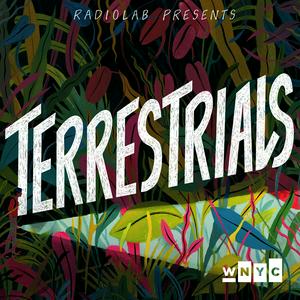
Welcome, nature lovers, to the home of the Terrestrials podcast and family-friendly Radiolab episodes about nature. Every other week, host Lulu Miller will take you on a nature walk to encounter a plant or animal behaving in ways that will surprise you. Squirrels that can regrow their brains, octopuses that can outsmart their human captors, honeybees that can predict the future. You don’t have to be a kid to listen, just someone who likes to see the world anew.
You’ll hear a range of nature stories on this podcast. Sometimes these will be brand new Terrestrials episodes, full of original songs (by “The Songbud” Alan Goffinski) that tell a fantastical-sounding story about nature that is 100% true. Sometimes these will be our very best, shiniest, furriest, leafiest Radiolab episodes about animals or plants or nature.
The stories that drop here will always be family-friendly and safe for kids. They will always be sound-rich and full of the vivid, gripping storytelling you’ve come to expect from Radiolab. They will always transport you to the beyond-human world: into the depths of the ocean, into jungles, prairies, forests, space, snow, wildflower fields and beyond. Sometimes we’ll encounter something so wild we just have to break out into song about it! Don’t worry, good voices not required.
Join us on this adventure!
Site web du podcastÉcoutez Terrestrials, Véto Inside ou d'autres podcasts du monde entier - avec l'app de radio.fr
Obtenez l’app radio.fr gratuite
- Ajout de radios et podcasts en favoris
- Diffusion via Wi-Fi ou Bluetooth
- Carplay & Android Auto compatibles
- Et encore plus de fonctionnalités
Obtenez l’app radio.fr gratuite
- Ajout de radios et podcasts en favoris
- Diffusion via Wi-Fi ou Bluetooth
- Carplay & Android Auto compatibles
- Et encore plus de fonctionnalités
Terrestrials
Scannez le code,
Téléchargez l’app,
Écoutez.
Téléchargez l’app,
Écoutez.
Terrestrials: Podcasts du groupe
 France

