PodcastsGouvernementSupreme Court of Canada Hearings (Floor Audio)

Supreme Court of Canada Hearings (Floor Audio)

SCC Hearings Podcast
Supreme Court of Canada Hearings (Floor Audio)
Dernier épisode

167 épisodes

  • Supreme Court of Canada Hearings (Floor Audio)

    His Majesty the King in Right of Canada v. Damodar Arapakota (42061)

    17/04/2026 | 1 h 12 min
    The respondent, Damodar Arapakota, was charged with bribing a foreign public official, contrary to s. 3(1)(a) of the Corruption of Foreign Public Officials Act, S.C. 1998, c. 34. The Crown alleged that the respondent bribed an official with the government of Botswana by paying for the official’s family vacation in Orlando, Florida, in return for which the respondent received letters confirming the government of Botswana’s intention to award a contract to his company and confirming the value of the prospective contract. The trial judge found that the respondent conferred a material benefit on the official, but that the benefit was not consideration for the letters that the official later provided. She further found that the letters did not rise to the level of a material or tangible economic advantage sufficient to trigger liability under s. 3(1)(a). As a result, she acquitted the respondent. The Crown appealed the acquittal. The majority of the Court of Appeal for Ontario dismissed the appeal finding that while the trial judge misinterpreted one of the elements of the offence at s. 3(1)(a), this error had no impact on the proper disposition of the case. Justice Monahan, dissenting, would have allowed the appeal, set aside the acquittal and ordered a new trial. He found that the trial judge erred in her interpretation of s. 3(1)(a), which had a material impact on the verdict.

    Argued Date

    2026-04-16

    Keywords

    Criminal law — Bribing a foreign public official — Elements of offence — Whether the majority of the Court of Appeal erred in its interpretation of s. 3(1)(a) of the Corruption of Foreign Public Officials Act, S.C. 1998, c. 34 — Whether the majority of the Court of Appeal erred in finding that the trial judge’s legal error did not affect the verdict.

    Notes

    (Ontario) (Criminal) (As of Right)

    Language

    Floor Audio

    Disclaimers

    This podcast is created as a public service to promote public access and awareness of the workings of Canada's highest court. It is not affiliated with or endorsed by the Court. The original version of this hearing may be found on the Supreme Court of Canada's website. The above case summary was prepared by the Office of the Registrar of the Supreme Court of Canada (Law Branch).
  • Supreme Court of Canada Hearings (Floor Audio)

    R.B.-C. v. His Majesty the King (41677)

    10/04/2026 | 3 h 38 min
    R.B.-C., an Iranian citizen in Canada on a post-graduation work permit, was convicted for sexual assault. More than 14 months after conviction, a conditional sentence of two years less a day plus probation was ordered. R.B.-C. applied for a stay of proceedings as a remedy for unreasonable delay during the sentencing phase of proceedings in breach of s. 11(b) of the Charter of Rights and Freedoms. The motions judge applied R. v. Charley, 2019 ONCA 726, which adopted the framework set out in R. v. Jordan, 2016 SCC 27, and which set a five-month presumptive ceiling for post-verdict delay. After calculating total delay and deductions, the motions judge derived a net delay below the presumptive five-month ceiling and dismissed the motion to stay proceedings. The Court of Appeal allowed an appeal. It held post-conviction delay exceeded the five-month presumptive ceiling and the appropriate remedy was to reduce the sentence to 20 months.

    Argued Date

    2026-01-16

    Keywords

    Charter of Rights and Freedoms — Right to be tried within a reasonable time — Remedies — What is the test for unreasonable delay in the sentencing phase — What is the appropriate remedy for unreasonable delay in the sentencing phase?

    Notes

    (Ontario) (Criminal) (By Leave) (Publication ban in case)

    Language

    Floor Audio

    Disclaimers

    This podcast is created as a public service to promote public access and awareness of the workings of Canada's highest court. It is not affiliated with or endorsed by the Court. The original version of this hearing may be found on the Supreme Court of Canada's website. The above case summary was prepared by the Office of the Registrar of the Supreme Court of Canada (Law Branch).
  • Supreme Court of Canada Hearings (Floor Audio)

    English Montreal School Board, et al. v. Attorney General of Quebec, et al. (Day 4/4) (41231)

    26/03/2026 | 3 h 32 min
    The Act respecting the laicity of the State was passed and assented to on June 16, 2019. Its purposes include affirming the laicity of the state in Quebec and specifying the general obligations arising therefrom, prohibiting the listed persons from wearing religious symbols in the exercise of their functions and requiring those persons to perform their functions with their face uncovered. The Act also contains provisions through which the legislature exercises the override power granted to it by s. 52 of the Quebec Charter and s. 33 of the Canadian Charter and permits the Act to apply notwithstanding certain rights and freedoms.Once the Act came into force, a number of persons, groups of persons and organizations brought separate proceedings challenging the constitutionality of the Act or certain of its provisions. They raised constitutional grounds, some of which were related to the Canadian Charter or the Quebec Charter. The Superior Court largely dismissed the challenge, except on two points. The Court of Appeal arrived at the same conclusions except as regards the educational language rights that s. 23 of the Canadian Charter guarantees to Canadian citizens belonging to Quebec’s English linguistic minority. Unlike the trial judge, the Court of Appeal found that the Act does not infringe s. 23.

    Argued Date

    2026-03-26

    Keywords

    Constitutional law — Constitutional validity — Division of powers — Pre-Confederation legislation — Constitutional architecture and unwritten principles — Charters of rights — Notwithstanding clauses — Rights guaranteed equally to both sexes — Minority language educational rights — Democratic rights of citizens — Enumerations — Whether grounds raised to challenge constitutional validity of Act respecting the laicity of the State should be accepted — Canadian Charter of Rights and Freedoms, ss. 3, 23, 28 and 33 — Charter of human rights and freedoms, ss. 50.1 and 52 — Act respecting the laicity of the State, CQLR, c. L-0.3.

    Notes

    (Quebec) (Civil) (By Leave)

    Language

    Floor Audio

    Disclaimers

    This podcast is created as a public service to promote public access and awareness of the workings of Canada's highest court. It is not affiliated with or endorsed by the Court. The original version of this hearing may be found on the Supreme Court of Canada's website. The above case summary was prepared by the Office of the Registrar of the Supreme Court of Canada (Law Branch).
  • Supreme Court of Canada Hearings (Floor Audio)

    English Montreal School Board, et al. v. Attorney General of Quebec, et al. (Day 3/3) (41231)

    25/03/2026 | 3 h 7 min
    The Act respecting the laicity of the State was passed and assented to on June 16, 2019. Its purposes include affirming the laicity of the state in Quebec and specifying the general obligations arising therefrom, prohibiting the listed persons from wearing religious symbols in the exercise of their functions and requiring those persons to perform their functions with their face uncovered. The Act also contains provisions through which the legislature exercises the override power granted to it by s. 52 of the Quebec Charter and s. 33 of the Canadian Charter and permits the Act to apply notwithstanding certain rights and freedoms.Once the Act came into force, a number of persons, groups of persons and organizations brought separate proceedings challenging the constitutionality of the Act or certain of its provisions. They raised constitutional grounds, some of which were related to the Canadian Charter or the Quebec Charter. The Superior Court largely dismissed the challenge, except on two points. The Court of Appeal arrived at the same conclusions except as regards the educational language rights that s. 23 of the Canadian Charter guarantees to Canadian citizens belonging to Quebec’s English linguistic minority. Unlike the trial judge, the Court of Appeal found that the Act does not infringe s. 23.

    Argued Date

    2026-03-25

    Keywords

    Constitutional law — Constitutional validity — Division of powers — Pre-Confederation legislation — Constitutional architecture and unwritten principles — Charters of rights — Notwithstanding clauses — Rights guaranteed equally to both sexes — Minority language educational rights — Democratic rights of citizens — Enumerations — Whether grounds raised to challenge constitutional validity of Act respecting the laicity of the State should be accepted — Canadian Charter of Rights and Freedoms, ss. 3, 23, 28 and 33 — Charter of human rights and freedoms, ss. 50.1 and 52 — Act respecting the laicity of the State, CQLR, c. L-0.3.

    Notes

    (Quebec) (Civil) (By Leave)

    Language

    Floor Audio

    Disclaimers

    This podcast is created as a public service to promote public access and awareness of the workings of Canada's highest court. It is not affiliated with or endorsed by the Court. The original version of this hearing may be found on the Supreme Court of Canada's website. The above case summary was prepared by the Office of the Registrar of the Supreme Court of Canada (Law Branch).
  • Supreme Court of Canada Hearings (Floor Audio)

    English Montreal School Board, et al. v. Attorney General of Quebec, et al. (Day 2/2) (41231)

    24/03/2026 | 3 h 18 min
    The Act respecting the laicity of the State was passed and assented to on June 16, 2019. Its purposes include affirming the laicity of the state in Quebec and specifying the general obligations arising therefrom, prohibiting the listed persons from wearing religious symbols in the exercise of their functions and requiring those persons to perform their functions with their face uncovered. The Act also contains provisions through which the legislature exercises the override power granted to it by s. 52 of the Quebec Charter and s. 33 of the Canadian Charter and permits the Act to apply notwithstanding certain rights and freedoms.Once the Act came into force, a number of persons, groups of persons and organizations brought separate proceedings challenging the constitutionality of the Act or certain of its provisions. They raised constitutional grounds, some of which were related to the Canadian Charter or the Quebec Charter. The Superior Court largely dismissed the challenge, except on two points. The Court of Appeal arrived at the same conclusions except as regards the educational language rights that s. 23 of the Canadian Charter guarantees to Canadian citizens belonging to Quebec’s English linguistic minority. Unlike the trial judge, the Court of Appeal found that the Act does not infringe s. 23.

    Argued Date

    2026-03-24

    Keywords

    Constitutional law — Constitutional validity — Division of powers — Pre-Confederation legislation — Constitutional architecture and unwritten principles — Charters of rights — Notwithstanding clauses — Rights guaranteed equally to both sexes — Minority language educational rights — Democratic rights of citizens — Enumerations — Whether grounds raised to challenge constitutional validity of Act respecting the laicity of the State should be accepted — Canadian Charter of Rights and Freedoms, ss. 3, 23, 28 and 33 — Charter of human rights and freedoms, ss. 50.1 and 52 — Act respecting the laicity of the State, CQLR, c. L-0.3.

    Notes

    (Quebec) (Civil) (By Leave)

    Language

    Floor Audio

    Disclaimers

    This podcast is created as a public service to promote public access and awareness of the workings of Canada's highest court. It is not affiliated with or endorsed by the Court. The original version of this hearing may be found on the Supreme Court of Canada's website. The above case summary was prepared by the Office of the Registrar of the Supreme Court of Canada (Law Branch).

Plus de podcasts Gouvernement

À propos de Supreme Court of Canada Hearings (Floor Audio)

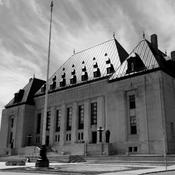
Unedited floor audio of oral arguments at the Supreme Court of Canada, i.e., in both English and French. Created as a public service to promote public access and awareness of the workings of Canada's highest court. Not affiliated with or endorsed by the Court. Original archived webcasts can be found on the Court's website at scc-csc.ca. Feedback welcome: podcast at scchearings dot ca.

Site web du podcast

Écoutez Supreme Court of Canada Hearings (Floor Audio), QUARTIER LIBRE ou d'autres podcasts du monde entier - avec l'app de radio.fr

Obtenez l’app radio.fr
 gratuite

  • Ajout de radios et podcasts en favoris
  • Diffusion via Wi-Fi ou Bluetooth
  • Carplay & Android Auto compatibles
  • Et encore plus de fonctionnalités

Supreme Court of Canada Hearings (Floor Audio): Podcasts du groupe

Applications
Réseaux sociaux
v8.8.10| © 2007-2026 radio.de GmbH
Generated: 4/19/2026 - 11:27:42 PM