

Écoutez gratuitement ce podcast dans l'application : Télécharger gratuitement dans l'App Store
radio.fr
Minuteur
Sauvegarde des favoris
56 épisodes
Christopher Nolan's Odyssey 3: The Pedants Revolt
23/07/2026 | 56 minLast week, Mary and Charlotte gave their instant verdict on Christopher Nolan’s Odyssey only hours after emerging from the premiere, dazzled somewhat by the proximity of so much A-list talent. A week later… they unleash their inner nerds to quibble with some of the decisions and omissions Nolan made in adapting Homer.
Their biggest gripe is the treatment of the female characters. Nausicaa and the ghost of Odysseus’ mother didn’t make the edit. Helen of Troy is robbed of agency and becomes a victim. The Gods are mostly cut and there’s even the implication that some of the more magical elements of the story might simply be a figment of the imagination resulting from too much lotus eating. Odysseus himself has become a bit of a goody two-shoes, only lying when he really has to and wracked by guilt of all the things he did at Troy, unlike Homer’s Odysseus who doesn’t think twice about ransacking innocent people.
It’s not all moan moan moan though. Who can disapprove of the enhanced role that Odysseus’ loyal dog Argus is given, complete with his own backstory, and the power of the canine performance? Give that dog an Oscar. Or better yet, a nice meaty bone.
Mary and Charlotte recommend:
No more reading than we suggested last week (except to urge people back to Homer itself). BUT if you haven't seen the film, you can see Argus the dog here: https://www.youtube.com/shorts/sxgHV-BmNrI
@instaclassicpod for Insta, TikTok and YouTube@insta_classics for Xemail: instantclassicspod@gmail.com
Instant Classics handmade by Vespucci
Producer: Jonty Claypole
Video Editor: Jak Ford
Theme music: Casey Gibson
Learn more about your ad choices. Visit podcastchoices.com/adchoicesChristopher Nolan's Odyssey 2: Instant Verdict
15/07/2026 | 51 minMary and Charlotte emerge from the premiere of The Odyssey, pausing only for a night’s rest, before regathering in the morning with strong coffees to give their instant verdict on Christopher Nolan’s summer blockbuster.
Headlines
Winners: Complicated, twisty-turny timelines; multiculturalism; Samantha Morton; Charlotte Higgins
Losers: Feminism; humour; The Gods; Mary Beard
To find out what all this means, listen to the episode!
Further reading (and watching):
The basic message here is “go watch the movie”. Mary is perhaps less keen overall, but still urges you to go see. It is also worth having a look at (and comparing) Ubert Pasolni’s The Return which is focussed on the second half of the poem. https://en.wikipedia.org/wiki/The_Return_(2024_film)
Charlotte mentioned Colm Tóibín’s novel House of Names.
@instaclassicpod for Insta, TikTok and YouTube
@insta_classics for X
email: instantclassicspod@gmail.com
Instant Classics handmade by Vespucci
Producer: Jonty Claypole
Video Editor: Jak Ford
Theme music: Casey Gibson
Learn more about your ad choices. Visit podcastchoices.com/adchoicesChristopher Nolan's Odyssey 1: What you need to know before you go
09/07/2026 | 47 minChristopher Nolan’s adaptation of The Odyssey - the most eagerly anticipated event since Odysseus spied the shores of Ithaca - is almost with us at last. Mary and Charlotte have been exploring Homer’s epic over the last year in the Instant Classics Book Club, but if you’re time poor or just want a little refresher, then you’ll find the basics in this pre-screening primer.
In the first half, they run through what actually happens in The Odyssey, as Odysseus, a twisty-turny man, makes his twisty-turny way back home. In the second, they pull out some of the big themes from the book - the problems of homecoming, post-traumatic disorder, the cost of war, growing up, fidelity, colonisation, and the thin line between so-called civilisation and so-called barbarism. This poem really does have everything, yet manages to be poetic and hugely entertaining while about it. In theory, it’s the perfect material for Christopher Nolan, who has long been fascinated with non-linear story-telling, the effects of war, and journeys. But whether he succeeds will be the subject of next week’s episode…
Further reading
Charlotte and Mary usually quote from Emily Wilson’s translation of the poem (W. W. Norton, 2018), but another good recent translation is by Daniel Mendelsohn (Chicago UP and Penguin Classics, 2025). But there are many translations on offer which will not mislead – so do not get too anxious about getting the “right” one.
Approachable introductions to the poem include:
Barbara Graziosi, Homer: a very short introduction (Oxford UP, 2019)
Edith Hall, The Return of Ulysses (I. B. Tauris, 2012)
Elton Barker and Joel Christensen, Homer: a beginner’s guide (Oneworld, 2013)
Moses Finley, The World of Odysseus is an old favourite (reissued by New York Review of Books, 2002)
@instaclassicpod for Insta, TikTok and YouTube
@insta_classics for X
email: instantclassicspod@gmail.com
Instant Classics handmade by Vespucci
Producer: Jonty Claypole
Video Editor: Jak Ford
Theme music: Casey Gibson
Learn more about your ad choices. Visit podcastchoices.com/adchoicesUSA 250: “I’m Spartacus!”
02/07/2026 | 47 minMary and Charlotte welcome Professor Maria Wyke back on the show to talk about two of the most famous words in cinema: “I’m Spartacus!” Hollywood has always had an obsession with Ancient Rome. So much so, the Roman Epic - or sword-and-sandal - is a cinematic genre in its own right. Stanley Kubrick’s Spartacus, starring Kirk Douglas, Laurence Olivier and a host of other stars, is perhaps the towering achievement. But what is Spartacus really about?
It was adapted by Dalton Trumbo from Howard Fast’s 1951 novel. Both men had fallen foul of the House Un-American Activities Committee and were blacklisted from Hollywood. Their names were proudly displayed at the start of the film, marking the decline of the Committee’s influence on American culture. In some ways, the refusal by Spartacus’ slave army to betray their leader to the Roman authorities is a message about free speech and solidarity. The character of black slave Draba who defies white supremacist authority is also a statement on the Civil Rights movement. But the brilliance of Spartacus is that it defies easy interpretation and deliberately plays with themes and symbols - not least in the crucifixion scene at the end of the film.
Mary, Charlotte and Maria move forwards a few decades to Gladiator - and argue the power of that film is the way it similarly seems to, but doesn’t quite, push a moral message. Gladiator 2 on the other hand…
Further reading
Our wonderful guest Maria Wyke’s book Projecting the Past (Routlege, 1997) has a fascinating chapter on Spartacus
Howard Fast’s novel Spartacus, on which Kubrick’s film was based, is on the Internet Archive.
See also:
A. Futtrell, “Seeing Red”, in Sandra Joshel et al. (eds), Imperial Projections (Johns Hopkins UP, 2001)
Martin Winkler, Spartacus: Film and History (Wiley-Blackwell, 2007)
Martin Winkler, Gladiator: Film and History (Wiley-Blackwell, 2004)
@instaclassicpod for Insta, TikTok and YouTube
@insta_classics for X
email: instantclassicspod@gmail.com
Instant Classics handmade by Vespucci
Producer: Jonty Claypole
Video Editor: Jak Ford
Theme music: Casey Gibson
Learn more about your ad choices. Visit podcastchoices.com/adchoicesUSA 250: Building a new Rome
25/06/2026 | 52 minShortly after its formation, the United States of America initiated a building program for both state and federal governments, turning to Ancient Greece and Rome for inspiration. As Mary and Charlotte discover… In-between duties like writing the Declaration of Independence, acting as Minister to France and being President, Thomas Jefferson found time to make inspiration trips to study Roman architecture in France. Although he didn’t design the Capitol in Washington DC, he set the tone with his designs for Monticello (his Virginia home) as well as the University of Virginia and Virginia State Capitol.
Over the decades, other influences gained greater prominence - whether nostalgic styles like the gothic or the modernity of Frank Lloyd Wright. But neo-classicism is on the rise once again. According to President Trump’s executive order Making Architecture Beautiful Again, ‘classical’ is the preferred style for federal buildings - in particular, the plan for a ‘United States Triumphal Arch’.
Mary and Charlotte recommend some further reading:
Donald Trump’s executive order on classical architecture.
Edwin Heathcote, the architecture critic of the Financial Times, on triumphal arches and DC.
The DC Commission of Fine Arts have published the schemes for Trump’s arch: https://www.cfa.gov/system/files/meeting-materials/1-CFA-16APR26-1-EOP_DOI_Arch-pres%20%5BApr9%5D.pdf
The first scheme for the Navy Memorial, including the triumphal arch is shown here: https://escholarship.org/content/qt9r40k5hd/qt9r40k5hd_noSplash_87482e06371178d8fcd9bb449eb06f39.pdf
A useful website for Jefferson’s classical architecture: https://www.monticello.org/jefferson-and/architecture
The temporary triumphal arch in DC is pictured here: https://ggwash.org/view/40678/dc-once-had-its-own-arc-de-triomphe
The detailed history of triumphal arches, from antiquity to now, is the subject of Peter Howell, The Triumphal Arch (Unicorn, 2021)
Mary’s The Roman Triumph (Harvard UP, pb, 2009) discusses the Roman significance of these arches, and the incident with Pompey’s elephants.
@instaclassicpod for Insta, TikTok and YouTube
@insta_classics for X
email: instantclassicspod@gmail.com
Instant Classics handmade by Vespucci
Producer: Jonty Claypole
Video Editor: Jak Ford
Theme music: Casey Gibson
Learn more about your ad choices. Visit podcastchoices.com/adchoices
Plus de podcasts Arts
 Lecture du coranArts, Livres
 Fréquence 9 3/4 - Le podcast Harry Potter chapitre par chapitreArts, Fiction, Livres, Science-fiction
 Conversations chez LapérouseActualité : analyses, Actualités, Arts, Livres
 Liste de lectureArts, Livres
 La Voix des BijouxArts, Culture et société, Documentaire, Histoire
 VulgaireArts, Humour, Éducation
 Les Histoires des ProphètesArts, Arts du spectacle, Fiction, Islam, Religion et spiritualité, Science-fiction
 Au Coeur De La ModeArts, Mode et beauté
 COUCH by Lena SituationsArts, Culture et société, Développement personnel, Interviews cinéma, Loisirs, Mode et beauté, Télévision et cinéma, Éducation
 Bookmakers : le making-of de la littératureActualités, Arts, Culture et société, Gouvernement
Podcasts tendance de Arts
 En développement : le labo des scénaristesArts
 Livres audioArts, Histoire, Hobbies, Livres, Loisirs
 Procrastination, pour procrastiner utile sur son écritureArts
 HISTOIRES D’AMERIQUEArts, Histoire, Livres
 Livres Laugh LoveArts, Livres
 Sous la couverture des livresArts, Livres
 Les podcasts d'Ombres BlanchesArts, Fiction, Livres
 TransmissionActualités, Arts, Culture et société, Gouvernement
 Les histoires de MiniParisiensArts, Livres
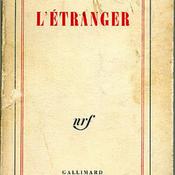 Albert Camus, l’EtrangerArts
 Planète CoréeArts, Culture et société, Documentaire, Histoire
 Meet the WritersApprentissage des langues, Arts, Comédies, Fiction, Livres, Éducation
 Dinner with SallyArts, Culture et société, Mode et beauté, Télévision et cinéma
 Louvre 2025Arts
 glouglouAlimentation, Arts, Culture et société, Relations
 Fishwives of ParisAlimentation, Arts, Culture et société, Destinations et voyages, Histoire
 La malle aux livresArts, Livres
 OPEN BOOKActualité du divertissement, Actualités, Arts, Culture et société, Documentaire, Livres
 Chroniques du JupiverseArts, Business, Entreprenariat, Livres
 Com d'ArchiArts, Culture et société, Design
À propos de Instant Classics
Join world-renowned classicist Mary Beard and Guardian chief culture writer Charlotte Higgins for Instant Classics — the weekly podcast that proves ancient history is still relevant.
Ancient stories, modern twists… and no degree in Classics required.
Discover The Odyssey and join the book club at: https://www.exploringtheodyssey.com
Écoutez Instant Classics, Lecture du coran ou d'autres podcasts du monde entier - avec l'app de radio.fr

Obtenez l’app radio.fr gratuite
- Ajout de radios et podcasts en favoris
- Diffusion via Wi-Fi ou Bluetooth
- Carplay & Android Auto compatibles
- Et encore plus de fonctionnalités
Obtenez l’app radio.fr gratuite
- Ajout de radios et podcasts en favoris
- Diffusion via Wi-Fi ou Bluetooth
- Carplay & Android Auto compatibles
- Et encore plus de fonctionnalités
Instant Classics
Scannez le code,
Téléchargez l’app,
Écoutez.
Téléchargez l’app,
Écoutez.
Instant Classics: Podcasts du groupe
 France