

Écoutez gratuitement ce podcast dans l'application : Télécharger gratuitement dans l'App Store
radio.fr
Minuteur
Sauvegarde des favoris
600 épisodes
BFW Revisited: Religion and the American Revolution
13/10/2026 | 55 minIn late spring 1776, 150 armed revolutionary soldiers marched into the Anglican Trinity Church to warn the reverend to stop praying for King George III and his family. The reverend read the prayers anyway. Later that year, another Anglican reverend faced the same choice but made the opposite decision.
Throughout our recent conversations about Loyalism, we’ve heard that religion shaped the loyalty choices many early Americans made. In this revisited episode, Kate Carté helps us explore how the British Empire was a Protestant Empire and how the Revolution broke religious bonds, as well as political bonds.
Kate’s Book
RECOMMENDED NEXT EPISODES
🎧 Episode 214: Skepticism & American Faith
🎧 Episode 317: Jewish colonists in Early America
🎧 Episode 356: The Moravian Church in North America
🎧 Episode 392: Religion and Race in Early America
🎧 Episode 399: Denmark Vesey’s Bible
SUPPORT OUR WORK
🎁 Make a Donation to Ben Franklin’s World
REQUEST A TOPIC
📨 Topic Request Form
📫 liz@benfranklinsworld.com
WHEN YOU'RE READY
🗞️ BFW Gazette Newsletter
👩💻 Join the BFW Listener Community
🌍 Join the History Explorers Club
TAKE THE QUIZ
🧭 Discover How You Explore History (under 2 minutes)
👉 https://www.benfranklinsworld.com/quiz
LISTEN 🎧
🍎 Apple Podcasts
💚 Spotify
🎶 Amazon Music
🛜 Pandora
CONNECT
🦋 Liz on Bluesky
👩💻 Liz on LinkedIn
🛜 Liz’s Website
SAY THANKS
💜 Leave a review on Apple Podcasts
💚 Leave a rating on Spotify
*Book links are affiliate links. Every purchase supports the podcast.452 How Everyday Loyalists Experienced the Revolution
06/10/2026 | 1 h 23 minWe often ask why some Americans chose to remain loyal to the British and why they did not want to seek independence. But the question some Americans asked at the time of the Revolution focused more on navigating daily life: How could they protect their families, property, and honor when neighbors, committees, and crowds decided what side they were on?
Today we’re joined by three guests who will help us investigate the American Revolution through Loyalist eyes and explore how Loyalists experienced the American Revolution.
Timothy Compeau, an Associate Professor of History at Huron University College at Western University in London, Ontario; Bonnie Huskins who teaches history at St. Thomas University in Fredericton, New Brunswick; and Kacy Tillman, a professor of English and Writing at the University of Tampa.
Timothy's Book | Bonnie's Work | Kacy's Book
Show notes: https://www.benfranklinsworld.com/452
EPISODE OUTLINE
00:00:00 Introduction
00:06:07 The Origins and Definitions of the Term “Loyalist”
00:11:11 Common Misconceptions about Loyalists
00:22:52 How Communities Identified their Loyalist Neighbors
00:31:34 How Everyday Loyalists Experienced the Revolution
00:40:19 Women Loyalists and the Fear of Violence
00:50:40 Black Loyalists and the Search for Freedom
01:00:05 Post-War Animosities Between Loyalists and Revolutionaries
01:09:12 What We Still Get Wrong About the Revolution
RECOMMENDED NEXT EPISODES
🎧 Episode 085: American Loyalists in Canada
🎧 Episode 126: The Reintegration of American Loyalists
🎧 Episode 380: The Tory's Wife
🎧 Episode 421: Loyalism and Revolution in Georgia
🎧 Episode 441: The Escapes of David George
SUPPORT OUR WORK
🎁 Make a Donation to Ben Franklin’s World
REQUEST A TOPIC
📨 Topic Request Form
📫 liz@benfranklinsworld.com
WHEN YOU'RE READY
🗞️ BFW Gazette Newsletter
👩💻 Join the BFW Listener Community
🌍 Join the History Explorers Club
TAKE THE QUIZ
🧭 Discover How You Explore History (under 2 minutes)
👉 https://www.benfranklinsworld.com/quiz
LISTEN 🎧
🍎 Apple Podcasts
💚 Spotify
🎶 Amazon Music
🛜 Pandora
CONNECT
🦋 Liz on Bluesky
👩💻 Liz on LinkedIn
🛜 Liz’s Website
SAY THANKS
💜 Leave a review on Apple Podcasts
💚 Leave a rating on Spotify
*Book links are affiliate links. Every purchase supports the podcast.BFW Revisited: The Reintegration of American Loyalists
29/09/2026 | 48 minWhat would it take for you to forgive a neighbor who sided against you in a civil war? And what would you say to win back a community that you had fought against?
In our last episode, we explored loyalism across the Atlantic World and met Loyalists who, as serious political actors, had their own ideas about how the British Empire should operate. But the story of Loyalism didn’t end with the founding of the United States, nor with the end of the war.
In this revisited episode, Rebecca Brannon explores how South Carolina’s War for Independence was a true civil war, one that pitted neighbor against neighbor and, in some instances, fathers against sons.
Rebecca’s Book | Website
RECOMMENDED NEXT EPISODES
🎧 Episode 126: Reintegration of Loyalists in South Carolina
🎧 Episode 294: 1774: The Long Year of Revolution
🎧 Episode 330: Loyalism in the British Atlantic World
🎧 Episode 380: The Tory’s Wife
🎧 Episode 421: Loyalism and Revolution in Georgia
SUPPORT OUR WORK
🎁 Make a Donation to Ben Franklin’s World
REQUEST A TOPIC
📨 Topic Request Form
📫 liz@benfranklinsworld.com
WHEN YOU'RE READY
🗞️ BFW Gazette Newsletter
👩💻 Join the BFW Listener Community
🌍 Join the History Explorers Club
TAKE THE QUIZ
🧭 Discover How You Explore History (under 2 minutes)
👉 https://www.benfranklinsworld.com/quiz
LISTEN 🎧
🍎 Apple Podcasts
💚 Spotify
🎶 Amazon Music
🛜 Pandora
CONNECT
🦋 Liz on Bluesky
👩💻 Liz on LinkedIn
🛜 Liz’s Website
SAY THANKS
💜 Leave a review on Apple Podcasts
💚 Leave a rating on Spotify
*Book links are affiliate links. Every purchase supports the podcast.BFW Revisited: Loyalism in the British Atlantic World
22/09/2026 | 1 h 6 minIn the late winter of 1775, colonists in a village outside of New York City hoisted the royal standard of King George III 75 feet into the air.
The standard raisers signed their names to a proclamation pledging to defend the king and his government. For them, defending the British crown did not mean surrender; it served as a clear statement of what it still meant to be British.
In Episode 451, we explored a court-martial trial that allowed us to see how early Americans thought about what it would mean to be an American after independence.
In this revisited episode, historian Brad Jones helps us take up the other half of that question: what did it mean to be British during the age of the American Revolution? And why did answers to this question take different forms around the Atlantic World?
Brad’s Book
SUPPORT OUR WORK
🎁 Make a Donation to Ben Franklin’s World
REQUEST A TOPIC
📨 Topic Request Form
📫 liz@benfranklinsworld.com
WHEN YOU'RE READY
🗞️ BFW Gazette Newsletter
👩💻 Join the BFW Listener Community
🌍 Join the History Explorers Club
TAKE THE QUIZ
🧭 Discover How You Explore History (under 2 minutes)
👉 https://www.benfranklinsworld.com/quiz
LISTEN 🎧
🍎 Apple Podcasts
💚 Spotify
🎶 Amazon Music
🛜 Pandora
CONNECT
🦋 Liz on Bluesky
👩💻 Liz on LinkedIn
🛜 Liz’s Website
SAY THANKS
💜 Leave a review on Apple Podcasts
💚 Leave a rating on Spotify
*Book links are affiliate links. Every purchase supports the podcast.BFW Bonus: We Want More History
18/09/2026 | 20 minAmerican history is in the news a lot these days. We see and hear about fights over monuments, textbooks, and the stories we should include or exclude from our museums and historic markers.
What these stories overshadow is the great demand for more history in the United States. A coalition of historians and history organizations noticed this demand and decided to feed it by organizing a new initiative: A We Want More History weekend, which takes place September 25-27.
In this bonus episode, we’re joined by Beth English, the Executive Director of the Organization of American Historians, and Kate Masur, the John D. MacArthur Professor of History at Northwestern University. The guest historians share more about the origins of the national, coordinated weekend of history programs, how we can get involved, and where to find more information.
SUPPORT OUR WORK
🎁 Make a Donation to Ben Franklin’s World
REQUEST A TOPIC
📨 Topic Request Form
📫 liz@benfranklinsworld.com
WHEN YOU'RE READY
🗞️ BFW Gazette Newsletter
👩💻 Join the BFW Listener Community
🌍 Join the History Explorers Club
TAKE THE QUIZ
🧭 Discover How You Explore History (under 2 minutes)
👉 https://www.benfranklinsworld.com/quiz
LISTEN 🎧
🍎 Apple Podcasts
💚 Spotify
🎶 Amazon Music
🛜 Pandora
CONNECT
🦋 Liz on Bluesky
👩💻 Liz on LinkedIn
🛜 Liz’s Website
SAY THANKS
💜 Leave a review on Apple Podcasts
💚 Leave a rating on Spotify
*Book links are affiliate links. Every purchase supports the podcast.
Plus de podcasts Arts







Podcasts tendance de Arts












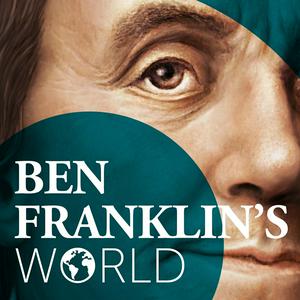
À propos de Ben Franklin's World
This is a multiple award-winning podcast about early American history. It’s a show for people who love history and who want to know more about the historical people and events that have impacted and shaped our present-day world.
Each episode features conversations with professional historians who help shed light on important people and events in early American history.
Site web du podcastÉcoutez Ben Franklin's World, Torchon ou d'autres podcasts du monde entier - avec l'app de radio.fr
Obtenez l’app radio.fr gratuite
- Ajout de radios et podcasts en favoris
- Diffusion via Wi-Fi ou Bluetooth
- Carplay & Android Auto compatibles
- Et encore plus de fonctionnalités
Obtenez l’app radio.fr gratuite
- Ajout de radios et podcasts en favoris
- Diffusion via Wi-Fi ou Bluetooth
- Carplay & Android Auto compatibles
- Et encore plus de fonctionnalités
Ben Franklin's World
Scannez le code,
Téléchargez l’app,
Écoutez.
Téléchargez l’app,
Écoutez.
 France