

Écoutez gratuitement ce podcast dans l'application : Télécharger gratuitement dans l'App Store
radio.fr
Minuteur
Sauvegarde des favoris
46 épisodes
A Plankton Ambassador: How Plankton Shaped Life on Earth
22/09/2026 | 37 minPlankton made life on Earth possible. So why do we know so little about them? In this episode of Oceanography, Clark speaks with Vincent Doumeizel, Senior Adviser on the Oceans to the United Nations Global Compact and author of The Power of Plankton. Together, they dive into the extraordinary world of organisms drifting through our oceans, from their role in producing oxygen and shaping evolution to their influence on the carbon cycle, marine food webs, and ocean health.
They also explore how new tools like environmental DNA, satellites, and AI are transforming plankton research, why plankton remain largely absent from environmental policy, and how understanding this mostly invisible ecosystem could reveal new ways to protect our oceans and our planet.
Support our science communication directly by donating to Pine Forest Media or directly on PayPal
Episode Guests: Vincent Doumeizel
Find the book, The Power of Plankton
Read the Plankton Manifesto
Connect with Vincent Doumeizel on LinkedIn or follow on social media @theseaweedrevolution
Listen to Pine Forest Media’s NEWEST PODCAST GREEN FREQUENCY
Episode Transcript and more information on the Pine Forest Media website
Follow Pine Forest Media on Instagram @pineforestmedia
Hosted, produced, and edited by Clark Marchese
Cover art by Jomiro Eming
Theme music by Nela Ruiz
Find some more Pine Forest Media podcasts below
Listen to Plastic Podcast on Spotify or Apple Podcasts
Listen to South Pole on Spotify or Apple Podcasts
Listen to Something in the Water on Spotify or Apple Podcasts
Hosted on Acast. See acast.com/privacy for more information.What Do We Need From Ocean Technology?
15/09/2026 | 27 minHow do we measure the ocean? Nicolas Pade, executive director of the European Marine Biological Resource Centre, joins Oceanography to explore the technologies making ocean observation possible, from satellites and autonomous floats to biological sensors, imaging and AI. We examine what scientists can already measure, why marine biodiversity remains so difficult to observe, and how individual data points become baselines, models and predictions. Grounded in Blue Tech Europe 2026, the conversation also reveals what it takes to move an idea from the laboratory into an observing system operating at scale.
Continue the conversation on Green Frequency with the companion episode, What Does Ocean Technology Need From Us?
Support our science communication directly by donating to Pine Forest Media or directly on PayPal
Episode Guests: Nicolas Pade
Visit the EMBRC website or follow the EMBRC on LinkedIn
Listen to Pine Forest Media’s NEWEST PODCAST GREEN FREQUENCY
Episode Transcript and more information on the Pine Forest Media website
Follow Pine Forest Media on Instagram @pineforestmedia
Hosted, produced, and edited by Clark Marchese
Cover art by Jomiro Eming
Theme music by Nela Ruiz
Find some more Pine Forest Media podcasts below
Listen to Plastic Podcast on Spotify or Apple Podcasts
Listen to South Pole on Spotify or Apple Podcasts
Listen to Something in the Water on Spotify or Apple Podcasts
Hosted on Acast. See acast.com/privacy for more information.Queer Voices in Oceanography
08/09/2026 | 1 h 12 minWhat does it mean to be queer in oceanography? In this special episode, nine LGBTQ+ scientists and ocean professionals share, in their own words, what it has meant to build lives and careers around the sea. Their work stretches from phytoplankton, deep-sea food webs, marine bioacoustics, and microbial ecology to ocean acidification, coastal pollution, fisheries, and marine protected areas. Across very different lives and disciplines, certain experiences begin to echo.
They remember the first queer scientist who made another future imaginable. They reflect on joy, friendship, and uncertainty aboard research vessels; the daily calculations surrounding visibility and safety; and the mentors, labmates, and chosen communities that helped them find their place in science. They also consider what universities, laboratories, and research leaders can do to make ocean fieldwork and life at sea safer and more inclusive.
But Queer Voices in Oceanography is not only a conversation about barriers. It is a portrait of nine people who love the ocean and have built their lives around understanding and protecting it. Together, their stories reveal why representation matters, what becomes possible when scientists can bring their whole selves to their work, and how the people who once needed to see a queer scientist are becoming the people a younger generation can see.
Support our science communication directly by donating to Pine Forest Media or directly on PayPal
Episode Guests:
Dr. Erin Jones
Jacob Snyder
Lee Miller
Jamie Blatter
Dr Jesus Alcazar Trevino
Nicolas Storie
Dr. Michael Henson
Dr. Marina Sanz-Martín
Dr. Tristan Mckenzie
To connect with more queer scientists visit 500 Queer Scientists
Episode Transcript and more information on the Pine Forest Media website
Follow Pine Forest Media on Instagram @pineforestmedia
Hosted, produced, and edited by Clark Marchese
Cover art by Jomiro Eming
Theme music by Nela Ruiz
Find some more Pine Forest Media podcasts below
Listen to Plastic Podcast on Spotify or Apple Podcasts
Listen to South Pole on Spotify or Apple Podcasts
Listen to Something in the Water on Spotify or Apple Podcasts
Hosted on Acast. See acast.com/privacy for more information.How Ocean Science Sails the Seven Seas
25/08/2026 | 34 minNot every ocean story gets heard. Ocean science and conservation work happens around the world, but research does not automatically reach the public, policymakers, or even other parts of the ocean community. So what determines which stories break through, and who helps important information travel further?
Giacomo Abrusci, founder of Seven Seas Media, joins Oceanography for a conversation about ocean communication, science media, and the people working to connect research with wider audiences. Seven Seas Media has spent more than a decade lowering barriers to participation in ocean conservation, publishing contributors from diverse regions, disciplines, and career stages.
The conversation explores why some environmental stories attract attention while others are overlooked, how independent media can connect silos within ocean conservation, and why accessibility, editorial independence, and long-form storytelling matter for science communication.
It also turns to the High Seas Treaty, conservation success stories, the realities of environmental decline, and the difference between optimism and agency. What does meaningful ocean action look like when no individual can solve a global problem alone?
From scientists and journalists to lawyers, designers, doctors, and community advocates, ocean conservation needs many kinds of expertise. Whatever your skills are, there may be a place for them in protecting the ocean.
Support our science communication directly by donating to Pine Forest Media or directly on PayPal
Episode Guests: Giacomo Abrusci
Visit the Seven Seas Media website, connect with them on LinkedIn or follow their YouTube channel.
Connect with Giacomo on LinkedIn
Listen to Pine Forest Media’s NEWEST PODCAST GREEN FREQUENCY
Episode Transcript and more information on the Pine Forest Media website
Follow Pine Forest Media on Instagram @pineforestmedia
Hosted, produced, and edited by Clark Marchese
Cover art by Jomiro Eming
Theme music by Nela Ruiz
Find some more Pine Forest Media podcasts below
Listen to Plastic Podcast on Spotify or Apple Podcasts
Listen to South Pole on Spotify or Apple Podcasts
Listen to Something in the Water on Spotify or Apple Podcasts
Hosted on Acast. See acast.com/privacy for more information.From Collapse to Comeback: How Sustainable Fisheries Are Built
11/08/2026 | 33 minNot long ago, the race to catch fish was pushing some U.S. fisheries toward collapse. Fishing seasons became shorter, boats went out in dangerous conditions, and fishermen, scientists, regulators, and conservationists often saw one another as enemies. So how did they begin working together?
Amanda Leland, executive director of Environmental Defense Fund and co-author of Sea Change, tells the story of the unlikely coalition that helped transform American fisheries management. Using Gulf red snapper as a case study, she explains how catch shares helped replace the race to fish with a system that gave fishermen greater flexibility and a direct stake in healthier fish populations. The conversation explores science, monitoring, livelihoods, trust, and the early mistakes that shaped better programs, offering a hopeful but hard-won lesson: lasting ocean conservation often begins by working with the people who depend on the resource most.
Support our science communication directly by donating to Pine Forest Media or directly on PayPal
Episode Guests: Amanda Lealand
Connect with Amanda Lealand on LinkedIn
Find Amanda’s Book, Sea Change
Learn more about the work of the Environmental Defense Fund
Listen to Pine Forest Media’s NEWEST PODCAST GREEN FREQUENCY
Episode Transcript and more information on the Pine Forest Media website
Follow Pine Forest Media on Instagram @pineforestmedia
Hosted, produced, and edited by Clark Marchese
Cover art by Jomiro Eming
Theme music by Nela Ruiz
Find some more Pine Forest Media podcasts below
Listen to Plastic Podcast on Spotify or Apple Podcasts
Listen to South Pole on Spotify or Apple Podcasts
Listen to Something in the Water on Spotify or Apple Podcasts
Hosted on Acast. See acast.com/privacy for more information.
Plus de podcasts Nature
 La vie partoutNature, Sciences
 THE BIG SHIFT ! ÉcologieCulture et société, Nature, Sciences
 Murmure EquinNature, Sciences
 Le Monde d'après par ReporterreNature, Sciences
 Jusqu'au SommetBusiness, Développement personnel, Entreprenariat, Nature, Sciences, Sports, Sports de nature, Éducation
 Y'a plus de saisonsHumour, Interviews de comédiens, Nature, Sciences
 Get BirdingLoisirs, Nature, Sciences, Sciences naturelles
 Ecoalf | Bluetiful StoriesNature, Sciences
 Engagés pour la natureBusiness, Entreprenariat, Gouvernement, Nature, Sciences
Podcasts tendance de Nature
 Sur la Piste du BISONCulture et société, Documentaire, Nature, Religion et spiritualité, Sciences, Spiritualité
 À Voix Haute pour la BiodiversitéNature, Sciences
- Jusqu'au SommetBusiness, Développement personnel, Entreprenariat, Nature, Sciences, Sports, Sports de nature, Éducation
 Tout tourne rond sur cette TerreCulture et société, Nature, Sciences
- Y'a plus de saisonsHumour, Interviews de comédiens, Nature, Sciences
 Paroles de designer en permaculture (jardinage et cueillette sauvage)Nature, Sciences
 Choses à Savoir PLANETENature, Sciences
 Brèves de Nature SauvageAnimaux, Enfants et Famille, Nature, Sciences
 Sound By NatureNature, Sciences
 Les Voix de la forêtNature, Sciences
 Plongée dans les océansNature, Sciences
 NaturalistesNature, Sciences
À propos de Oceanography | Marine Science and Ocean Stories
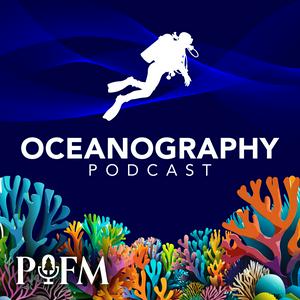
The ocean is never separate from human life. Oceanography is a marine science podcast about what we know, how we know it, and what we choose to do with that knowledge.Hosted by science communicator Clark Marchese, the show brings researchers, conservationists, policymakers, Indigenous knowledge holders, advocates, and storytellers into conversations that move from discovery to decision-making. We follow whale calls into the deep sea, trace pollution from land to water, visit research vessels and international summits, and ask how ocean science can inform policy that genuinely serves people and the planet.Each episode makes complex research accessible without flattening it, connecting marine biology and ocean discovery with conservation, technology, justice, power, and global policy. Expect deep-dive interviews, narrative explainers, and field reporting grounded in curiosity, rigor, and the belief that understanding the ocean should help us care for it.Oceanography is an endorsed activity of the United Nations Decade of Ocean Science for Sustainable Development and is produced by Pine Forest Media Hosted on Acast. See acast.com/privacy for more information.
Site web du podcastÉcoutez Oceanography | Marine Science and Ocean Stories, La vie partout ou d'autres podcasts du monde entier - avec l'app de radio.fr
Obtenez l’app radio.fr gratuite
- Ajout de radios et podcasts en favoris
- Diffusion via Wi-Fi ou Bluetooth
- Carplay & Android Auto compatibles
- Et encore plus de fonctionnalités
Obtenez l’app radio.fr gratuite
- Ajout de radios et podcasts en favoris
- Diffusion via Wi-Fi ou Bluetooth
- Carplay & Android Auto compatibles
- Et encore plus de fonctionnalités
Oceanography | Marine Science and Ocean Stories
Scannez le code,
Téléchargez l’app,
Écoutez.
Téléchargez l’app,
Écoutez.
Oceanography | Marine Science and Ocean Stories: Podcasts du groupe
 France