

Écoutez gratuitement ce podcast dans l'application : Télécharger gratuitement dans l'App Store
radio.fr
Minuteur
Sauvegarde des favoris
148 épisodes
Episode 147 | The Sound of Story: What Documentary Filmmakers Need to Hear | With James LeBrecht
30/09/2026 | 49 minEpisode Summary
What if documentary filmmakers thought about sound with the same intention they bring to images?
We spend enormous amounts of time thinking about cameras, lenses, lighting, and composition. But sound is more than something we need to capture cleanly. It can create emotion, establish a sense of place, bring us closer to our subjects, and shape the way an audience experiences a story.
In this episode of The Documentary Life, Chris G. Parkhurst is joined by acclaimed sound designer, filmmaker, and Crip Camp co-director James LeBrecht for a conversation about the storytelling power of sound. Drawing from more than four decades working in film and theater, Jim explores how ambience, Foley, production audio, music, and even imperfection can become part of a documentary’s emotional language. He also discusses where filmmakers should draw the ethical line between enhancing sound and altering the truth of a moment.
Ultimately, this conversation is less about microphones and equipment than it is about learning to listen differently. Jim encourages documentary filmmakers to treat sound as another storytelling tool—to notice the environments surrounding their subjects, collect the sounds of the worlds they enter, and think intentionally about what an audience hears as well as what they see. Because sometimes the sound that seems imperfect, insignificant, or merely in the background is precisely what brings us closer to the story.
In This Episode
Why documentary filmmakers should think about sound as a storytelling tool, not simply a technical necessity
How ambience can establish place, create emotion, and bring an audience closer to documentary subjects
Using Foley and subtle sound design to shape the audience’s sense of intimacy and perspective
Why imperfect production sound can sometimes communicate something important about the filmmaking itself
What filmmakers should record on location to give themselves more possibilities in post-production
Where the ethical line lies between cleaning up documentary audio and altering the truth of a moment
Why removing every hesitation, breath, and imperfection can also remove some of the humanity
How listening to films—not simply watching them—can help documentary filmmakers become better storytellers
Chapters
00:00 – Why documentary filmmakers need to think about sound differently
01:01 – Cambodia, a lost boom pole, and learning to adapt
07:50 – Why what we hear matters as much as what we see
08:24 – Meet sound designer and filmmaker James LeBrecht
10:45 – Every sound has a function—and an emotion
15:22 – When sound stops being support and becomes storytelling
19:01 – Using ambience and Foley to bring us closer to our subjects
23:25 – Why audiences forgive imperfect images before bad audio
25:38 – Minding the Gap and the storytelling power of imperfection
27:46 – How ambience can carry the emotional weight of a scene
33:47 – Collaborating with filmmakers on subjective sound design
35:53 – The ethics of cleaning up and altering documentary audio
40:38 – How filmmakers can learn to listen differently
43:03 – Using surround sound to create a sense of place
44:47 – Learning from the great sound designers
47:31 – Final thoughts with James LeBrecht
Featured Guest
James LeBrecht is an award-winning filmmaker, sound designer and mixer, author, podcast host, and disability rights activist with more than 45 years of experience working in film and theater. His sound credits include acclaimed documentaries such as Minding the Gap, The Waiting Room, and The Force, and he spent a decade as resident sound designer at Berkeley Repertory Theatre.
Jim co-directed and co-produced Crip Camp with Nicole Newnham, which received the Sundance Audience Award, an Independent Spirit Award, a Peabody Award, and an Academy Award nomination. He is also a co-founder of FWD-Doc, which supports documentary filmmakers with disabilities, and the 1IN4 Coalition, focused on disability inclusion and accessibility in film and television.
Learn More
📖 The Documentary Life Field Guide
"I've put together the free guide I wish someone had handed me when I first picked up a camera."
Download here:
The Documentary Life Field Guide
📺 Watch on YouTube
Watch the full conversation here:
https://www.youtube.com/watch?v=d4XwqGp0RyQ
🎙 Listen to More Episodes
Related episodes:
✉ Join the Newsletter
Receive weekly reflections, podcast updates, documentary resources, and practical advice for nonfiction filmmakers.
Sign up here
Support The Documentary Life
If you're enjoying the show, there are a few simple ways to support it:
• Subscribe
• Leave a review
• Share the episode with another filmmaker
• Join the newsletter
Connect
Website
Newsletter
Instagram
LinkedIn
YouTube
Barang Films
Quotes from the Episode
"Every sound has a function and every sound has an emotion." — James LeBrecht
"You can build an ambience of that location and slowly start peeling away elements that you've added." — James LeBrecht
"I want your film to be as effortless to listen to as possible." — James LeBrecht
"Sometimes these imperfections are important." — James LeBrecht
"You never want to lose the human touch." — James LeBrecht
"You just have to look at sound as just another tool in your storytelling." — James LeBrecht
"Listen carefully, because what we hear is every bit as much a part of the story as what we see." — Chris G. Parkhurst
About The Documentary Life
The Documentary Life is a podcast exploring the craft, business, and lived experience of documentary filmmaking. Through conversations with filmmakers from around the world, host Chris G. Parkhurst explores not only how documentaries are made, but what it means to build a meaningful, sustainable creative life.
And Lastly…
Stories matter. Listening matters. Human connection matters.
Thanks for spending part of your documentary life with us.Episode 146 | Wearing Every Hat: Surviving as a One-Person Crew | With Dandan Liu
16/09/2026 | 47 minEpisode Summary
What does it really take to make a documentary when you’re the entire crew?
Working as a one-person crew can offer documentary filmmakers an extraordinary kind of freedom. With less equipment and a smaller footprint, we can move quickly, respond to unexpected moments, and sometimes build a level of intimacy with our subjects that would be difficult with a larger production. But that freedom comes with responsibility: directing, shooting, recording sound, managing gear, following the story, and remaining present enough to notice what’s actually unfolding in front of us.
In this episode of The Documentary Life, Chris G. Parkhurst is joined by filmmaker and educator Dandan Liu for a thoughtful exploration of the realities of solo documentary filmmaking. Drawing from her own minimalist approach, Dandan discusses why she prefers working with a lighter footprint, how solo filmmaking can create greater intimacy with subjects, the pressure of carrying every production role yourself, what happens when creative independence becomes isolation, and why working alone doesn’t mean working without collaboration or outside perspective.
Ultimately, Dandan argues that minimalist filmmaking isn’t simply about carrying less gear or making production easier. It’s a philosophy built around story, relationships, presence, and trusting your own creative voice. A one-person crew won’t be right for every documentary, but when the story allows it, working smaller can sometimes help us get closer—to our subjects, to unexpected moments, and to the story that is actually trying to reveal itself.
In This Episode
Why working as a one-person crew can create greater intimacy with documentary subjects
The freedom—and responsibility—that comes with carrying every production role yourself
How minimalist filmmaking allows filmmakers to respond quickly to unexpected moments
Staying present while simultaneously directing, shooting, recording sound, and following the story
What happens when the independence of working solo begins to feel like isolation
Maintaining perspective, seeking feedback, and collaborating even when you make films alone
Why story, relationships, and creative instinct matter more than the size of your crew or camera package
How to know when a one-person crew is—or isn’t—the right approach for your documentary
Chapters
00:00 – Wearing every hat as a one-person documentary crew
00:49 – Nepal, impermanence, and learning to pay attention
08:27 – Why working smaller can bring us closer to the story
09:17 – Dandan Liu’s unlikely path from science to documentary filmmaking
17:43 – How Dandan became a solo documentary filmmaker
21:19 – Why a larger crew led her back to minimalist filmmaking
24:27 – The hidden pressure of being the only filmmaker in the room
28:12 – Staying open to the story when you’re working alone
30:09 – When creative independence becomes isolation
32:32 – Consent, responsibility, and collaborating with your subjects
34:16 – Why minimalist filmmaking is about more than carrying less gear
36:31 – Common misconceptions about one-person documentary crews
39:26 – Trusting your creative voice and embracing the unexpected
41:49 – Teaching a more minimalist, heart-driven approach to filmmaking
46:15 – Dandan’s documentary course and resources for filmmakers
Featured Guest
Dandan Liu is a documentary filmmaker, educator, and creative guide whose work is rooted in a minimalist, heart-driven approach to nonfiction storytelling. After beginning her career in science, Dandan stepped away from the laboratory and spent several years living in contemplative communities around the world, including a 14th-century Zen monastery in Japan. It was during this period of exploration that she picked up her first camera and began making documentaries, eventually discovering an approach built around small crews, simple equipment, intimacy with subjects, and the freedom to respond to stories as they unfold.
Today, Dandan teaches documentary filmmaking to students around the world, with courses covering the filmmaking process from pre-production through editing, color grading, and audio. At the heart of her teaching is the belief that compelling documentary filmmaking depends less on expensive equipment or large crews than on the filmmaker’s eye, relationships, creative voice, and ability to remain present with the story.
Desktop Documentaries
Make a Documentary from Your Family Story
Turn the stories, memories, and archives within your own family into a finished documentary short.
In this self-paced 12-week course, Dandan Liu guides you from finding and shaping your story through interviewing family members, working with archival material, and creating a 5–10 minute documentary.
Documentary Life listeners save $50 with the link above or by using coupon code DOCLIFE at checkout.
Elevate Your Documentary
Improve the look and sound of your documentary with three on-demand classes from Dandan Liu covering lighting, color grading, and sound editing.
Get 48 video lessons with practical techniques for lighting interviews, correcting and matching color, cleaning up dialogue, and balancing your audio mix.
Bundle Price: $97
Combined course value: $147
Sponsor
Protect your gear—and your production—with ATHOS Insurance, trusted by filmmakers and production professionals. Get fast, straightforward coverage for everything from short-term equipment insurance to annual production policies.
TDL listeners receive a $35 promotional credit:
Get your ATHOS quote + $35 credit
ATHOS Insurance is a sponsor of The Documentary Life.
Learn More
📖 The Documentary Life Field Guide
"I've put together the free guide I wish someone had handed me when I first picked up a camera."
Download here:
The Documentary Life Field Guide
📺 Watch on YouTube
Watch the full conversation here:
https://www.youtube.com/watch?v=JFerzbwNOjU
🎙 Listen to More Episodes
Related episodes:
✉ Join the Newsletter
Receive weekly reflections, podcast updates, documentary resources, and practical advice for nonfiction filmmakers.
Sign up here
Support The Documentary Life
If you're enjoying the show, there are a few simple ways to support it:
• Subscribe
• Leave a review
• Share the episode with another filmmaker
• Join the newsletter
Connect
Website
Newsletter
Instagram
LinkedIn
YouTube
Barang Films
Quotes from the Episode
"Pay attention while you're there. Not simply because paying attention will make your documentary better, but because you don't know if you'll ever stand there again." — Chris G. Parkhurst
"The smaller the crew, the more responsibility we carry. But sometimes carrying less is what allows us to pay closer attention to what's right in front of us." — Chris G. Parkhurst
"You have less weight that you have to carry physically, but there's a lot more pressure for you to just be on it." — Dandan Liu
"I really believe that I'm actually not the creator, I'm the receiver of the story." — Dandan Liu
"It's not the equipment that matters, it's really the eye and the heart behind the story. It's your relationships, it's the authenticity that you bring in as a filmmaker." — Dandan Liu
"You don't want to limit yourself and the possibilities of your story by being too attached to your preconceived notions of how it was...Episode 145 | AI and the Documentary Filmmaker | With Philip Shane
02/09/2026 | 48 minEpisode Summary
How can documentary filmmakers actually use AI—and where does it belong in the creative process?
Artificial intelligence is rapidly becoming part of the filmmaking toolkit, but beneath the hype and anxiety are practical questions: What can these tools genuinely help us do? Where do they fall short? And how do we embrace new technology without losing sight of the human judgment and creativity at the heart of documentary filmmaking?
In this episode of The Documentary Life, Chris G. Parkhurst is joined by award-winning documentary filmmaker, editor, and AI educator Philip Shane for a practical exploration of AI across the documentary workflow. They discuss using AI for research, brainstorming, interview preparation, transcript analysis, story development, B-roll and visual creation, music, voice generation, translation, and post-production—while also confronting its current limitations and the larger concerns surrounding copyright and creative authorship.
Drawing on nearly four decades of filmmaking and his own experience navigating earlier technological revolutions, Philip offers a useful perspective for filmmakers feeling overwhelmed by the speed of change: you don't need to use every new tool, but understanding what's possible allows you to make informed choices about what belongs in your own work. Ultimately, AI is another tool. The filmmaker still decides how—and whether—to use it.
In This Episode
Why AI may be the next major technological shift in documentary filmmaking
Practical ways filmmakers can use AI for research and story discovery
Brainstorming interview questions, outlines, and documentary structure with AI
Using transcripts and AI to find important moments buried in hours of footage
AI-generated B-roll, reenactments, and the questions they raise for nonfiction
Creating music, voices, translations, and other post-production elements with AI
Why working with AI requires iteration—not simply asking for an answer
How documentary filmmakers can embrace new tools without surrendering creative judgment
Chapters
00:00 – Why AI feels like the next filmmaking revolution
09:13 – Meet documentary filmmaker and AI educator Philip Shane
11:29 – How AI compares to earlier technological shifts in filmmaking
16:15 – What filmmakers misunderstand about AI
20:52 – Using AI for research, brainstorming, and story discovery
25:30 – AI in editing, B-roll, and documentary reenactments
30:08 – The AI tools documentary filmmakers are using now
34:46 – Using AI to find stories buried inside hours of footage
37:03 – AI-generated music, voices, and translation
41:23 – How filmmakers can learn AI without becoming overwhelmed
43:48 – Why AI requires collaboration, iteration, and creative judgment
46:08 – Philip Shane’s AI resources for documentary filmmakers
Featured Guest
Philip Shane is an award-winning documentary filmmaker, producer, director, editor, and educator with more than 35 years of experience in nonfiction storytelling. His credits include the Sundance Special Jury Prize-winning Being Elmo, Einstein, and Dancing in Jaffa, for which he received the Best Editing Award at the DocAviv Film Festival. Earlier in his career, Philip worked extensively in broadcast journalism at ABC News, contributing to programs that received both a duPont-Columbia Award and an Emmy. In recent years, he has become a speaker and educator on the use of artificial intelligence in documentary filmmaking, teaching filmmakers how emerging AI tools can be used across research, writing, imagery, audio, and post-production. Drawing on decades spent navigating technological change, Philip brings a filmmaker’s perspective to AI—focused not simply on what these tools can do, but on how documentary storytellers can use them thoughtfully, creatively, and with intention.
Desktop Documentaries
Documentary Filmmaker's AI Playbook (2026)
A four-part on-demand AI class created for documentary filmmakers.
Get more than nine hours of lessons, including a bonus session on the Midjourney editor.
Learn real workflows and current tools, with zero hype, from Sundance award-winning documentary filmmaker Philip Shane.
Doc AI Hub
Learn how documentary filmmakers are really using AI.
Doc AI Hub gives you live sessions, replays and curated updates to help you keep up with AI while staying focused on your film.
Intro Offer: 50% off your first month
Learn More
📖 The Documentary Life Field Guide
"I've put together the free guide I wish someone had handed me when I first picked up a camera."
Download here:
The Documentary Life Field Guide
📺 Watch on YouTube
Watch the full conversation here:
https://www.youtube.com/watch?v=XK36-4zfrAE
🎙 Listen to More Episodes
Related episodes:
✉ Join the Newsletter
Receive weekly reflections, podcast updates, documentary resources, and practical advice for nonfiction filmmakers.
Sign up here
Support The Documentary Life
If you're enjoying the show, there are a few simple ways to support it:
• Subscribe
• Leave a review
• Share the episode with another filmmaker
• Join the newsletter
Connect
Website
Newsletter
Instagram
LinkedIn
YouTube
Barang Films
Quotes from the Episode
"The tools of documentary filmmaking will always change. The work is learning how to change with them, without losing sight of why we picked up a camera in the first place." — Chris G. Parkhurst
"You realize, it's a tool... You're sitting there and you're working with it. You're molding it and shaping it." — Philip Shane
"No AI has edited well yet." — Philip Shane
"Technological change is just part of the deal." — Philip Shane
"Eventually, if you don't already, you'll see it as just another tool... and in fact, you don't have to use it, and you don't have to use all of it." — Philip Shane
About The Documentary Life
The Documentary Life is a podcast exploring the craft, business, and lived experience of documentary filmmaking. Through conversations with filmmakers from around the world, host Chris G. Parkhurst explores not only how documentaries are made, but what it means to build a meaningful, sustainable creative life.
And Lastly…
Stories matter. Listening matters. Human connection matters.
Thanks for spending part of your documentary life with us.Episode 144 | The Ethics Lab: Access, Consent & Trust | With Alan Berry & Mark Enochs
19/08/2026 | 46 minEpisode Summary
What does it mean when someone trusts you with their story?
Access may get a documentary filmmaker through the door, but it is only the beginning. The deeper responsibility lies in earning trust, maintaining it throughout production, and making ethical decisions about another person's story long after the interview ends.
In this episode of The Documentary Life, Chris G. Parkhurst is joined by filmmakers Alan Berry and Mark Enochs, directors of Dead Man's Line, for a practical conversation about access, consent, and trust in documentary filmmaking. Drawing from their experience interviewing law enforcement, family members, journalists, and others connected to an extraordinary Indianapolis hostage case, they explore how relationships are built before the camera rolls, why keeping promises to participants matters, what happens when difficult material emerges in an interview, and how filmmakers navigate subjects who may not agree with the finished film.
Rather than offering a simple set of ethical rules, this conversation examines documentary ethics as an ongoing human relationship—one requiring honesty, humility, clear communication, and an understanding that being entrusted with someone's story carries responsibilities that can continue long after the cameras stop rolling.
In This Episode
Why access is only the beginning of a documentary relationship
Building trust before the camera ever starts rolling
How honesty, preparation, and credibility help earn access
Setting clear expectations with documentary participants
Keeping promises when difficult material emerges in the edit
Navigating subjects who disagree with the finished film
The filmmaker’s responsibility to participants after production ends
Why documentary ethics ultimately comes down to how we treat people
Chapters
00:00 – The first moment of access: how documentary relationships begin
02:00 – Building trust before the camera starts rolling
04:35 – When access becomes earned access
13:41 – Living inside the relationship with your subjects
16:54 – Setting expectations and keeping promises to participants
19:06 – Ethical decisions filmmakers face in the edit
23:31 – What happens when subjects see the finished film?
28:04 – How Dead Man’s Line made its way to Hollywood
37:04 – Loyalty, collaboration, and the long road to Dead Man’s Wire
40:19 – The ultimate trust test—and what documentary filmmakers can learn from it
Featured Guests
Alan Berry and Mark Enochs are longtime friends and the filmmaking team behind Dead Man’s Line, a documentary exploring the extraordinary 1977 Indianapolis hostage crisis involving Tony Kiritsis. Through extensive archival material and interviews with law enforcement officers, journalists, legal professionals, family members, and others connected to the case, they built the film by earning access one relationship at a time. Their experience offers a valuable case study in the practical ethics of documentary filmmaking: establishing credibility, building trust before filming begins, keeping promises to participants, making difficult editorial decisions, and accepting that not everyone will agree with the finished film. Their work on Dead Man’s Line would later contribute archival material to Gus Van Sant’s narrative adaptation, Dead Man’s Wire, on which Berry and Enochs were credited as historical consultants.
Watch Dead Man's Line Full Documentary
https://www.youtube.com/watch?v=hUcZXVT6888
Sponsors
Learn More
📖 The Documentary Life Field Guide
"I've put together the free guide I wish someone had handed me when I first picked up a camera."
Download here:
The Documentary Life Field Guide
📺 Watch on YouTube
Watch the full conversation here:
https://youtu.be/SvVx__qM4yw
🎙 Listen to More Episodes
Related episodes:
✉ Join the Newsletter
Receive weekly reflections, podcast updates, documentary resources, and practical advice for nonfiction filmmakers.
Sign up here
Support The Documentary Life
If you're enjoying the show, there are a few simple ways to support it:
• Subscribe
• Leave a review
• Share the episode with another filmmaker
• Join the newsletter
Connect
Website
Newsletter
Instagram
LinkedIn
YouTube
Barang Films
Quotes from the Episode
"The relationship really starts before you ever get in the studio." — Alan Berry
"Treating people like how you'd want to be treated goes the furthest. And then on top of it, sticking to your word." — Alan Berry
"Show up when you say you're going to. Ask the questions you say you're going to ask." — Mark Enochs
"If you're being honest about what you're saying, I think you're going to go over well. But if you're trying to BS somebody... they're going to see through it." — Alan Berry
"What we've always wanted is just for people to see it." — Alan Berry
About The Documentary Life
The Documentary Life is a podcast exploring the craft, business, and lived experience of documentary filmmaking. Through conversations with filmmakers from around the world, host Chris G. Parkhurst explores not only how documentaries are made, but what it means to build a meaningful, sustainable creative life.
And Lastly…
Stories matter. Listening matters. Human connection matters.
Thanks for spending part of your documentary life with us.Episode 143 | How Do I Sustain My Documentary? | With Jilann Spitzmiller
05/08/2026 | 37 minEpisode Summary
What happens when the money runs out—but the film isn't finished?
For many documentary filmmakers, securing initial funding feels like the biggest hurdle. But as the months stretch into years, a different challenge begins to emerge: how do you sustain both your film and yourself through a process that rarely follows a straight line?
In this episode of The Documentary Life, Chris G. Parkhurst is joined by veteran documentary filmmaker and grant mentor Jilann Spitzmiller for an honest conversation about the realities of long-form documentary production. Together they explore sustaining funding over years—not months—why pauses in production don't mean failure, and how filmmakers can navigate the emotional, financial, and creative demands of projects that unfold over time.
Whether you're waiting on grants, balancing freelance work with your film, or wondering if your documentary has simply taken too long, this conversation offers reassurance that endurance—not uninterrupted momentum—is often what brings meaningful nonfiction stories to completion.
In This Episode
Why long production timelines are the norm—not the exception
Sustaining your documentary through years of uncertainty
Navigating the emotional and financial realities of long-form filmmaking
Balancing paid work while keeping your film alive
Letting go of guilt when life forces your documentary to pause
Building resilience through community, mentorship, and support
Why taking a break doesn't mean you've failed
Endurance as one of the most important documentary filmmaking skills
Chapters
00:00 – Why sustaining a documentary is harder than starting one
04:53 – Why long-form documentaries take years to complete
07:28 – Jilann Spitzmiller on the realities of long-haul filmmaking
14:26 – What happens when the funding runs out?
20:11 – Navigating the emotional middle of a documentary project
23:29 – Balancing paid work while keeping your film alive
28:28 – Finding personal grounding during long productions
31:21 – Why taking longer doesn't mean you're failing
33:20 – Building support through mentorship and community
36:13 – Final reflections and resources for documentary filmmakers
Featured Guest
Jilann Spitzmiller is an award-winning documentary filmmaker, cinematographer, producer, and mentor with more than 30 years of experience creating long-form, character-driven nonfiction films. Her work has been supported by organizations including the Sundance Institute, ITVS, and the Open Society Institute, and includes acclaimed documentaries such as Shakespeare Behind Bars and Meow Wolf: Origin Story. As an educator and grant mentor, Jilann has helped countless filmmakers navigate the realities of documentary funding, production, and distribution. Drawing on decades of experience making films that unfold over many years, she offers a candid and deeply reassuring perspective on sustaining both a documentary project and the filmmaker behind it.
Website
Sponsors
Desktop Documentaries – Doc Funding Hub
Looking for practical guidance on funding your documentary? The Doc Funding Hub from Desktop Documentaries, created by award-winning filmmakers Jilann Spitzmiller and Hank Rogerson, helps documentary filmmakers develop sustainable fundraising strategies through live webinars, funding alerts, an extensive resource library, and the Funding Essentials for Your Documentary course. As a listener of The Documentary Life, you'll receive 50% off your first two months when you join through the link below.
👉 Doc Funding Hub
👉 Documentary Budgeting Tool Kit
👉 The Ultimate Documentary Pitch Template Package
👉 Desktop Docs All Products
Learn More
📖 The Documentary Life Field Guide
"I've put together the free guide I wish someone had handed me when I first picked up a camera."
Download here:
The Documentary Life Field Guide
📺 Watch on YouTube
Watch the full conversation here:
youtube.com/watch?v=1kQ9Y44rE0c&feature=youtu.be
🎙 Listen to More Episodes
Related episodes:
Episode #142 How Do I Fund My Film? with Liz Nord
Episode #69 The Art of Film Funding with Carole Lee Dean
Episode #15 Shaking the Money Tree with Morrie Warshawski
✉ Join the Newsletter
Receive weekly reflections, podcast updates, documentary resources, and practical advice for nonfiction filmmakers.
Sign up here
Support The Documentary Life
If you're enjoying the show, there are a few simple ways to support it:
• Subscribe
• Leave a review
• Share the episode with another filmmaker
• Join the newsletter
Connect
Website
Newsletter
Instagram
LinkedIn
YouTube
Barang Films
Quotes from the Episode
"A documentary isn't measured by uninterrupted momentum. The question isn't whether your film pauses. The question is whether, when the time comes, you find your way back." — Chris G. Parkhurst
"If I had known then just how torturous this process would become... I probably never would have made the film. And maybe that's one of documentary's quiet mercies." — Chris G. Parkhurst
"Making a film is about commitment." — Jilann Spitzmiller
"There's no shame in having to step away. It's just the normal ebb and flow of making a long-term documentary." — Jilann Spitzmiller
"Your film is going to come and go. But you're sort of stuck with yourself the whole time." — Jilann Spitzmiller
About The Documentary Life
The Documentary Life is a podcast exploring the craft, business, and lived experience of documentary filmmaking. Through conversations with filmmakers from around the world, host Chris G. Parkhurst explores not only how documentaries are made, but what it means to build a meaningful, sustainable creative life.
And Lastly…
Stories matter. Listening matters. Human connection matters.
Thanks for spending part of your documentary life with us.
Plus de podcasts Arts
 Les Goûts Les CouleursArts, Business, Design, Marketing
 Sur le fil de la créationArts, Culture et société, Design
 Conversations chez LapérouseActualité : analyses, Actualités, Arts, Livres
 Bookmakers : le making-of de la littératureActualités, Arts, Culture et société, Gouvernement
 TorchonArts, Culture et société, Livres
 Les Histoires des ProphètesArts, Arts du spectacle, Fiction, Islam, Religion et spiritualité, Science-fiction
 Graphic MatterArts, Arts visuels, Design
 COUCH by Lena SituationsArts, Culture et société, Développement personnel, Interviews cinéma, Loisirs, Mode et beauté, Télévision et cinéma, Éducation
 Vision(s)Arts, Arts visuels
Podcasts tendance de Arts
 PIGMENTÉArts
 The MothArts, Arts du spectacle
 岩中花述Arts
 DUPAMICAFFEINE | دوباميكافينArts, Développement personnel, Livres, Tutoriels, Éducation
 Le Coin LuxeArts, Mode et beauté
 DishAlimentation, Arts, Culture et société, Humour
 Sold OutArts, Arts du spectacle, Business
 Les Éclaireurs de Dialogues - Des auteurs et des livresArts, Fiction, Livres
 Question existentielleArts, Mode et beauté
 Livres Audio GratuitsArts, Livres
 C'est à lire, Bernard PoiretteArts, Livres
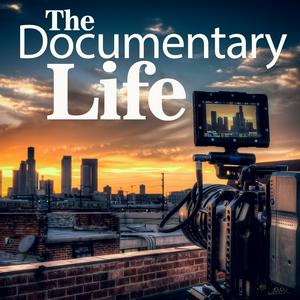
À propos de The Documentary Life
The Documentary Life is a podcast about building a life in nonfiction storytelling.
Hosted by documentary filmmaker Chris G. Parkhurst, the show explores what it really means to make documentaries—not just as a craft, but as a way of moving through the world with greater curiosity, observation, and empathy.
Each episode features thoughtful conversations with filmmakers, editors, cinematographers, producers, journalists, festival programmers, and other storytellers who have dedicated themselves to telling true stories. Together, we explore the creative process, the realities of production, the ethical questions that arise when working with real people, and the personal challenges of sustaining a meaningful creative life.
But The Documentary Life isn't only about cameras, funding, or film festivals.
It's about learning to listen more carefully. To sit with complexity instead of rushing toward certainty. To embrace uncertainty, contradiction, and the deeply human stories that exist all around us.
Whether you're directing your first short documentary, editing your tenth feature, producing independent nonfiction work, or simply someone drawn to authentic storytelling, this is a place for honest conversations about the rewards and realities of documentary filmmaking.
Expect interviews with accomplished filmmakers from around the world, practical discussions about craft and career, behind-the-scenes insights from real productions, and reflections on the philosophy of living a documentary life.
Because in the end, documentary filmmaking isn't simply about making films.
It's about paying attention.
Welcome to The Documentary Life.
Site web du podcastÉcoutez The Documentary Life, Les Goûts Les Couleurs ou d'autres podcasts du monde entier - avec l'app de radio.fr
Obtenez l’app radio.fr gratuite
- Ajout de radios et podcasts en favoris
- Diffusion via Wi-Fi ou Bluetooth
- Carplay & Android Auto compatibles
- Et encore plus de fonctionnalités
Obtenez l’app radio.fr gratuite
- Ajout de radios et podcasts en favoris
- Diffusion via Wi-Fi ou Bluetooth
- Carplay & Android Auto compatibles
- Et encore plus de fonctionnalités
The Documentary Life
Scannez le code,
Téléchargez l’app,
Écoutez.
Téléchargez l’app,
Écoutez.
 France
